This article is published in Aviation Week & Space Technology and is free to read until Jul 14, 2026. If you want to read more articles from this publication, please click the link to subscribe.

Collaborative Combat Aircraft Battle Brews In Germany

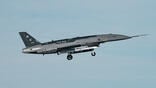
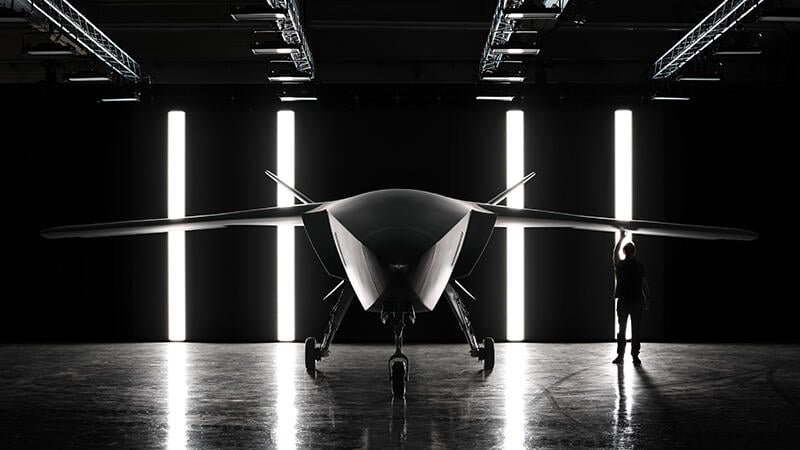
Helsing CA-1

Helsing targets 2027 for the CA-1 Europa’s first flight.

Credit: Helsing

With a plan to augment its Euro­fighter Typhoon fleet and eventual Lockheed Martin F-35s with collaborative combat aircraft, Germany is emerging as an early battleground for the European market for such aircraft.

The goal is to bring more combat mass to the German Air Force. Germany has indicated it sees a future in which collaborative combat aircraft (CCA) take on different roles in working with crewed platforms, but its initial focus is a fighter-bomber mission.

  • Helsing explores flight test options for CA-1 Europa
  • Boeing’s MQ-28 is Rheinmetall’s early favorite
  • Airbus draws on Barracuda experience for CCA bid

While a competition is not yet formally underway, likely bidders are already lining up to compete for a program that could end up encompassing hundreds of aircraft. The contest is one of the hottest for CCAs outside the U.S. Germany wants to field something around 2029, although that may initially be mainly to experiment and refine operational concepts before embarking on a more serious acquisition.

The looming competition also spotlights a set of issues that are increasingly dominating European arms purchases: the desire for speed, national autonomy and the ability to scale.

Helsing is leaning heavily into its German roots and startup mentality to accelerate development of the CA-1 Europa CCA. When the company unveiled the CA-1 in October, it set 2027 as the goal to get the vehicle airborne, aided by its acquisition of Grob Aircraft.

“All the suppliers are selected; things are being procured,” Alexander Busse, associate director for programs at Helsing, tells Aviation Week. There is still room for adjustments to reflect what will be learned in flight trials. Hardware and software tests are taking place in parallel to maintain pace.

One of the benefits of the Grob acquisition is the company’s experience in flight testing, although where that will take place is still in question. Helsing has indicated it would like to fly in Germany. The country’s regulators are trying to move with a heightened sense of urgency to adapt to current security needs. Still, securing approval to fly a vehicle in Germany as large as a CCA, uncrewed, comes with hurdles. There are other options for flight testing in Europe, and Busse says the company is in talks with all of them in case it needs to go elsewhere to keep the program on track.

The time pressure will hardly ease up once the Europa is airborne. If Helsing wins a contract from the German government to produce vehicles, it likely will have to start delivering them soon. The German Air Force has indicated it would like to have some CCAs in inventory before the end of the decade.

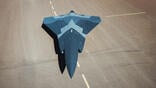
MQ-28 Ghost Bat
Rheinmetall sees MQ-28 Ghost Bat as its best near-term bet. Credit: Boeing

“First flight is super important,” says Klaus Herrmann, Helsing’s director for product management. “But if we did this and then reconvened and said, ‘Cool, what do we do now?’ then we’d lose.” The company is already working with suppliers to make sure it can scale up.

Helsing said its supplier choice has been driven by several goals, including having a truly European system. Even where the company might have to use items that fall under U.S. arms transfer regulations, such as in certain communications subsystems, it would design the vehicle to be able to operate without them.

Busse says another crucial factor is keeping costs low. A CCA cannot cost what a fighter does, which means using commercial or military off-the-shelf components. Helsing is drawing on Europe’s automotive and industrial supplier networks, which are accustomed to producing highly reliable equipment to exacting standards. Where the company has been able to switch from aerospace suppliers to automotive ones, the price difference has been “significant” in some cases, Hermann says.

Germany is the lead target market for the startup’s Europa ambition, where demand for several hundred aircraft is anticipated. If you add other potential European buyers, the number jumps. “We think it’s going to be many hundreds to low thousands,” Hermann says.

Rival Rheinmetall has taken a different approach, believing there is insufficient time for the company to develop an aircraft from scratch. It has announced talks with Anduril regarding the YFQ-44A Fury, Boeing regarding its MQ-28 Ghost Bat and Lockheed Martin around its Vectis.

The partner will provide what is effectively a truck, says Timo Haas, head of Rheinmetall’s Digital Division, which includes its air activities. Rhein­metall has told partners: “You have the aircraft, you have the wings, you have avionics, you have the jet engine, you have all that. But where we jump in is the so-called combat system, the final network when it comes to the sovereign part, communications, cryptographics and integration between platforms, mission systems, weapons, effectors, sensors and integration into that aircraft.”

Still, a preferred near-term candidate has now emerged: the MQ-28. “They’re the most advanced right now,” Haas says.

Although Anduril is on contract with the Pentagon to test the Fury, Rheinmetall would rather see that system mature.

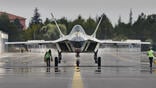
Kratos Valkyrie
Airbus is planning a flight test with the Kratos Valkyrie this year. Credit: Airbus/Kratos

Haas says he is intrigued by Lockheed’s Vectis, particularly given its Skunk Works pedigree and his own experience working with the company on the F-35. Rheinmetall is starting to build F-35 sections in partnership with Northrop Grumman for Lockheed. But the Vectis will not be ready for an end-of-decade delivery, either, he says, judging it “higher in capability but lower in availability.”

Despite working with Boeing, the company could partner with a different manufacturer at a later stage.

Rheinmetall, at least in the early stages, does not plan to build the vehicles in Germany, instead focusing on ensuring they can be supported locally. Establishing a production line would require a larger production run that could emerge.

Airbus also has looked abroad for a partner, even though the European airframer has designed and flown smaller uncrewed combat demonstrator aircraft in the past. Last year, it agreed to acquire two Kratos Defense & Security Solutions XQ-58A Valkyrie CCAs to missionize them for local requirements. It is preparing to flight-test of its CCA technologies using a Valkyrie by year-end.

Airbus chose the Valkyrie because “we know it works,” says Marco Gumbrecht, Airbus Defense and Space’s head of key accounts for Germany. “We wanted to challenge ourselves, independent of future customers, to understand if we can bring a collaborative combat aircraft capability onto the market as soon as possible.”

The company plans to incorporate its Multiplatform Autonomous Reconfigurable and Secure system, which features artificial-­intelligence-­supported software known as Mindshare, on the Valkyrie. Those have been tested onboard the company’s DT25 target drones and other undisclosed platforms, building on experience dating back to Airbus predecessor programs involving the Barracuda uncrewed combat air vehicle demonstrator.

For the flight trials—currently planned for an undisclosed location in Europe—the Valkyries will be linked with Learjets operated by GFD acting as Eurofighter surrogates. The Learjets will carry representative Eurofighter hardware, as well as a Rafael Litening 5 targeting pod adapted with data links to communicate with the Valkyries or other uncrewed aircraft. Integrating the data links into the Litening pod avoids sacrificing a Eurofighter weapons station for CCA communications equipment, Gumbrecht notes.

The flight trials will involve operators onboard the Learjets sending commands to formations of Valkyries that will include both live and simulated air systems. Several countries have explored using Link 16 to control CCAs. Airbus is instead employing dedicated data links to establish what Gumbrecht describes as a more “covert link.”

Although Germany is the initial target market, Airbus, like its rivals, has wider ambitions in Europe.

Other contenders could enter the race. General Atomics is flying its YFQ-42A under the U.S. Air Force CCA Program and has signaled interest.

Like the U.S. Air Force, which is working with multiple vendors on its CCA program, Germany likely will award contracts to more than one supplier, at least in its early stage, and as it determines its real operational needs for such a system.

Robert Wall

Robert Wall is Executive Editor for Defense and Space. Based in London, he directs a team of military and space journalists across the U.S., Europe and Asia-Pacific.

Tony Osborne

Based in London, Tony covers European defense programs. Prior to joining Aviation Week in November 2012, Tony was at Shephard Media Group where he was deputy editor for Rotorhub and Defence Helicopter magazines.