This article is published in Aerospace Daily & Defense Report part of Aviation Week Intelligence Network (AWIN), and is complimentary through Dec 25, 2025. For information on becoming an AWIN Member to access more content like this, click here.

Airbus Sees Opportunity In NATO E-7 Cancellation

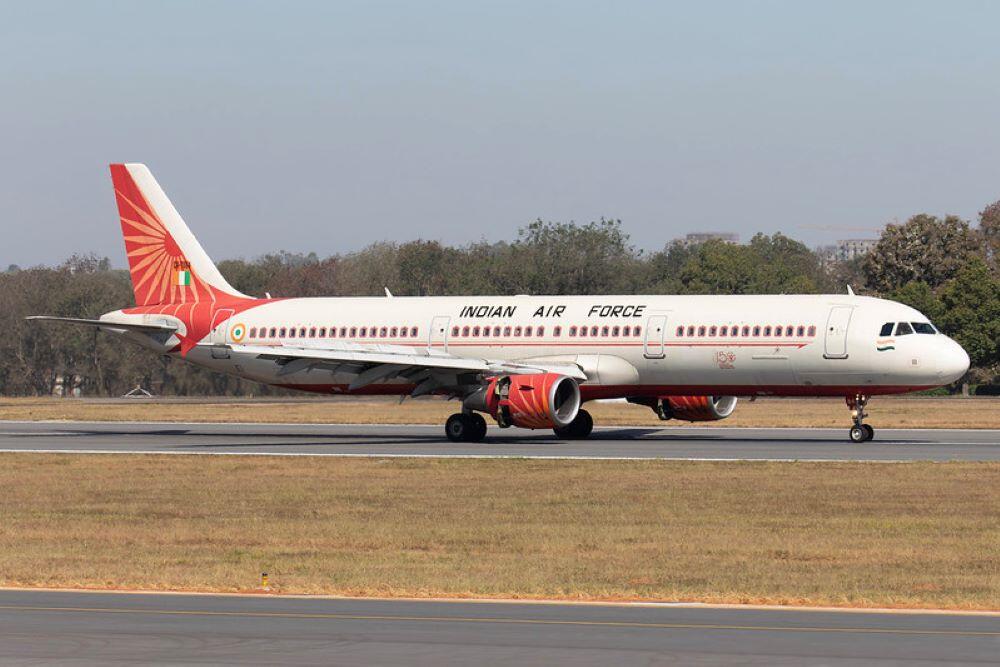
Tony Osborne – Aviation Week Caption: One of several ex-Air India A321s that could be converted into an airborne early warning platform for the Indian Air Force.

One of several former Air India A321s that could be converted into an airborne early warning platform for the Indian Air Force.

Credit: Tony Osborne / Aviation Week

DUBAI–Airbus sees a potential opening to address a NATO need to find an alternative platform to Boeing’s E-7 airborne early warning (AEW) aircraft following the collapse of that procurement.

The alliance needs to replace its aging Boeing 707-based E-3 Sentry airframes by 2035 and had planned to do this with the E-7 until the U.S. pulled its funding in July.

Jean Brice-Dumont, Airbus Defense and Space’s head of Air Power, told journalists at the Dubai Airshow here that he believes the company “could” provide an alternate solution.

The company is already involved in industry proposals for the Alliance Future Surveillance and Control (AFSC) through its Aspaaro industry team formed in 2021.

“AFSC is a system of systems ... the FCAS of AWACS [Airborne Warning and Control System],” Brice-Dumont said. He compared AFSC with the complex Future Combat Air System (FCAS) that the company is working on with industry in Germany and Spain.

AFSC aims to develop a multidomain network of distributed and airborne sensors across the alliance to replace the E-3 in 2035. E-7 was due to be part of that system.

“Some countries will want to buy Swedish,” he suggested, a reference to the Saab GlobalEye that some NATO countries have selected or are looking at.

“We will have to look at this holistically,” he added.

One possible avenue could be to lean off the back of a potential development for India that would convert several former Air India A321s to airborne early warning aircraft called Netra II.

The airframer is currently having an “ongoing discussion” with the Indian Air Force and the country’s Defense Research and Development Organization (DRDO) about how those aircraft will be converted. India wants to equip the aircraft with a locally developed active electronically scanned array (AESA) radar that is fitted in a ski box-like fairing atop the fuselage, similar to that of the Erieye radar on the GlobalEye.

“We are preparing that for India, and there’s a potential aircraft available for this kind of mission for our customers,” Brice-Dumont said.

That program is one of two major efforts by the company to begin militarizing the Airbus A320 family of narrowbody airliners. Unlike Boeing’s 737, which has been modified into the E-7 and P-8 Poseidon maritime patroller among others, the A320 “has not been militarized,” Brice-Dumont said. But the Indian AEW work is one of two projects that could “open the field.”

The other project is to develop a maritime patrol variant of the A321XLR that would feature a weapons bay behind the wing. France has selected the proposed platform for further derisking studies, part of an initiative to eventually replace the French Navy’s Dassault Atlantique 2 aircraft. Paris has set aside €3 billion ($3.4 billion) for the program in its 2026 finance bill.

Brice-Dumont said the maritime patrol variant was one of the “most spectacular,” with an “all you can eat” set of modifications.

These military derivatives of the A320 family could pave the way for other roles for the aircraft in electronic warfare, jamming and other special missions.

Tony Osborne

Based in London, Tony covers European defense programs. Prior to joining Aviation Week in November 2012, Tony was at Shephard Media Group where he was deputy editor for Rotorhub and Defence Helicopter magazines.