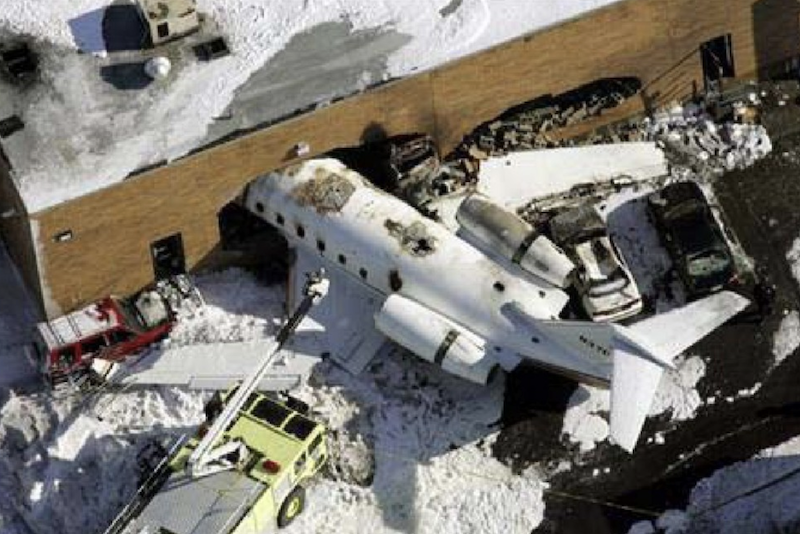
The NTSB’s investigation of the Teterboro overrun accident found that the Runway Safety Areas at all four runway ends did not meet existing FAA standards.
What can be done to provide better protection at airports that were built long before jets and can’t expand due to surrounding buildings, roads or adverse terrain?
This conundrum was brought to the industry’s attention on Feb. 2, 2005, following the high-speed rejected takeoff of a Bombardier Challenger 600 at Teterboro Airport. The aircraft exited the runway at an excessive speed, demolished the airport perimeter fence, crossed a six-lane highway and crashed into a building.
The NTSB’s investigation of the Teterboro runway overrun found that the Runway Safety Areas (RSA) at all four runway ends did not meet existing FAA standards specifying that RSAs must extend 1,000 ft. beyond the departure end of the runway and be 500 ft. wide. The nonstandard RSAs had been identified long before this accident.
The Port Authority of New York and New Jersey (PANYNJ), which owns and operates Teterboro Airport, conducted a study in 2004 examining alternatives for the nonstandard RSAs. The PANYNJ and the FAA concluded that installing a nonstandard (265 ft.-long-by-162 ft. wide) Engineered Materials Arresting System (EMAS) bed at the departure end of Runway 6 would be the most practicable solution.
Engineered materials are defined in FAA Advisory Circular 150/5220-22B as “high energy absorbing materials of selected strength, which will reliably and predictably crush under the weight of an aircraft.” The technology is comprised of beds of specially designed, aerated cement blocks. The blocks crumble under the weight of an aircraft, enabling an aircraft to stop safely and quickly in an emergency.
According to the FAA’s EMAS webpage: “Where airports lack adequate space for traditional safety areas, installation of an engineered materials arresting system allows for suitable energy management for the runway excursion aircraft. EMAS is located beyond the far end of a runway where an aircraft is taking off or landing. A properly designed and constructed EMAS absorbs the kinetic energy of runway excursion aircraft in less space and time than traditional safety areas.” A standard EMAS will bring a runway’s critical aircraft to a complete stop when it enters the EMAS at 70 kts or less.
In May 2005, the PANYNJ committed to installing an EMAS at Teterboro. The airport received grants from the FAA to facilitate the engineering and design of the RSA improvements. The first installation was on the north end of Runway 6/24 in October 2006. Another EMAS was installed on the south end of Runway 1/19, and a third was installed on the south end of Runway 6/24.
A few years later the system proved its worth. On Oct. 1, 2010, the pilots of a Gulfstream G-IV failed to attain the proper touchdown point while landing with a gusting crosswind and touched down more than halfway down the runway. Despite their activation of the braking devices, the jet departed the end of the runway at 40 to 50 kts.
The G-IV traveled about 100 ft. into an EMAS surface located immediately beyond the runway and came to rest. The jet sustained only minor damage.
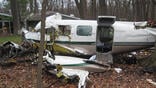
The value of EMAS proved itself again in an incident involving a Cessna Citation Excel at Reading Regional Airport in Pennsylvania in July 2021. An EMAS measuring 255 ft. in length by 170 ft. in width) had been installed at the departure end of Runway 13 in 2009 using Airport Improvement Program funding from the FAA. The obstacles and terrain beyond the departure end of Runway 13 included a localizer antenna, a down sloping embankment and trees.
Fortunately, the Excel was brought to a stop in the EMAS, resulting in a collapse of the nose landing gear. Most importantly, nine people exited the jet with no injuries.
The legal proceedings regarding the Mesa Falcon Field accident will likely take years. Will the case produce a legal precedent that applies to other airport operators? Could these legal claims against the city of Mesa be a preemptive warning to other airports providing access to business jets to make certain they are undertaking actions to comply with FAA safety zone requirements? Perhaps.
What is an airport operator’s liability when it delays bringing an airport into compliance with runway safety area and runway protection standards? What can airports do once they recognize their airport is no longer in compliance with these standards?
The business aviation community awaits the final NTSB report on the Mesa runway excursion as well as the settlements in civil litigation cases to determine the important lessons.
Click here for The Role Of Runway Safety Areas, Part 1.
Click here for The Role Of Runway Safety Areas, Part 2.

Related Content