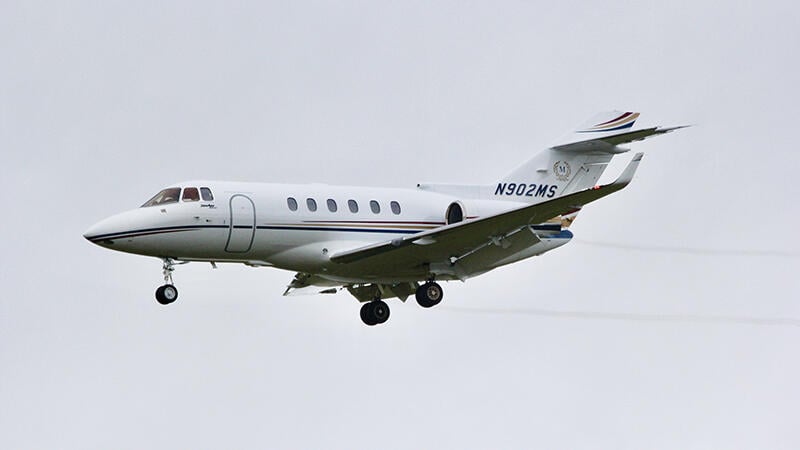
A Hawker 900XP descends to land.
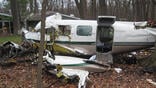
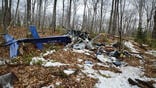
Once again, the photos of the crash from a post-maintenance flight of a Hawker are grim. On Oct. 16, 2025, a Hawker 800XP conducting stall checks experienced a loss of control and impacted terrain, killing all three occupants. Sadly, this is yet another accident in which a Hawker jet experienced a violent loss of control while performing a post-maintenance flight test after maintenance on the TKS Ice Protection System panels.
In the aftermath of this recent fatal accident, the NTSB in early January issued urgent recommendations to the manufacturer, the FAA and industry association NBAA. While the recommendations are focused on the post-maintenance test flights involving stall testing in some Hawker aircraft, there are several reasons why the rest of the industry should pay attention to the important lessons learned.
The impetus for the urgent recommendations was a disturbing number of serious events involving Hawkers equipped with TKS panels for icing protection conducting post-maintenance stall checks.
Onboard the aircraft involved in the accident last October were the pilot, co-pilot and a company maintenance representative. The pilot and co-pilot were the primary flight crew of operator Aerolíneas del Centro. The aircraft had been undergoing maintenance for the preceding seven months. This included removal of the wing leading edges and TKS ice protection panels. Per Textron Aviation, a post-maintenance stall test flight is required before the jet can be returned to service.
The twinjet departed Battle Creek Executive Airport (BTL) in Michigan and climbed to 15,000 ft. mean sea level (MSL), within the requested block altitude of 14,000 to 16,000 ft. MSL. Minutes after leveling off, the Hawker began a rapid descent, followed by a transmission in Spanish which translated to: “in a stall, recovering, sorry.” The jet impacted terrain in a relatively flat attitude.
Duncan Aviation provided the operator with a list of experienced test pilots for hire to perform the post-maintenance stall test flight. After being unable to coordinate the stall test flight, the operator’s flight crew elected to perform the post-maintenance stall test themselves.
While the NTSB’s investigation was ongoing at the time of this writing, the safety board noted that the descent profile and other aspects of the fatal accident were similar to those of a Hawker 900XP undergoing a post-maintenance test flight on Feb. 7, 2024, near Westwater, Utah, that killed both pilots.
According to that aircraft’s flight data recorder, after the jet entered the stall, it abruptly rolled to the right, and the pilots responded with full left-wing-down aileron control input, full power and full aft elevator control input, which aggravated the aerodynamic stall and spin. As of this writing, the final report has not been published.
Another accident occurred on May 4, 2006, involving a Raytheon BAe-125-800A during a post-maintenance test flight requiring testing of the stall system at Lincoln, Nebraska. The first maneuver to be performed was a clean stall. Prior to the flight the pilots calculated the stick shaker activation speed to be 115 kt., pusher speed at 107.5 kt. and aerodynamic buffet speed to occur at 105.5 kt. As the aircraft slowed to approximately 126 kt., the right wing suddenly stalled and the nose dropped through the horizon.
The aircraft continued to roll to the right in a near-vertical descent. It entered a cloud layer below, and due to the attitude of the aircraft, the gyros tumbled. The crew was unable to determine the attitude of the aircraft until they exited the cloud layer. The jet continued to roll to the right, about three turns total when it experienced a rapid roll reversal to the left. It rolled about two to three turns to the left.
When the pilots exited below the base of the cloud layer, the captain saw only ground through the windshield and immediately pulled back on the yoke. Aircraft control was regained at approximately 7,000 ft. MSL. The jet had lost nearly 11,000 ft. of altitude and sustained substantial structural damage due to exceeding 6g in the recovery.
The NTSB is aware of two other events in which jets exhibited unacceptable stall characteristics during stall test flights. On March 3, 2005, a Raytheon Hawker 800XP entered an aerodynamic stall without stick shaker or stick pusher activation and rolled uncommanded three times to the right during a stall test flight in West Palm Beach, Florida. Maintenance personnel noted that some of the jet’s vortex generators were deformed, likely present before it departed on the stall test flight.
A previous event involving deformed vortex generators led to the issuance of a Service Information Leaflet (SER No. 180) advising operators of Hawker BAe 125-800 and -1000 series jets to exercise caution when cleaning wing top surfaces and to straighten or replace any distorted vortex generators.
Stall Checks Required
The purpose of the stall test flight required for certain Hawker jets is to ensure that the jet’s stall behavior and the stall identification and warning system exhibit acceptable characteristics before it is returned to service following certain maintenance actions involving the wing leading-edge assemblies, deicing distribution panels (TKS panels) and stall trigger assemblies.
The wing design for the specified jets is sensitive to minor wing component installation or condition defects. Removal of the TKS panels for maintenance requires immense precision during reinstallation to make certain the panels are aligned with laser-like precision in the proper location along the leading edge of the wing. The range of acceptable tolerances for some wing component installations specified by the Hawker Structural Repair Manual must be achieved within a few hundredths of an inch to avoid introducing unacceptable stall characteristics.
Similarly, discontinuities or ridges in the sealant between the leading edge and upper wing skin can also result in unacceptable stall characteristics. The adhesive used to reseal the TKS panel to the wing should not protrude above the metal edges. A seemingly minuscule protrusion of adhesive can negatively affect the wing’s critical angle of attack (AOA).
The stick shaker is set to operate at an indicated airspeed of 7% to 9% above the stalling speed in the Hawker 900XP series. Unacceptable stall characteristics include the tendency to roll at the stall. The Raytheon manual allows the stick pusher to coincide with the natural stall provided that any rolling motion can be constrained to within 20 deg. of bank with “normal” use of the ailerons.
One of the unusual reactions during stall testing cited in the Hawker manual can be the sudden uncommanded movement of the ailerons contrary to pilot control input. The movement of the yoke can be so sudden and strong that the yoke is wrenched out of the pilot’s hands. Long ago this undesirable movement was termed “aileron snatch.”
Raytheon’s manual contains a special warning about aileron snatch. “Aileron snatch may occur at or prior to stall and is not acceptable,” it says. The movement “may be strong enough to affect recovery using aileron input, in which case the elevator control must be moved forward to decrease the AOA and allow the return of normal aileron control. In such an event the pilot must be prepared to recover from an unusual attitude.”
The vast majority of pilots should never encounter this phenomenon on a modern jet that is properly maintained and kept within the aircraft’s maneuvering margins. Thus, it is entirely likely that nearly all of the current population of pilots have never been trained for this.
Pilot Training
The NTSB concluded that although the pilots of the Hawker 900XP were properly trained and qualified for normal operations, their training, experience and procedures available in the manual were inadequate to prepare them to safely respond to the adverse stall behavior they encountered.
The Raytheon manual stipulates that “pilots conducting stall checks should have prior experience in performing stalls in the Hawker and must be prepared for unacceptable stall behavior at any point leading up to and throughout the maneuver.”
The NTSB noted that this broad, subjective criterion to perform a stall test flight is open to interpretation. “Beyond the information in the Structural Repair Manual and POM [pilot operating manual] for each airplane, we identified no other current document from the manufacturer specifying any additional experience, training or qualification criteria for pilots tasked to perform a stall test flight.”
The NTSB identified that Hawker 900XP and 800XP operating manuals do not specify procedures or checklists for pilots on how to recover the jet from the stall. Each manual’s emergency procedures and abnormal procedures contained no protocol for responding to unacceptable stall behavior or recovering from unusual attitudes.
No Natural Warning
The Hawker 900XP’s POM clearly states, “There is no natural stall warning or aerodynamic buffet prior to the stall.” This is a common trait of swept-wing aircraft. Unfortunately, this important point is poorly communicated in aviation training materials, both printed and online.
According to the NTSB’s urgent recommendation announcement, “The flight crews of certain Hawker airplanes may not fully understand that the wing is sensitive to surface anomalies, such as visually imperceptible wing component defects or light ice accretion, that can result in a stall before stick shaker and stick pusher activation, and they may be unprepared to recover the airplane from an inadvertent encounter with a stall and adverse stall behavior.”
Many other business jets exhibit no natural stall warning or aerodynamic buffet prior to a stall. The following is an excerpt from the NTSB’s Office of Research and Engineering report of the accident involving a Bombardier CL-600 at Truckee, California.
“The Challenger 600 series wing design is characterized by a ‘leading edge’ stall; as the [AOA] increases toward the stall, a separation bubble begins to form near the leading edge on the upper surface. At first, this is a localized phenomenon and is not evident in the aircraft-level characteristics. Specifically, no pre-stall buffet occurs. If the AOA is further increased, the bubble grows and then suddenly, without any precursor indications, ‘bursts.’ The upper surface airflow separates almost entirely aft of the burst bubble.
“The natural stall characteristics of the Challenger 600 series (and thus the Challenger 605 specifically as well) are thus a stall with no pre-stall warning, an abrupt load factor reduction at the instant of stall, and an uncontrolled and uncontrollable rolling motion.”
The overly simplified “aerodynamic” lessons contained in the majority of ground school training are applicable to low-speed Clark Y-profile airfoils typical on low-performance general aviation aircraft. In contrast, the stall behavior of advanced high-performance airfoils and swept wings is much different.
There are flight instructors and examiners who require stalls during in-aircraft training and checking in swept-wing aircraft, and these can end badly. An example comes from flight training in a Hawker 700 in preparation for a Part 135 checkride on Sept. 20, 2003, near Beaumont, Texas.
The instructor pilot asked the first pilot to perform a stall in the approach configuration. The first pilot is overheard on the cockpit voice recorder asking the instructor if he has done stalls in the jet. The instructor replied, “It’s been a while.” The first pilot then remarked: “This is the first time I’ve probably done stalls in a jet. Nah, I take that back. I’ve done them in a Lear.” The instructor then said he had stalled the Jetstar (Lockheed L-1329) on a Part 135 ride. Minutes later, the jet impacted the ground violently, killing all three people onboard the aircraft.
Failure by both pilots to respond correctly to the stall warning system in a Bombardier CL-600 at Truckee, California, on July 26, 2021, resulted in a left-wing stall and impact with terrain. Contributing to the accident was the first officer’s improper deployment of the flight spoilers, which decreased the airplane’s stall margin.
The safety implications and consequences of providing misleading information or applying poor instructional technique are significant, especially when nearing an aircraft’s maneuvering margins. An essential component in the effective delivery of ground and flight training in swept-wing aircraft is a properly trained and qualified cadre who possess sound academic and operational knowledge.
NTSB Urgent Recommendations
The many incidents and accidents occurring during post-maintenance test flights in both aircraft and rotorcraft lead to the question: “Should post-maintenance pilots be placed in a situation in which they are flying an aircraft so close to the limits of the aircraft envelope?”
The FAA’s Information for Operations (InFO) 08032 explicitly says that post-maintenance is not a “test flight” and the crew are not qualified test pilots. With that said, sometimes the margins in the aircraft envelope can be razor thin. If so, it could be argued that pilots performing these duties should receive extra training in: the handling issues associated with operations close to the aircraft’s flight envelope; how to detect the deterioration in the sometimes razor-thin margins prior to an excursion beyond the limits of the aircraft envelope; and how to properly recover the aircraft to a stable condition in a deteriorating situation.
The preponderance of evidence involving select Hawker jets led the NTSB to urge Textron Aviation, the FAA and the NBAA to take immediate action on the safety recommendations in its report, “Establish Pilot Training and Experience Qualification Criteria and Stall Test Plan for Post-maintenance Stall Test Flights in Certain Hawker Airplane Models,” on Jan. 2, 2026. All recommendations received an urgent classification.
The NTSB recommended that Textron define manufacturer-authorized pilot training and experience qualification criteria for pilots who perform post-maintenance stall test flights in Hawker 700, 800, 800XP, 850XP and 900XP jets to ensure that they are prepared with the competencies needed to safely respond to an encounter with unacceptable stall characteristics.
The safety board also recommended that Textron develop a stall test plan that describes unacceptable stall characteristics, recovery procedures and safety considerations needed to prepare manufacturer-authorized flight crewmembers to safely perform post-maintenance stall flight tests. This should include a review of all other aircraft models listed on the type certificate. Each model that is subject to post-maintenance stall test flights should comply with the two previous safety recommendations.
Furthermore, Textron Aviation should review the POM and aircraft flight manual and revise them as necessary to provide a description of the adverse effects of certain wing surface anomalies-—such as visually imperceptible defects or light ice accretion—on the aircraft’s stall behavior, including the possibility of stall before stick shaker or stick pusher activation. There should be a description of unacceptable stall characteristics and procedures for recovering the jet from an inadvertent encounter with a stall and adverse stall behavior.
The NTSB also recommended that Textron Aviation and the NBAA inform owners and operators of the circumstances of these accidents to increase their awareness of the possibility of unacceptable stall behavior, such as an uncommanded roll through 360 deg. and entry into a spin. Flight crew training and experience should ensure the safety of these flights exceeds that which is typically provided to operational line pilots.
It is tempting to sit back and comfortably cite aviation’s generally commendable safety record, but in this case, our safety system failed badly. The lack of proactive action to identify and mitigate these glaring deficiencies is a black eye to an industry that likes to tout its safety record.
Do these recent accidents represent the classic tip of the iceberg, in which deeper problems exist under the surface? When viewed in combination with similar accidents, this begs the question of unresolved weaknesses in our safety system—not just for post-maintenance test flights in general, but also for the training to fly swept-wing aircraft and the poorly understood dangers of recovery in swept-wing business jets when pilots exceed the maneuvering envelope.

Related Content