UMass Memorial Medical Center Life Flight was established in September 1982 as the first dedicated air ambulance program in New England.
Following publication of this article, The Ohio State University noted that it established the first hospital-based HEMS unit in the U.S. in 1967 using Army National Guard helicopters. —Ed.
Helicopter emergency medical services have been a constant in the everchanging U.S. health care landscape, providing a self-contained, self-reliant means of ferrying patients between hospitals or from the scene of an accident to a higher level of care.
Flight for Life at St. Anthony Central Hospital in Denver founded the first civilian, hospital-based helicopter emergency service (HEMS) in the U.S. in 1972, with a single Aerospatiale Alouette III helicopter. Now based at CommonSpirit Health-St. Anthony Hospital in Lakewood, Colorado, Flight for Life operates from multiple locations in the state using six helicopters, three fixed-wing King Airs and seven ground ambulances.
Flight for Life helicopters are operated by Air Methods Corp., which itself began in Colorado in 1980 with a single Bell 206 piloted by Roy Morgan, its founder. Morgan, who passed away in 2024 at age 88, “believed having a trained medical team with access to excellent equipment, on site and during transport, would save lives,” his obituary states. “He knew a well-equipped, fast helicopter with excellent pilots could deliver that.”
Morgan’s vision of a self-contained, civilian flying medical unit has carried through to today’s Air Methods, which is considered the nation’s largest privately owned HEMS provider. (Air Methods emerged from Chapter 11 bankruptcy in December 2023 under the ownership of a lenders group that includes institutional investors.) The company provides both community- and hospital-based air medical services and reports operating 329 helicopters and 31 fixed-wing aircraft from 300 bases in 48 states.
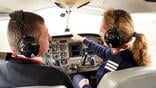
Air medical bases are staffed for 24/7 operation. The standard crew complement of an Air Methods helicopter is a single pilot, a flight nurse and a flight paramedic. The company requires new pilots to have a minimum of 2,000 flight hours, with mandatory annual recurrent training. The typical duty schedule for pilots is seven days on, seven days off.
A new flight nurse must have a minimum of three years’ experience in an emergency room or intensive care unit (ICU); the flight paramedic must have three years’ experience in responding to 911 calls. Medical crewmembers work 24-hr. shifts: 24 hr. on, 24 hr. off, 24 hr. on, then five days off.
Synchronized Response

Large hospitals that have helipads also have their own communications centers and personnel that dispatch and track helicopters after receiving a call. Air Methods’ bases that do not have their own communications centers use Air Com, the company’s communications hub in Omaha, Nebraska.
As of 2016, the FAA has required that HEMS operators of 10 or more helicopters have an operations control center (OCC). The Air Methods OCC is based in the Denver metropolitan area. Specialists there assess current and projected weather in the area where a flight is requested as well as other potential hazards along the route, such as migratory birds.
The response to each call involves the tight synchronization of these elements, starting with a go/no-go decision. Air Methods has a motto: “four to go, one to say no.” If any one of the three-member crew or OCC staff has a problem with the requested flight, the mission is halted.
The same maxim applies in the helicopter itself, where it is “three to go, one to say no,” explains Patrick Ray, senior lead pilot with Air Methods’ Life Flight Air Ambulance at UMass Memorial Medical Center in Worcester, Massachusetts.
“If any one of us has a problem with the flight, you say something and we stop the flight,” Ray says. “That can be from the point the call comes in, to a minute before we land somewhere; it doesn’t matter. Three or four to go, one to say no. We do not take anybody hostage.”
Calls to the hospital communications center’s 1-800 number come from another hospital, a fire department or an ambulance service requesting a helicopter. (Calls to Air Com come from another hospital or 911 emergency center.) The communications center alerts Ray, who accepts or declines the mission.
Upon acceptance, he completes a risk assessment combined with a flight plan and status information and sends the information via iPad application to the OCC. The OCC checks for weight and balance, weather and operational conditions and within minutes assigns a dispatch number, assuming the flight is approved. The number is provided to the communications center, which dispatches and tracks the helicopter and communicates with the crew by radio.
Ray flies Life Flight 1, an Airbus Helicopters (formerly Eurocopter) EC145-C2e manufactured in Columbus, Mississippi, and customized with a medical interior and Genesys Aerosystems avionics by Metro Aviation in Shreveport, Louisiana.
Air Methods’ Life Flight 2, a community-based program that is associated with UMass Memorial Medical Center, operates a smaller Airbus EC135 light twin-engine helicopter from Fitchburg Municipal Airport, 24 mi. north of the hospital.
Airbus Helicopters in March announced a fleet expansion agreement with Air Methods for new H140 light twins, a growth variant of the H135/EC135 slated to enter service for the HEMS segment in 2028, as well as 10 single-engine H125 and 11 H135 helicopters. The Marignane, France-based manufacturer says it supplies 725 HEMS helicopters in the U.S., representing 55% of the market share.
Operating Conditions

As with its military version, the U.S. Army’s UH-72A Lakota, the twin-turbine EC145 is derived from the MBB/Kawasaki BK 117 developed in the 1970s. Life Flight 1’s 2019 model is configured with a four-blade main rotor, a conventional tail rotor and signature rear clamshell doors, which medical crew open to load a patient and stretcher. The helicopter had logged 2,236 hr. 9 min. with 7,953 landings as of BCA’s visit.
UMass Memorial Life Flight was established in September 1982 as the first dedicated air ambulance program in New England. Life Flight was owned and operated by Rocky Mountain Holdings when Air Methods purchased Rocky Mountain in 2002.
Ray, 45, arrived there in October 2019 as a line pilot from Florida, where he flew 13 years for Orlando Health Air Care 2, originally with OmniFlight Helicopters, which Air Methods acquired in 2011. He believes he was the youngest pilot at OmniFlight when he started flying HEMS, first on a single-engine Bell 206L-4 LongRanger and later on a BK 117. Before that, he flew a LongRanger for about a year for Marlin Energy in the offshore oil and gas industry. He has logged nearly 5,000 flight hours.
From its base at UMass Memorial, a Level 1 trauma center in central Massachusetts, Life Flight’s service area extends from New Hampshire to Connecticut and from Boston to Albany, New York. The helicopter transports patients to a higher level of care here as well as to other hospitals.
“All of them,” Ray responds, when asked which hospitals Life Flight serves in the Boston area—Massachusetts General, Beth Israel Deaconess, Brigham and Women’s, Tufts Medical Center, Lahey Hospital & Medical Center—all with elevated helipads, among others.
Flying in the region presents different conditions than flying in Florida, where Ray spent much of his early career as a pilot, initially as a fixed-wing flight instructor.
“Up in the northeast, the weather gets kind of challenging in the winter because the icing levels come down, and you go up into the hills of New Hampshire or Vermont at night with no moon, it gets kind of dark,” Ray says. “You have to be careful because the weather from the airports that you see on the Metars [Meteorological Aerodrome Forecast], the TAFs [terminal aerodrome forecasts] and all the stuff they train you in aviation—all the airports are in the valleys.
“But we have to get over the hills,” he explains. “You see an airport that’s reporting 1,500, 1,600, 1,700 ft. overcast—that’s marginal, that’s fine, we can go. But you can’t get to it without being IFR [instrument flight rules] because you’ve got to climb to 2,300-2,400 ft. to get across the ridge to get down in that valley.”
BCA wanted to know which technologies Ray finds most beneficial, mentioning ADS-B, GPS, Terrain Awareness and Warning System (TAWS) and night-vision goggles (NVG), each of which Air Methods provides on its helicopters, among the possibilities. “All of it,” he says.
“I started EMS in 2007,” Ray elaborates. “The two biggest things that greatly improved what we were doing then is GPS—starting with the Garmin 430 full-color, moving map GPS [an integrated GPS/navigation/communications system]. It shows you where you’re at and where you’re moving. Everything much later than that is obviously much better. And then, night-vision goggles.”
Ray started using NVGs in Orlando around 2013 in a BK-117 B-2 that was modified to accommodate them and now uses ANVIS-9 model goggles. Air Methods medical crewmembers also wear NVGs as needed—the flight nurse or paramedic will take the left seat to assist the pilot in scanning for obstacles—and help work the radios with the communications center and emergency personnel on the ground.
“They’re technically an aid,” Ray says of NVGs. “Even though they’re a great enhancement to your vision at night, they have their limitations, like greatly reduced peripheral vision. Instead of having 180 deg. [field of view], you have about 40, so we have to constantly scan around. They’re set to a certain distance and/or infinity, but we usually set them such that when we’re coming into an LZ [landing zone] you can clearly see power lines, trees, obstacles—that’s what we’re using them for in a low-altitude environment.”
He lists some further NVG limitations. “They’re about 2 lb. on your head,” Ray says. “Some people have neck issues with them. They’re monochromatic. Usually they’re orange, green or white, so you can’t see [other] color. Depending on what the weather is like, whether it’s overcast, how much lunar light is available, they still do not enhance your vision to the point that you would like.
“But let’s say if there’s about 40% or 50% Moon or greater, you can see leaves blowing with them,” Ray allows. “It’s much greater than night vision, by all means.”
UMass Life Flight 1 transported 574 patients in 2024. About 70% of calls involve interfacility transfers; other calls bring the helicopter to remote locations such as a smaller hospital’s landing area, one of hundreds of predesignated landing zones in the region, or to an airport where the patient has been transported by ground ambulance.
Medical Intervention

LifeNet 8-1, an Air Methods unit based at Hagerstown Regional Airport in northwestern Maryland, covers multiple counties in that state, Pennsylvania and West Virginia. Using an Airbus EC135 T2+ helicopter, it transports patients from local community hospitals to higher levels of care in cities including Baltimore, Hershey and York, Pennsylvania, Washington, D.C., and Winchester, Virginia.
About 35% of LifeNet 8-1’s landings are made at unimproved sites such as interstate highways, farm fields and parking lots in response to car crashes, falls and other accidents. The unit in 2025 marked its 15th year at fixed-base operator Rider Jet Center, having transported more than 7,500 patients during its tenancy.
Among the challenges LifeNet 8-1 pilots face is the need to cross or fly within Class B airspace surrounding Baltimore-Washington and Washington Dulles International airports. Some of the hospitals it operates to—MedStar Washington Hospital Center, Children’s National Hospital—are within the Washington, D.C., Flight Restricted Zone, which requires prior authorization.
When a call comes in, the communications center alerts the medical crew as well as the pilot. “Our pilot is checking weather, the OCC is checking weather, the pilot is looking at his risk assessment and we’re getting our gear together, pulling blood out of the cooler, getting whatever equipment we might need for that specific patient if they tell us ahead of time,” says LifeNet 8-1 Flight Paramedic Ryan Byler.
While the flight nurse and flight paramedic come from different disciplines, their roles are interchangeable on the helicopter. “I have more experience in pre-hospital 911 [calls], airway management and time-critical ‘right now’ interventions,” Byler says. “The nurse has the experience of being more in the hospital ICU with ventilators, IV pumps and all the extra equipment, and we bring that together.”
Flight Nurse Tyler Roach came to LifeNet 8-1 with five years of ICU experience at Berkeley Medical Center in Martinsburg, West Virginia, and five years' emergency room experience at Meritus Medical Center in Hagerstown.
“You go from a big ICU where there’s plenty of room to a super-cramped environment,” Roach says of the transition to HEMS. “You’re landing at areas you’ve never been to before. It’s just a completely different environment with different stressors and things that kind of come with the territory, but prior to doing the job you don’t know what to expect.”
Medical crewmembers focus on how the flight affects the patient. At altitude, the balloon inside an endotracheal tube could expand and damage or obstruct the patient’s airway, for example, or IV bags could expand and decrease the flow rate maintained on the ground.
Roach, 38, a nine-year veteran flight nurse, likes the challenges the job brings.
“Working in a hospital, we have doctors there, we have other nurses, so you’re never truly kind of ‘out there,’” Roach says. “In the aircraft, it is truly just me and Ryan. Anything that exceeds our patient care guidelines, the breadth of knowledge that we have, is only a phone call away.
“You’re much more independent and autonomous, which I love,” Roach adds. “I get to do things as a flight nurse that in a hospital are outside of my scope of practice. Nurses don’t routinely intubate in a hospital. That’s typically something that a medic would do.”
When the helicopter lands, medical crewmembers load the patient on a stretcher through the rear clamshell doors, staying in constant communication with the pilot. Patients have hearing protection during all phases of flight.
One crewmember keeps “tail guard” to prevent emergency personnel on the ground, bystanders, an item of clothing or a loose object from getting too close to the tail rotor—in the case of the EC135, a Fenestron shrouded tail rotor. Prior to takeoff, they do a walkaround of the aircraft to check for any open latches. The rotors usually stay turning.
“The roar of the rotors, heat from the exhaust, the smell of fumes—it can be overwhelming,” says Roach. “We keep our helmets on coming and going, which helps to muffle some of the noise.”
Says Life Flight’s Ray: “We’re trying to be quick because those patients are in a non-hospital environment. Even if a patient is in a smaller regional facility, they still have a doctor, a much greater level of care than you do on the side of the road. There are times that we won’t shut down at a hospital depending on what it is—heart attacks, strokes—we will stay hot, with the rotors turning. They’ll go in, grab the patient and go.”
Safety Management

Under a final rule it published in April 2024, which becomes effective in May 2027, the FAA requires that Part 135 on-demand air ambulance and charter operators and Part 91.147 air tour companies implement safety management systems (SMS) across their organizations to identify, monitor and address potential operational hazards. Commercial airlines have been required to have SMS systems since 2018.
Air Methods announced in October 2024 that it had submitted a declaration of compliance with the FAA for the new SMS requirement years ahead of the compliance date, becoming one of the first air medical providers to do so. Its voluntary SMS program had been accepted by the FAA since 2021.
“SMS is a proactive, data-driven framework that enables Air Methods to identify potential hazards before they become critical safety issues, ensuring that it can continue delivering the safest air medical transport services in the industry,” the company said.
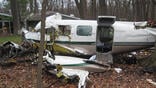
Both UMass Life Flight and LifeNet 8-1 have had serious accidents in the past.
On Jan. 11, 2022, a LifeNet 8-1 EC-135 destined for Children’s Hospital of Philadelphia Heliport was substantially damaged in a hard landing in Drexel Hill, Pennsylvania. The pilot was seriously injured; the flight nurse, the flight paramedic and an infant patient were not injured.
The NTSB determined the probable cause of the accident was “an inflight attitude upset for undetermined reasons that resulted in a rotor system overspeed, a reduction of power from both engines and a subsequent hard landing.”
Following the accident, the flight nurse evacuated the patient and then evacuated the pilot while the medic shut down both engines, the NTSB said. The nurse traveled with the patient and the medic with the pilot by ground ambulance to area hospitals.
“It certainly had an impact on the crew but at this base the biggest frustration was they couldn’t get back to serve the community,” says Ron Brown, who was then serving as Air Methods’ regional account executive for Maryland and Pennsylvania. “We had to wait for another aircraft to come in. They shared a tremendous resiliency and dedication to come back to take care of this population.”
On July 14, 1984, a Life Flight BO-105C, then owned by Omni Flight Airways, according to the NTSB, crashed during a forced autorotation landing in Rehoboth, Massachusetts. The helicopter was transporting a patient to Worcester from Martha’s Vineyard. The pilot and a doctor were killed; the flight nurse and the patient were injured.
The NTSB found that the pilot had neglected to turn on the main tank fuel pumps prior to takeoff, leading to fuel starvation and loss of power in both engines. An electrical wire in the low-fuel warning circuit, which would have alerted the pilot through a light on the panel, was found to be not connected.
Ray is Life Flight’s safety representative. He lists various Air Methods safety practices, including flight observation programs, internal reviews and a Corrective Action Preventive Action process that bases follow as part of the SMS program.
But the essence of safety, he says, begins with the helicopter.
“If you just want to get right down to the nuts and bolts of the safety, you look at the aircraft,” Ray says. “It’s twin-engine, it’s single-pilot IFR capable, full autopilot, TAWS, full glass cockpit. It’s got the latest and greatest stuff with multiple redundancies—dual hydraulic systems, dual radios, dual GPS.”
At the organization level, “you’ve got the operational control center trying to provide that check and balance on our weather decision-making, our maintenance of the aircraft, the flight times on the aircraft, all that kind of stuff,” he adds. “We’ve got all the electronics, the gizmos, the gadgets, the toys, the support you can have in the modern aviation community.”
Ray enjoys the spontaneity of being a HEMS pilot, something that does not typically come with the territory for corporate, utility or offshore oil pilots.
“I don’t know when I’m going or where I’m going, and I’m doing it 24 hr. a day, seven days a week,” he says. “If you’re asking me to go lift an air conditioner on top of the Sears Tower, you’re not going to call me up in the middle of the night.”
It is not the excitement of landing on a highway or the glow of making the nightly news that attracted him to the field, but something decidedly more mundane.
“The reason pilots go into EMS is because this helicopter does not move across the country,” Ray says. “That’s the attraction. My wife wants me home at night. I don’t live out of a suitcase.”

Related Content