This article is published in Aviation Daily part of Aviation Week Intelligence Network (AWIN), and is complimentary through Jun 05, 2026. For information on becoming an AWIN Member to access more content like this, click here.
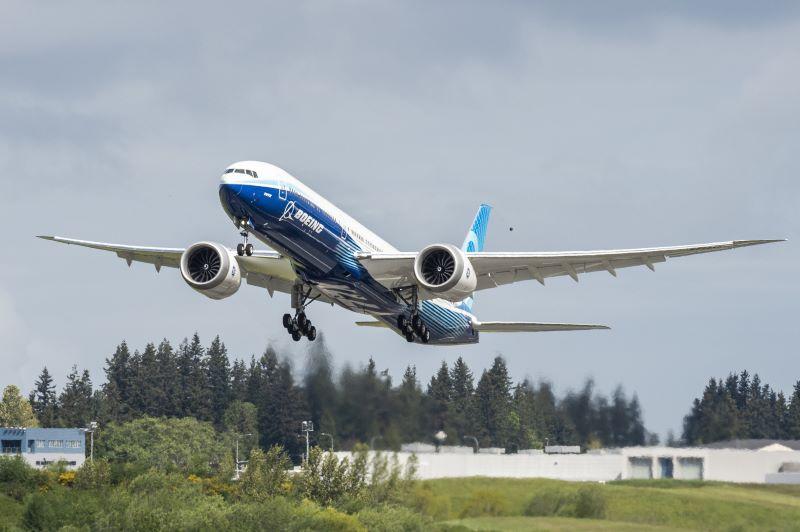
Boeing 777X test flight
CHARLESTON, South Carolina—FAA Administrator Bryan Bedford believes the Boeing 737 MAX will be certified by year’s end and suggested the 777X will follow, in 2027.
“I think we’ll get the MAX 7 first, then followed by the -10 and hopefully the 777 early next year,” Bedford said during the CAPA Airline Leader Summit in Charleston, S.C.
The revised 777X certification timing from Bedford is considered surprising as Boeing previously suggested that flight tests were on track for completion in time for the award of an amended type certificate by year end. This was to have cleared the way for long-delayed deliveries to begin early in 2027.
Industry sources say until as recently as April, Boeing had hoped to clinch FAA certification for the 777 in October, with flight tests expected to wrap up with the completion of the final stages of Type Inspection Authorization (TIA) around September. A key element of the final phase of 777-9 tests includes flights to clear the aircraft for extended range twin engine operations (ETOPS). Aviation Week understands these were originally expected to begin in June.
However, Boeing CEO Kelly Ortberg, speaking on May 27 at the Bernstein annual Strategic Decisions Conference in New York, suggested that the overall timetable now appears to have slid further to the right. “You should expect that we will hopefully be done with our flight test program by the end of the year, with the exception of ETOPS,” he said. “ETOPS is going to extend into next year,” added Ortberg.
“But we’re building the airplanes and getting ready to start the deliveries next year,” he emphasized. Asked if initial operators would accept early 777-9 deliveries with baseline certification without ETOPS clearance, Ortberg said, “I would say for the most part the customers are going to want our ETOPS testing done.”
It remains unclear as to what is behind the latest schedule stretch. Boeing’s flight test department is under a heavy workload as it simultaneously completes certification work on the two final members of the 737 MAX family, the -7 and the stretched -10, while also flying four development 777-9s. Ortberg said, “our flight test organization is common, so it’s the same team who supports all the airplanes. So, once we get done with the -7 and the -10 flight test program, we will be able to apply more resources to the 777-9.”
Boeing and GE Aerospace, the exclusive provider of the 777-9’s GE9X engine, are also working on a finalized configuration to correct a mid-seal durability issue that emerged in January. However, both companies have reiterated that the fix will not impact delivery timing next year.
Speaking to media on May 19, Carlos Perez, GE Aerospace’s vice president of commercial engine systems engineering, said “we understand the issue, and we’re working through the fix. We don’t expect it to really impact the entry [into service] of the program. The flight test program is continuing to be ongoing, and we’ve been supporting Boeing every step of the way through that.”
Perez added that “obviously, at the same time we are discussing with the regulator the changes that might be necessary here; so, I think we’re bullish on what we’re going to be able to go do here. We don’t expect any significant challenge from that discussion.”
Breaking Bottlenecks
In Charleston, Bedford was complimentary of Ortberg, stating that the Boeing chief has “got the right mindset” for the company.
“Boeing first and foremost has to design great aircraft, and then they have to build them at a high level of quality and that—frankly—is the lowest cost solution for Boeing,” Bedford said. “Build a great airplane, manufacture it right the first time, not having to do rework. I think [Ortberg has] totally bought into that.”
The FAA has put significant resources into its aircraft certification team in anticipation of electric vertical-takeoff-and-landing aircraft (eVTOLs) primarily, but also out of a desire for the FAA to be more collaborative, Bedford told the audience. Creating a dialogue between its team and some of the U.S. manufacturers has been a slow process, he shared, but has since evolved into a level of trust—positioning things well for what may come next.
“It’s self-interesting, frankly, for us to want to partner with industry to understand what they’re trying to accomplish, because it helps us align our resources so that we’re not the bottleneck,” Bedford said. “It’s a change of mindset, but I think it’s designed to help unlock innovation. We’d love to see Boeing produce the next big-market aircraft here in the U.S. ... so how can we start having that conversation today, to make sure that we aren’t the bottleneck for achieving that outcome.”


Related Content