Daily Memo: AI Expanding Its Reach Into A Data-Rich Aftermarket

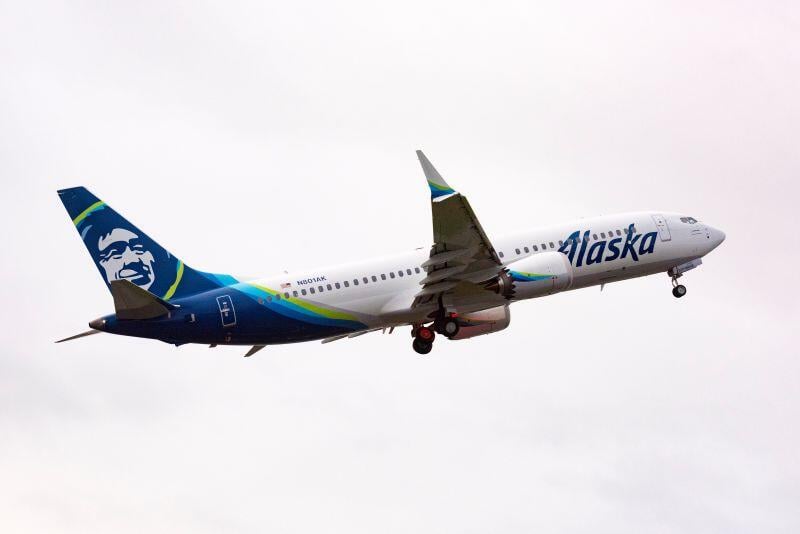
Alaska Airlines

Alaska Airlines Boeing 737-8

Credit: Alaska Air Group

It is hard to find a large organization that is not betting big on AI. Aviation’s examples are endless and go all the way up to regulators using live and historical flight data to flag risks and make changes.

AI is not magic. It is also adept at the type of fabricating that no business welcomes. But give the right tool a high-quality dataset, clearly defined rules and equally clear guardrails, and it can do things much faster than people can.

No surprise, then, that aircraft maintenance-related AI applications are all the rage.

Alaska Airlines recently made a big bet on Tailsight, an AI-powered maintenance planning tool. The airline didn’t just become a customer—it struck a deal to partner with the Texas-based software provider.

The goal is simple: Tailsight will use Alaska’s data and maintenance schedule to determine the best work packages for aircraft with upcoming downtime and ensure both the right parts and people are available.

It sounds simple, but the airline often finds itself with too many mechanics assigned to an overnight shift, for instance. Worse, it finds the parts for a must-do job weren’t sent to the required station. That can trigger an aircraft on ground (AOG) situation.

“We don’t want to have to pay for that,” Alaska Managing Director of Supply Chain Operations Stephanie Cootsona tells Aviation Week. “By having Tailsight and giving us the ability to forecast when the aircraft will be in the right position at the right location with the right type of technician, we can pre-plan.”

Tailsight proactively rearranges notional work packages to align factors such as mechanic availability with an aircraft’s planned routing. Working with Boeing and the FAA, the long-time Boeing 737 operator has optimized its maintenance program, adjusting task intervals and changing when work is done. AI helps the airline cover it all without over-staffing or stocking unnecessary spare parts.

“We’ve changed some of our maintenance practices, where things that used to be part of a heavy maintenance check we’re now doing on the line,” Cootsona says. “If you’re going to do that, you have to make sure you have the materials on hand.”

The changes require tracking, down to the tail number, what an aircraft needs and when the best opportunity is to get the work done. Lead times on parts means planning has to stretch out weeks. Extra parts and extra mechanics mean excess cost.

“We have to be coordinating with the materials team well in advance [of a heavy maintenance visit] so that they can do pre-draw and send materials to an MRO,” Cootsona says. “However, if we’re not also thinking about what work is going to be done on the line [before the heavy check visit], we can inadvertently shortchange ourselves by sending pre-draw material to the shop and not thinking about what’s coming up for the line.

“Tailsight gives us the ability to forecast when the aircraft will be in the right position at the right location with the right type of technician,” she continues. “We can pre-plan for those parts, support the pre-draw for the MRO, and still make sure that we’re having parts in stock in case there is a true AOG, and not have to use expedited purchasing.”

One of Tailsight’s keys is the ability to ingest structured and unstructured data—even natural-language notes such as out-of-service tooling at certain locations—and factor it into its planning. Starting with quality data is key for any successful AI application.

Another must-have: workflow integration.

“The higher you get on the criticality of the outcome, the more you need to have your control point and the human in the loop defined,” Akkodis CEO Jo Debecker tells Aviation Week.

The digital engineering consultancy has partnered with Microsoft to roll out its own maintenance planning optimization tool and has landed several unnamed operators and MRO providers as customers, Debecker says. It sees significant opportunity in aerospace, and the aftermarket in particular—and not just within large organizations.

“Scale is not the key,” he says. “It’s having your business process, your data and your guardrails, pointing back to the control points. If you have those two things in order, you can implement AI. You do not need to be the biggest shop.”

Sean Broderick

Senior Air Transport & Safety Editor Sean Broderick covers aviation safety, MRO, and the airline business from Aviation Week Network's Washington, D.C. office.