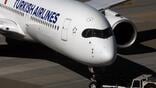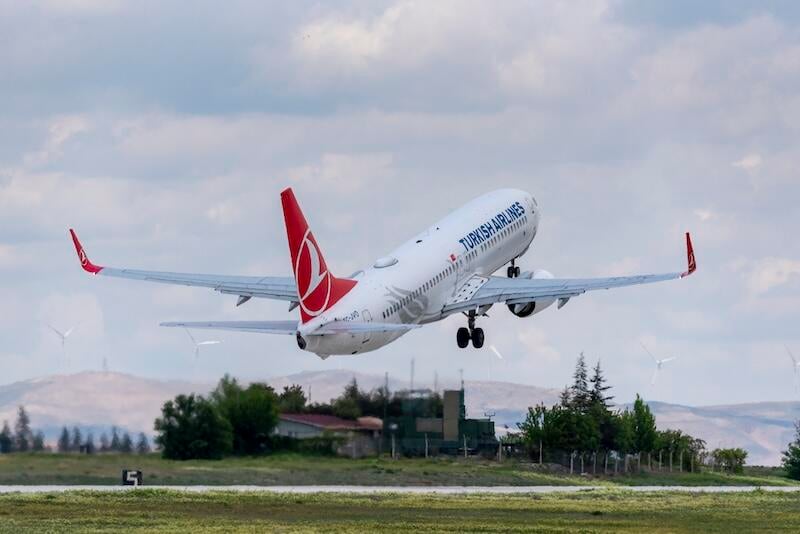
Turkish Airlines has confirmed plans to add Chengdu to its network in November, expanding its mainland China footprint to four destinations.
The Star Alliance member will open a 3X-weekly route between Istanbul Airport and Chengdu Tianfu International Airport on Nov. 11 using Boeing 787-9 aircraft. Outbound flights will operate on Wednesdays, Fridays and Sundays, with return services on Mondays, Thursdays and Saturdays.
Chengdu will join Beijing Capital International Airport, Shanghai Pudong International Airport and Guangzhou Baiyun International Airport in Turkish Airlines’ mainland China network. The new service will introduce additional competition on the TFU-IST sector, which is already served by Sichuan Airlines.
Chengdu is one of China’s largest metropolitan areas, with a population of more than 21 million, and has developed into a major center for technology, manufacturing, logistics and aviation. Its location also gives Turkish access to a market beyond the coastal cities served by its existing mainland China network.
The planned addition follows an increase in Turkish Airlines’ Asian capacity. OAG Schedules Analyser data shows the carrier is offering approximately 3.49 million one-way seats from Istanbul to Asian destinations during summer 2026, up 17.8% from about 2.96 million a year earlier. In mainland China, Turkish is offering approximately 376,800 one-way seats across its Beijing, Shanghai and Guangzhou routes during summer 2026, an increase of 71.5% from summer 2025.
The expansion reflects a broader reallocation of capacity toward Asia. On Turkish Airlines’ second-quarter earnings call earlier this month, CFO Metin Gülşen said higher fuel prices, changing overflight restrictions and conflict in the Middle East had required repeated network adjustments.
“Asia remained our strongest performing market during the second quarter,” Gülşen said. “Demand continued to benefit from changes in competitive landscape following the conflict in the Middle East, as a portion of passengers shifted away from the Gulf toward alternative routings. We responded by further expanding capacity across key markets, including China, Hong Kong, Thailand, among others.”
The airline increased Asian capacity by 7% compared with its initial plan and by 18% year over year, while the region’s load factor improved by 1.8 percentage points.
Turkish Airlines recently confirmed that from Oct. 26, it plans to reroute its 5X-weekly Istanbul-Sydney service through Singapore, replacing the existing Kuala Lumpur stop and allowing it to sell tickets on the Singapore-Sydney sector under fifth-freedom rights.
The change will increase Turkish Airlines’ Singapore operation from 17X-weekly to 22X-weekly while reducing Kuala Lumpur from 19X-weekly to 14X-weekly. Turkish also operates 3X-weekly flights to Melbourne via Singapore, consolidating both Australian routes over the same Southeast Asian gateway. The Sydney service will continue to use an Airbus A350-900 aircraft.
Turkish Airlines and subsidiary low-cost airline AJet carried 54 million passengers during the first seven months of 2026, up 5.4% from a year earlier, as available seat kilometers increased 4.7% to 161.2 billion. The group carried 9.5 million passengers in July alone, while its fleet reached 563 aircraft by the end of the month.

Related Content