Kristi Noem, the U.S. Homeland Security secretary fired March 5 by President Donald Trump, had a sweeping impact on U.S. airport security during her 13-month tenure.
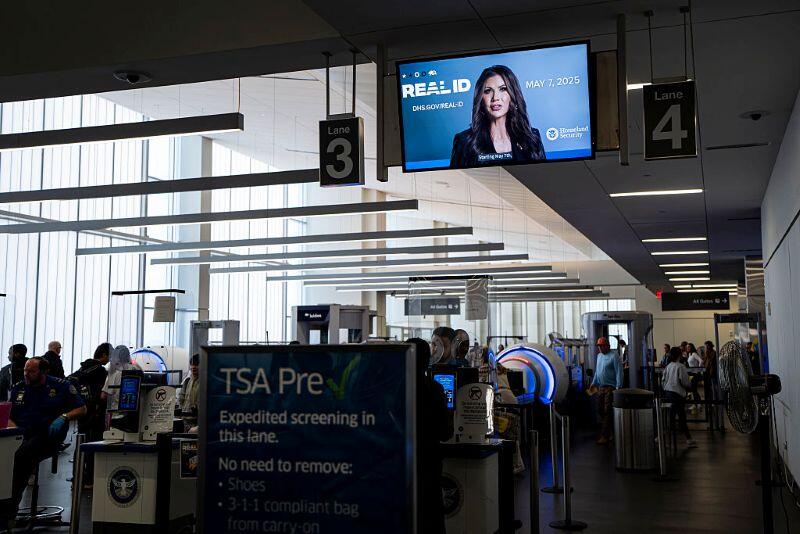
Noem was front and center as the Transportation Security Administration (TSA), part of the Homeland Security Department (DHS), made a series of changes to airport screening checkpoints aimed at speeding up throughput and lowering travelers’ stress. “My goal would be that someday someone could walk into an airport, walk through a scanner and go right to their airplane,” Noem said in July 2025, shortly after the TSA ended its shoes off policy in place for nearly 20 years. “That’s the goal, and that’s the challenge I put in front of TSA.”
Some of the changes implemented under Noem were already under discussion before the Trump administration took office. But she accelerated the process in a high profile way, holding press conferences at airports to showcase changes.
In a statement released after Trump fired her, Noem said DHS had “ushered in the golden age of travel” under her leadership.
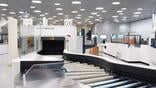
In addition to the shoes off policy change, TSA is allowing passengers to keep liquids and laptops in carryon bags at checkpoint lanes where computed tomography (CT) baggage scanners are deployed, another restriction that had been in place for two decades. A TSA spokesperson has confirmed to Aviation Week that “passengers screened in security lanes with CT units do not need to remove their travel-size liquids bag or electronics.”
TSA also is significantly expanding allowing passengers to use biometric facial recognition as their sole form of identification while passing through checkpoints, soon to be available to eligible passengers at 65 airports. TSA and Customs and Border Protection (CBP), also part of DHS, are conducting pilot programs allowing arriving international passengers to bypass security rescreening and baggage rechecking before boarding a connecting flight at a U.S. hub.
Taken together, dramatic differences can be seen at TSA checkpoints compared to when Noem was sworn in on Jan. 25, 2025. At airport checkpoints with CT scanners, even passengers who are not part of the PreCheck trusted traveler program are being allowed to proceed through checkpoints with their shoes on and liquids and laptops staying in carryon bags. Passengers taking part in the PreCheck Touchless ID program at airports across the U.S. no longer have to present physical identification.
But questions remain over whether Noem moved too fast in implementing the changes. Ending the shoes off requirement, perhaps her most well-known checkpoint initiative, has recently come under scrutiny over whether changing the policy has created a security problem.
The Wall Street Journal recently reported that the DHS inspector general warned Noem in a classified report in November 2025 that some body scanners deployed at U.S. airports cannot adequately scan shoes and that the change in policy had created a serious security vulnerability. After being briefed on the report, Noem reportedly declined to address the issue and blocked the IG report from being publicly released.
“Thanks to our cutting-edge technological advancements and multi-layered security approach, we are confident we can implement this change while maintaining the highest security standards,” Noem said when the shoes off requirement was ended.
Noem also made the decision in February to abruptly shut down the PreCheck and Global Entry programs when DHS’s funding lapsed after Republicans and Democrats in Congress stalemated over immigration enforcement policies. She quickly backtracked on a full closure of PreCheck, but Global Entry remains suspended and TSA is evaluating PreCheck’s availability on a “case by case basis” depending on “staffing constraints” at particular airports.
Around 50,000 TSA airport security officers have been working without pay since Feb. 14, raising fears that increased call outs will lower staffing levels at checkpoints and potentially cause flight disruptions.
On the morning of March 5 at Hartsfield-Jackson Atlanta International, the world’s busiest airport, both Global Entry and PreCheck were closed.
It is unclear whether Noem’s ouster will ease the path toward Democrats and Republicans reaching agreement to end the DHS shutdown.

Related Content