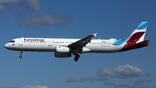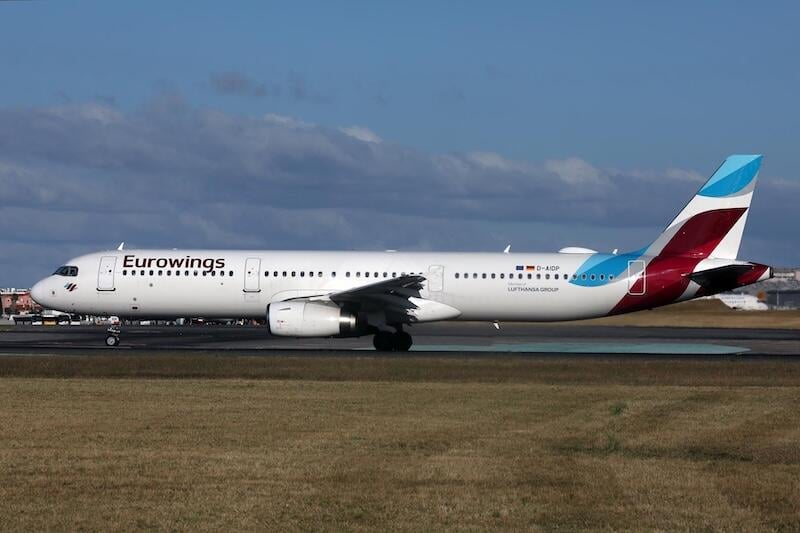
Eurowings will launch flights to Damascus from four German cities in January 2027, becoming the first wholly owned Lufthansa Group airline to serve Syria since flights were suspended during the civil war.
The airline will operate five flights per week to the Syrian capital, comprising a 2X-weekly service from Dusseldorf and a 1X-weekly frequency from Berlin, Hamburg and Stuttgart. Hamburg-Damascus will open Jan. 11, followed by Dusseldorf on Jan. 12, and the Berlin and Stuttgart routes on Jan. 13.
Damascus is a new destination for Eurowings, which said the routes would mainly target passengers visiting friends and relatives (VFR) or traveling to their country of origin.
The planned launch represents a further expansion of the airline’s VFR network, which encompasses more than 60 routes to over 20 destinations. Eurowings will also begin serving Baghdad in December, operating 2X-weekly from both Berlin and Dusseldorf. Its existing network in the segment includes destinations in Armenia, Georgia, Iraq, Lebanon, Morocco, Tunisia and the Balkans.
OAG data shows Eurowings has about 8.26 million two-way seats scheduled across its network during winter 2026-27, up 1.7% from 8.12 million a year earlier. Dusseldorf is the largest of the four bases involved in the Damascus expansion, accounting for approximately 3.21 million seats during the season.
Eurowings will enter an increasingly competitive Germany-Syria market. Berlin is already served from Damascus by Syrian Airlines and German leisure carrier Sundair, while Dusseldorf has flights operated by LEAV Aviation and Syrian carrier Fly Cham.
Sundair began Berlin-Damascus service in August, while Syrian Airlines opened its 2X-weekly route on Nov. 10. LEAV launched Dusseldorf-Damascus flights in July and is expanding its Syrian network during the winter to include services from Cologne/Bonn and Munich to Damascus. However, Hamburg and Stuttgart do not currently have scheduled nonstop services to Syria, according to the OAG data.
The move marks the return of a wholly owned Lufthansa Group airline to Syria since the December 2024 fall of former Syrian President Bashar al-Assad’s regime. Lufthansa and Austrian Airlines previously served the country but withdrew as security deteriorated during the early stages of the civil war in 2011.
However, Lufthansa already has a presence in the market through SunExpress, its joint venture with Turkish Airlines. The Turkish carrier flies to Damascus and Aleppo from Antalya and Izmir.
Eurowings will also follow other European Union carriers into Syria’s recovering market. Romania’s Dan Air launched Bucharest-Damascus flights in 2025, but flights are grounded after entering insolvency proceedings in November. Greece’s Aegean Airlines will begin flying between Athens and Damascus on Dec. 2, operating up to four times per week.
The expansion comes as Syria’s international aviation market continues to recover. Airlines scheduled approximately 1.8 million departing seats from Syrian airports between January and November 2026, up 68.5% from about 1.07 million during the same period in 2025. The number of nonstop airport pairs increased from 31 to 55.
Germany has emerged as one of the main markets for restored service. Sabre Market Intelligence estimates that about 113,500 passengers traveled between Germany and Syria in the 12 months through June 2026, making Germany Syria’s second-largest European country market after Turkey.
Dusseldorf was the largest German city market, generating approximately 29,400 passengers, while Berlin accounted for about 22,900. Germany’s 2025 microcensus also found that roughly 732,000 people living in the country had migrated from Syria for reasons including displacement, asylum or the pursuit of international protection.
However, the size of that population may not translate directly into demand for short visits. The German government has decided against allowing brief trips to Syria without possible consequences for a traveler’s protection status. Unless there is a compelling reason for the journey, such travel can create a presumption that protection is no longer required and prompt authorities to review the person’s status.

Related Content