Germany’s aviation market is heading into the northern winter with fewer seats than a year ago, widening the divide between Europe’s largest economy and the rest of the continent.
OAG Schedules Analyser data shows airlines will offer about 47.95 million departure seats from German airports during winter 2026-27, down 1.3% year over year and equivalent to 88% of pre-pandemic capacity. Elsewhere in Europe, capacity is expected to reach a record 118% of 2019 levels.
The weakness follows a subdued first half of 2026, when German airports handled 97.7 million passengers, down 0.8%. Although premium and leisure demand remains resilient, high taxes, charges and operating costs continue to affect where airlines deploy aircraft.
“The main structural reason is Germany’s high level of government-imposed aviation costs,” German aviation industry association BDL spokesperson Alexander Klay told the September/October issue of Air Transport World. “Airlines compare locations across Europe when deciding where to station aircraft and add capacity, and Germany remains one of the most expensive markets in terms of taxes and charges.”
Government-imposed aviation costs increased by €1.1 billion ($1.3 billion) during 2025 to €4.3 billion, according to BDL. The association estimates that these charges add about €30 to a typical one-way European fare from Germany.
The government has started to reverse some increases, reducing the short-haul aviation tax by €2.50 to €13.03 per passenger from July 1. Medium- and long-haul rates were also lowered, alongside efforts to reduce security and air traffic control costs.
However, the winter schedule suggests the measures have yet to prompt a broad capacity response. Domestic seats will fall 8.8% to 6.43 million, accounting for virtually all the market’s net contraction, while international capacity remains flat at 41.52 million.
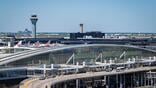
Frankfurt Airport capacity declines 2.7% to 14.72 million departure seats, while Munich falls 2.4% to 9.9 million and Berlin Brandenburg drops 1.7% to 5.81 million. By contrast, Dusseldorf grows 4.2%, Cologne Bonn 6.7% and Dortmund 24.3%.
More News And Analysis From Routes World 2026
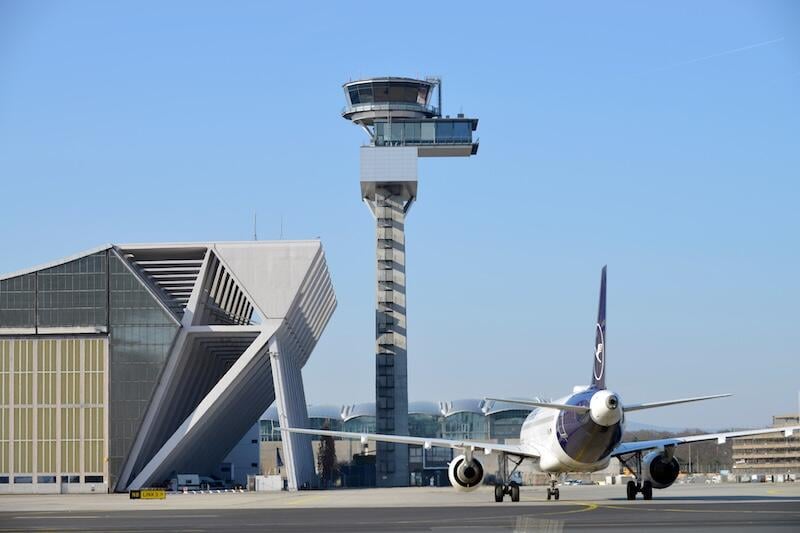
Germany’s two largest hubs are nevertheless investing for longer-term international demand. Frankfurt has opened its €4 billion Terminal 3 in April, initially providing annual capacity for 19 million passengers, while Munich has added a Terminal 1 pier designed primarily for non-Schengen airlines outside Lufthansa Group.
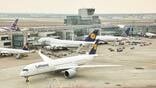
Lufthansa is also reshaping its German operation rather than restoring capacity across the board. Mainline seats will fall 9.3% this winter, while Lufthansa City Airlines expands 69.1% and leisure subsidiary Discover Airlines grows 28.7%. The strategy directs flying toward lower-cost units while prioritizing long-haul services, premium traffic and hub feed.
International leisure and VFR markets provide some brighter areas. Capacity to Spain rises 3.3% to 5.4 million seats and Turkey grows 4.9% to 3.77 million. Morocco, China, Portugal and Albania also record increases. However, seats to the UK, Switzerland, France and Ireland are lower.
Germany therefore retains two major global hubs, a large premium market and a strong cargo sector, but the cost environment continues to limit its recovery and leaves thinner domestic and regional links particularly exposed.
“The Federal Government has taken important first steps. The relief on aviation tax helps. The drive to reduce bureaucracy is also the right approach,” said Lars Redeligx, Dusseldorf Airport CEO and BDL president. “Now we need further action.”

Related Content