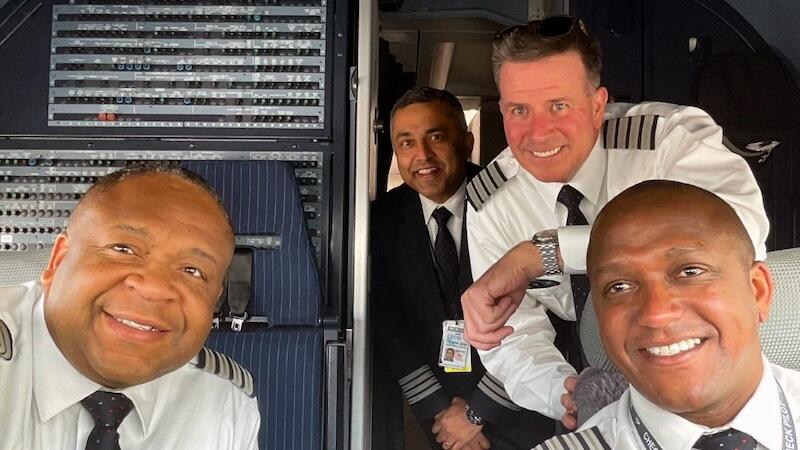
American airlines check pilots (from left) Larcell Armstrong, Gautam Samant, Danny Ryan and Carleton McQueen.
Credit: American Airlines
American Airlines is preparing pilots to fly Airbus A321XLR aircraft on transatlantic routes next year, including operating a series of training flights across the North Atlantic in September using A321neo aircraft. American has 50 A321XLRs on order, but deliveries have been delayed. The airline...

Subscription Required
American Airlines Training Pilots To Fly A321XLR Transatlantic Flights is published in Aviation Daily, an Aviation Week Intelligence Network (AWIN) Market Briefing and is included with your AWIN membership.
Already a member of AWIN or subscribe to Aviation Daily through your company? Login with your existing email and password
Not a member? Learn how to access the market intelligence and data you need to stay abreast of what's happening in the air transport community.
Related Content