This article is published in Aviation Week & Space Technology and is free to read until Nov 26, 2026. If you want to read more articles from this publication, please click the link to subscribe.
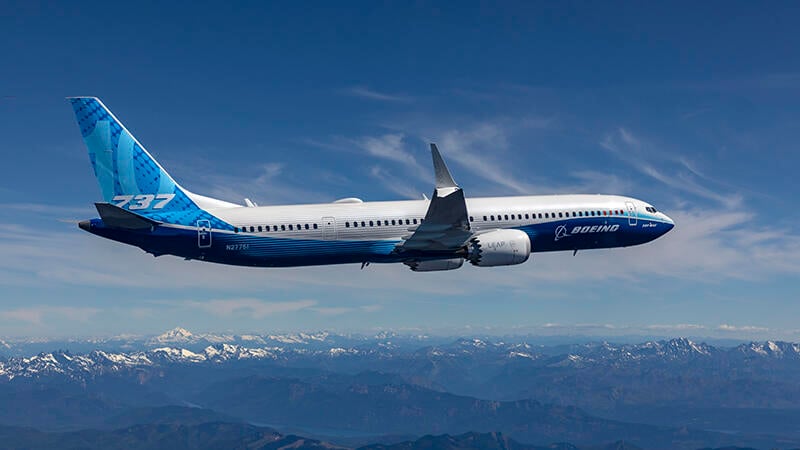
If airlines do not accelerate capacity growth again—particularly on domestic routes—the passenger narrowbody market is at risk of oversupply.
In total, more than 29,000 aircraft are in the global passenger fleet, 20,195 of them narrowbodies, according to Aviation Week’s Fleet Discovery database. Depending on the variant, narrowbodies such as the Boeing 737 and Airbus A220 and A320 typically seat 130-220 passengers and have ranges of 3,000-4,000 nm, making them well suited to domestic and regional routes.
In commercial aerospace, passenger air traffic demand is measured in revenue passenger kilometers (RPK), while available seat kilometers (ASK) cover capacity or supply. As in any industry, the goal is to find and maintain an equilibrium. In 2010-19, global domestic capacity, measured in ASKs, expanded at a 5.3% compound annual growth rate (CAGR), roughly in line with 6% for domestic RPKs, according to the International Air Transport Association. China drove much of the strong growth during that period, with domestic RPKs up at an 11% CAGR.
Today, the macroenvironment is volatile. Globally, passenger air traffic and capacity are roughly flat this year. China and the U.S. are vital domestic markets for the industry, accounting for about 25% of global passenger air traffic. However, unlike in the 2010s, China is no longer the growth market it once was, and the U.S. domestic market has matured.
As China’s economic growth has decelerated, so has domestic passenger air traffic demand. Last year, RPKs rose in the country’s domestic market by 4.7%, and 2026 data shows further deceleration. Through August, Chinese domestic RPKs were up 3.1%, trailing the 3.3% growth in capacity.
Meanwhile, U.S. airlines have been flagging excess domestic capacity for years. This year, RPKs and ASKs are down in the domestic market; ultra-low-cost carrier Spirit Airlines ceased operations in May. Carriers elsewhere are trimming capacity growth plans to boost load factors and fares in order to offset higher jet fuel costs.
Across the active passenger narrowbody fleet, 18,963 aircraft are in service or in short-term parking, and can be readily deployed for flight. The remaining 1,232 narrowbodies are in long-term storage. This cohort includes roughly 500 Pratt & Whitney geared turbofan (GTF)-powered A220s and A320neos, many of which are grounded while undergoing shop visits to inspect and replace parts containing contaminated powdered metal.
Wall Street analysts expect Airbus and Boeing to deliver more than 1,400 narrowbodies next year, equivalent to 7% of the passenger narrowbody fleet. If another 250 GTF-powered aircraft return to service in 2027, the market will need to absorb 1,650 young narrowbodies.
I am not a rocket scientist, but it is hard to imagine airlines considerably expanding their narrowbody fleets when passenger air traffic in the two largest domestic markets is barely growing. With a steady supply of new jets and slower growth, the market is facing a surplus of narrowbody aircraft within the next few years.
That risk is particularly acute as Airbus aims to increase production of A320neos to 75 units per month and A220s to 13 per month, while Boeing targets a monthly rate of 63 for the 737 MAX. At those rates, the airframers would deliver 1,600-1,700 narrowbodies annually.
Several things could happen to help maintain equilibrium in the narrowbody market. Airlines could reaccelerate their capacity growth plans, but that seems unlikely. Expanding capacity could put pressure on fares as investors push airlines to improve their profit margins.
Another option is to defer aircraft deliveries, but that also seems unlikely. New 737 MAXs and A320neos consume about 15% less fuel than older 737NGs and A320ceos. In addition, taking delivery of a new aircraft can be cash-flow-positive via a sale-leaseback transaction. When airlines enter into aircraft purchase agreements, they must make a series of cash deposits before delivery. Like a cash-out home refinancing, a sale-leaseback allows a carrier to recover the deposits it paid before delivery.
The easiest way to preserve equilibrium in the narrowbody market is to retire older aircraft. Historical data show that the passenger narrowbody fleet grows roughly 3% annually. If that trend holds and Airbus and Boeing deliver 1,600-1,700 narrowbodies per year, retirements will need to increase. After several years in which less than 2% of the narrowbody fleet was retired annually, the industry should prepare for a prolonged period in which that rate could double and exceed 4-5%.

Related Content