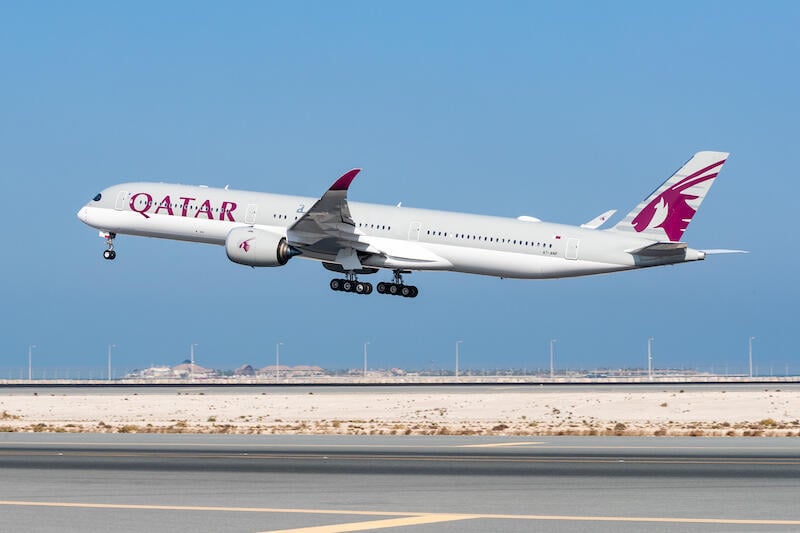
Qatar Airways Airbus A350-1000
Airbus recently completed the first flight of the A350F, which, aside from Beluga XLs and Multi-role Tanker Transport (MRTT) aircraft, is Airbus’ first dedicated freighter aircraft built since 2017. Flight Friday looks at how the A350 is doing in commercial service.
The very first A350 delivery was to Qatar Airways in December 2014. There have been almost 750 A350 aircraft deliveries since then.
The A350-900 in-service fleet (ISF) has grown from around 480 aircraft at the start of 2024 to over 600 today, representing more than 25% growth in the ISF. Total aggregated cycles have also grown in this period by a little over 10%.
The larger A350-1000, with first deliveries in early 2018—again to Qatar Airways as the launch customer—has seen its ISF grow 43% from 80 aircraft back at the start of 2024 to today. This time, however, the monthly cycle count has also risen 43% from the start of 2024.
Recently, the aggregated cycles have been impacted by the conflict in the Middle East, as carriers in the region account for more than a third of the A350-1000 fleet and 10% of the A350-900 fleet.
As operators navigate the recovery, the A350 is favored for operating flights due to its fuel efficiency compared to some of the legacy aircraft in their respective fleets.
This data was put together using Aviation Week’s Tracked Aircraft Utilization database.

Related Content