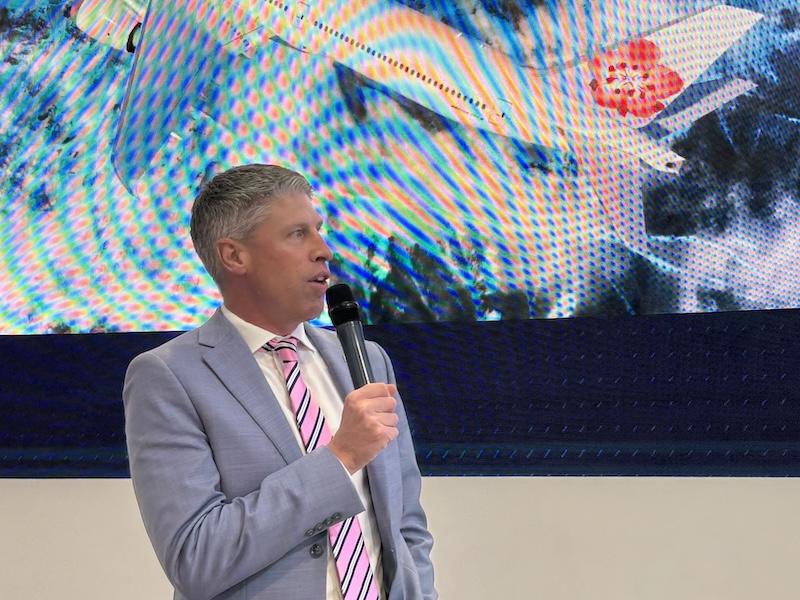
Boeing's Darren Hulst.
SINGAPORE—Airlines in Southeast Asia will need more than 4,800 new aircraft from 2025 to the end of 2044, with narrowbodies accounting for 80% of those orders, according to Boeing.
The U.S. manufacturer released an updated commercial aircraft 20-year market outlook at the Singapore Airshow on Feb. 4 that was focused on the Southeast Asia region.
Darren Hulst, Boeing Commercial Airplanes' SVP of marketing, said key takeaways in the outlook include a need in the region for 3,925 narrowbodies, 910 widebodies, 20 freighters and 30 regional aircraft—adding up to a total of 4,885 airliners.
Partly driving that demand is the fact that airlines in the region now have the second oldest single-aisle fleet, with an average age of 10.5 years, that carriers will be looking to retire and replace. And it is also based on Boeing's expectation that the region will see a 7% year-on-year traffic increase over the two decades.
Boeing also sees a need in Southeast Asia over 20 years for 250,000 new, skilled airline workers, including 62,000 more pilots, 78,000 more technicians and 103,000 more cabin crew. That will drive a need for more training and simulator academies in the region, Hulst told ATW in a Window Seat podcast recording this week.
There are variances in air traffic capacity growth from country to country, Hulst said. Among the fastest growing, in terms of capacity, are countries like Cambodia and Vietnam, while Indonesia’s capacity is still 20% lower than it was before the COVID pandemic. But Hulst said Indonesia also offered a “huge potential” for future growth and airliner sales.
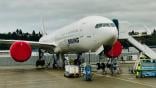
Hulst briefly mentioned the long-delayed Boeing 777X program, saying 777-9 certification was expected in the second half of 2026 and the aircraft had logged 4,400 flight-test hours. The 777X has so far gained 624 orders, with many customers in the Asia-Pacific region.
“While we expect [certification] in the second half of this year, it’s up to the regulator and, when it comes to taking delivery of the aircraft, up to the customer,” Hulst told reporters.

Related Content