This article is published in Air Transport World part of Aviation Week Intelligence Network (AWIN), and is complimentary through Aug 24, 2026. For information on becoming an AWIN Member to access more content like this, click here.

Boeing BCA CEO Says Stability First, Then Optimization

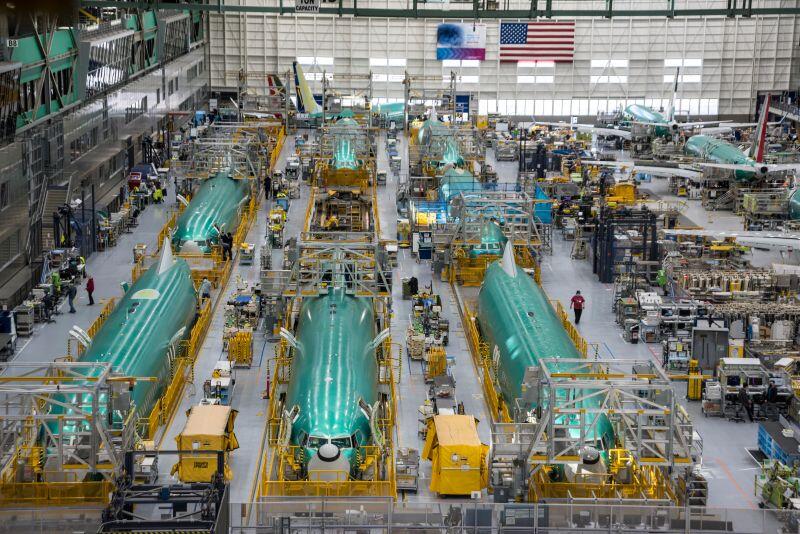
Boeing 737 factory in Renton, Washington.

Boeing 737 factory in Renton, Washington. 

Credit: Boeing

Boeing sought to temper expectations for its appearance at the Farnborough Airshow, saying that new orders were not its main preoccupation for the coming week.

“Our priority is not order announcements,” Boeing Commercial Airplanes CEO Stephanie Pope told a pre-show media briefing.

“Backlog is incredibly strong. Demand is not our issue. If we announce some orders along the way, we’ll celebrate with our customers based on if they want to do that.

“At the airshow we have a couple of priorities. One is to listen to our customers. We’re going to understand what their challenges are and update them…I think we have a lot to share and update them on.”

Customers, she added, were less worried about more, or new, technology, and more concerned about the durability of aircraft currently coming off the final assembly lines.

Next-generation aircraft would have to wait for several factors to come into alignment. “We’ve got to have our financial capacity together. The market has to be ready, meaning the customers see the value equation, and the technology has to drive that value equation for the customer. We’re going to…continue to work to understand that. And when the technology is ready, we’ll be ready.”

Asked where the constraints or bottlenecks were in the company’s supply chain, she said the situation was improving but some problems remained. “I think the supply chain is still a little bit volatile, and so that’s why I’m really proud that we’ve changed the way we work with our suppliers over the last couple of years. That was a big priority for me coming in,” Pope said.

Pope said that Boeing was sharing lessons it had learned internally in areas such as quality and training with its suppliers “and in many places we’re even sending experts in to partner up with them. That’s something we’re going to have to continue to monitor.”

Asked specifically about the integration of aerostructures business Spirit, “Overall, integration is going good,” Pope said. “We knew Spirit very well. We had a lot of people down there and inside of their factory before we even closed the deal.”

Like Boeing over the past two years, Spirit had to be stabilized before it could optimize in areas such as increasing production, she said. The Wichita-based aerostructures company was criticised for faulty workmanship that contributed to Boeing’s problems in recent years. “Spirit too has been stabilizing and now you have to optimize,” Pope said.

“We’re seeing a pretty significant improvement in quality, but there’s still more work to get it back in position and get it position and get it altogether.”

Alan Dron

Based in London, Alan is Europe & Middle East correspondent at Air Transport World.