This article is published in Air Transport World part of Aviation Week Intelligence Network (AWIN), and is complimentary through Apr 10, 2026. For information on becoming an AWIN Member to access more content like this, click here.
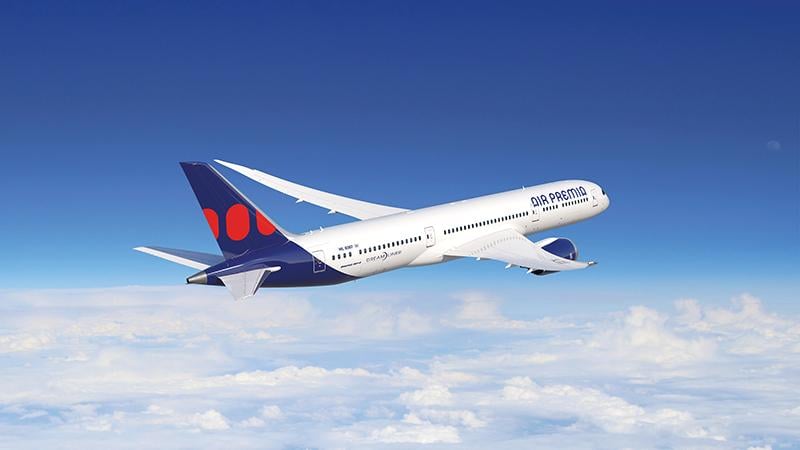
Air Premia’s Boeing 787-9 fleet has experienced supply chain constraints; the carrier is considering augmenting with Airbus A330s or A350s.
Through the 2010s, South Korea’s first and largest LCC, Jeju Air, saw solid growth in a market long dominated by full-service carriers. But founding CEO Kim Jong-chul and the airline’s then-consultant Kwangeun Park believed the LCC market would eventually saturate and become a red-ocean segment. Kim sought to acquire widebodies and enter the long-haul market, but the proposal did not materialize. He subsequently left and founded Air Premia in 2017, establishing South Korea’s first long-haul “hybrid” carrier.
Park—now Air Premia’s executive VP and chief strategy officer—says the airline aims to challenge Korean Air’s dominance in long-haul markets while navigating geopolitical and supply chain constraints.
“Seoul–Los Angeles is such a big market, but only two airlines were serving the route—Korean Air and Asiana. There needed to be more competition, and we became the first mover to the US market with a hybrid concept,” Park said. Air Premia launched its inaugural long-haul service to Los Angeles in October 2022 and now flies to New York Newark, Honolulu and San Francisco.
Before the pandemic, Seoul actively issued new airline licenses to meet rising demand and spur employment. The result was an increasingly crowded market—now with roughly 10 carriers—struggling with low profitability.
“The consolidation of Korean Air and Asiana is great for them to become a global player,” Park said. “But domestically, they’re a big player in a small market, and they have many cards to play,” he added, pointing to the flag carrier’s LCC subsidiaries Jin Air, Air Seoul and Air Busan.
ROBUST FINANCIALS
Air Premia began operations in 2021 during the height of the pandemic, facing severe financial headwinds. Because its first aircraft—originally scheduled for 2019—was delayed until 2020, the airline received compensation that helped soften early losses.
Operating mainly belly cargo on international routes during its first year, Air Premia “almost died,” Park admitted, before receiving private equity investment that kept the startup afloat. Cost considerations also prevented the airline from flying domestic routes during the pandemic, since widebody economics are tied to flight cycles.
The airline has since rebounded. It posted $260 million in revenue and $12 million in operating profit in 2023, rising to $340 million in revenue and $28 million in operating profit in 2024. Park projected 2025 revenue to reach $414 million, but expected weaker profitability due to a “perfect storm” of challenges.

Air Premia’s Rolls-Royce-powered Boeing 787-9 fleet experienced groundings in the first half of 2025, though the issue has eased. Meanwhile, strict US immigration policies sharply reduced travel demand between South Korea and the US—a market that accounts for 80% of the airline’s revenue—resulting in a 70–80% decline in its original target revenue. Costs also rose as a result of the introduction of four new aircraft in 2025.
Air Premia is majority-owned by tire distribution company Tire Bank, whose founder has long held ambitions of running an airline. Tire Bank acquired an additional 22% stake in Air Premia in May 2025 and now controls 70% of the company. Park was an IPO was still planned to inject more capital into the airline, with a target listing year of 2028.
FLEET AND PRODUCT
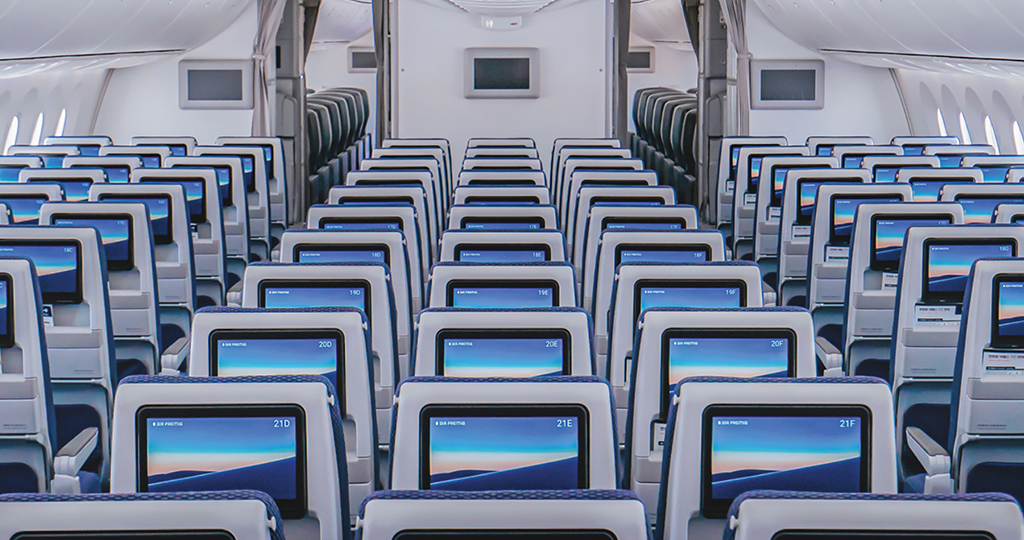
To bolster yields, Air Premia aims to increase ancillary revenue from 6.2% of total income to 10%. Half of its existing ancillary revenue comes from change and cancellation fees, 35% from seat upgrades and baggage fees, and the remainder from inflight duty-free sales. Unlike most LCCs, Air Premia offers seatback inflight entertainment and onboard Wi-Fi to attract both cost-conscious passengers and those accustomed to such offerings, Park said.
The carrier originally targeted a fleet of 15 787-9s by 2027, but supply chain disruptions have made that increasingly unrealistic. Park noted that maintaining a single-type widebody fleet was becoming more difficult, prompting Air Premia to open discussions with Airbus for fuel-efficient long-haul aircraft such as the A330-900 and A350-900. Additionally, the airline is mulling the possibility of moving away from an origin-destination model to a hub model, where a feeder network is essential to fill seats.
With that in mind, the airline is looking at narrowbody aircraft to serve regional markets like Hong Kong, Japan, Singapore and Vietnam—a move that would also give the airline the option to up-gauge to widebodies on those routes if demand requires it.
Meanwhile, Air Premia’s network focus remains on the US market to serve the strong Korean diaspora. The carrier announced it will launch service to Washington Dulles in April 2026. Park said the US East Coast was still dominated by Korean Air and that Air Premia was considering points further south and west like Chicago, Dallas and Atlanta.
While air rights limitations are preventing the airline from expanding into Europe and China, where slots in the Chinese airports also remain constrained, Air Premia is pursuing interline partners to broaden its North American footprint, with discussions underway with US carriers Alaska Airlines, Breeze Airways and Southwest Airlines.
“Entering an alliance will be a long-term goal and a huge leap for us,” Park said. “There are still some challenges but the homework now is to work on codeshares and interlines to build up our system capability.”

Related Content