This article is published in Aviation Daily part of Aviation Week Intelligence Network (AWIN), and is complimentary through Jun 24, 2026. For information on becoming an AWIN Member to access more content like this, click here.
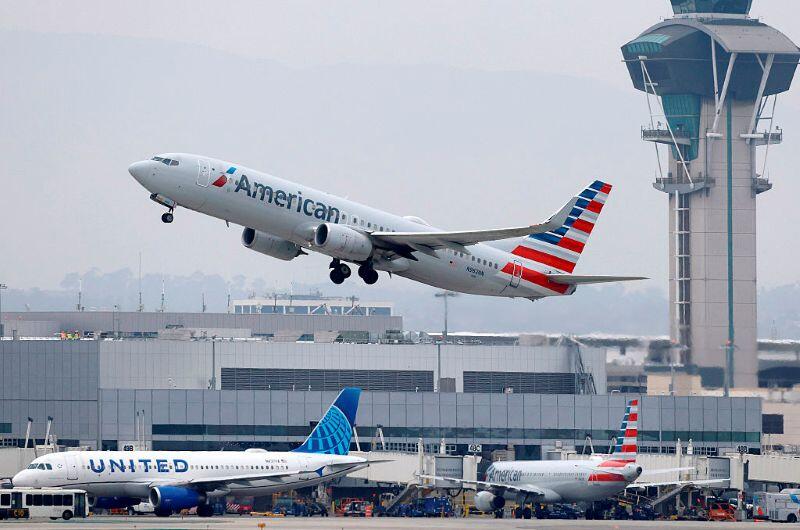
FAA’s plan for its new air traffic management software sees the initial operational demonstration focusing on high-level en route airspace before expanding as the process is validated.
Initial deployment of Strategic Management of Airspace Routing Trajectories (SMART) remains on track for September, FAA Senior Certification Advisor and technical pilot Steve Fulton said at the FAA/European Union Aviation Safety Agency (EASA) annual safety conference June 15. It will be a “bounded introduction,” limited to air traffic at 24,000 ft. and above.
“We’re going to introduce this strategic coordination of air traffic at high altitude,” he said. “When the airplanes are en route, we’ll be deconflicting the projected trajectories from each aircraft, and we’ll be providing [updated] arrival times.”
Fulton compared the plan to FAA’s trajectory-based operations (TBO) enhanced with artificial intelligence (AI) and cloud computing “to sharpen predictions of where the airplanes will be in space and time.” TBO’s original vision was to give air traffic controllers more accurate information to help them deconflict traffic.
SMART is seen as further enhancement, not a human replacement. The FAA envisions the software as a workload reduction tool for air traffic controllers, introducing assistance akin to what pilots get with modern flight decks.
“The flight crew is moving from this real-time integrator of information to a manager of the system, intervening where necessary,” Fulton said. “Doing that for air traffic [controllers] has not been possible because we’ve kept our humans in a real-time, integration-of-information mode. There are decision support tools, there are things that have been added incrementally, but we want to move this faster. That’s the reason for this.”
The FAA’s plans are ambitious. The agency has not announced a vendor for SMART; Air Space Intelligence, Palantir, and Thales developed demo versions as part of the competition.
Beyond naming a vendor, key functionality details still need defining. Among them is how route changes will be delivered to the aircraft.
“We’re using connectivity with the aircraft through a variety of options,” Fulton said. “We can push through airborne reroute [but] we’re respecting the authority of the controller. But those are the types of details we’re working out with our industry partners, how they want us to connect to their airplanes.”
Fulton acknowledged some stakeholders are concerned the FAA’s pace is too brisk.
“It’s not often you hear industry say to the FAA, ‘You’re going too fast,’ but we’re getting that from our operator partners as we’re working with them to be able to deploy this in September,” he said. “But we need to be able to validate very quickly that the core concept of being able to strategically deconflict the entire [national airspace system] using cloud computing.”

Related Content