This article is published in Business Aviation & AAM Report part of Aviation Week Intelligence Network (AWIN), and is complimentary through Mar 11, 2026. For information on becoming an AWIN Member to access more content like this, click here.
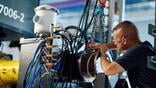
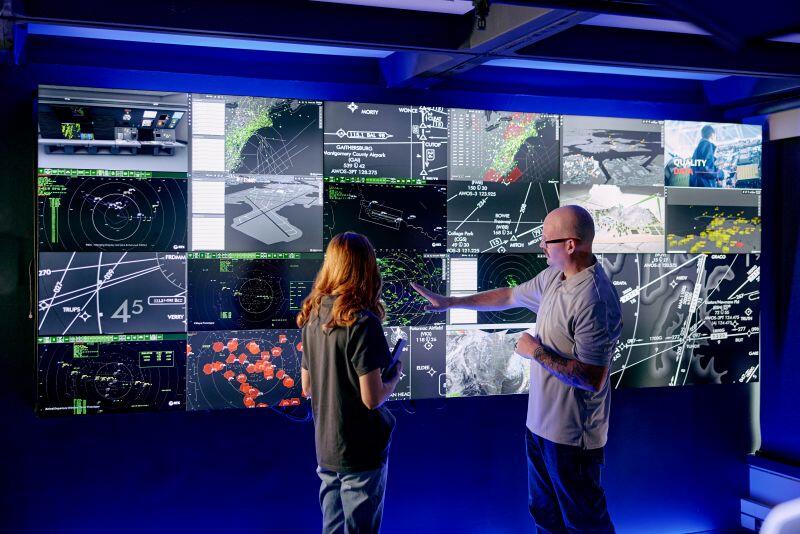
A high-resolution display exhibits different capabilities of the Auto Trac common automation platform.
WASHINGTON—RTX’s Collins Aerospace division briefed reporters March 3 on the common automation platform it has developed that would be a candidate for a new system the FAA envisions for its “brand-new air traffic control [ATC] system.”
The RTX Auto Trac system would automate terminal, enroute, oceanic and surface operations, replacing separate, legacy systems used to manage air traffic across those domains. Integrating data from various surveillance sources, including ADS-B and radar, it would unify flight data, timelines, and intent across the national airspace system.
FAA controllers currently use the Enroute Automation Modernization (ERAM) system for high-altitude, enroute airspace; the Standard Terminal Automation Replacement System (STARS) for aircraft approaching and departing airports; and the Advanced Technologies & Oceanic Procedures (ATOP) system in Oakland, New York, and Anchorage for oceanic traffic.
RTX is the FAA’s STARS contractor. Leidos provides the ERAM and ATOP systems. Leidos has also developed a common automation platform.
“Domestically those things are separate stovepipe systems currently,” said Cedric Vigil, RTX-Collins associate director for automation and air traffic systems. “They are programs that deliver [everything] from the processing hardware to the hardware and capability sets that are in front of the controller. If you have two million lines of code and you change 1,000 lines, you have to take the entire system back through a set of changes to verify it.”
Auto Trac is based on a modular architecture that integrates legacy systems and allows for the rapid introduction of new capabilities, such as a low-altitude surveillance system for uncrewed aircraft systems.
“The future of the technology operates on a platform concept,” Vigil said. “The fundamental idea is to take over sets of stovepipes that sit next to each other and start cutting them more into a layer cake so that each one of those layers can be managed, acquired, and tested separately.”
He added: “Instead of today, for instance, where you have different sets of hardware per system, you can now as a customer take and expand your hardware across the enterprise and then have a software platform that sits on top of it. Instead of managing processors that match your software, you can now handle those things separately. It reduces your modernization and sustainment costs.”
In 2025, Congress approved $12.5 billion as a “down payment” to accomplish the Trump administration’s proposed $31.5 billion air traffic control system overhaul. The common automation platform was not included in the down payment.
The FAA issued a request for information from industry for a Common Automation Platform in November 2025 but has made no further announcements. It set a response date of Dec. 19, 2025.