This article is published in Aviation Daily part of Aviation Week Intelligence Network (AWIN), and is complimentary through Aug 24, 2026. For information on becoming an AWIN Member to access more content like this, click here.
CFM's Open Fan Passes Preliminary Design Review Milestone
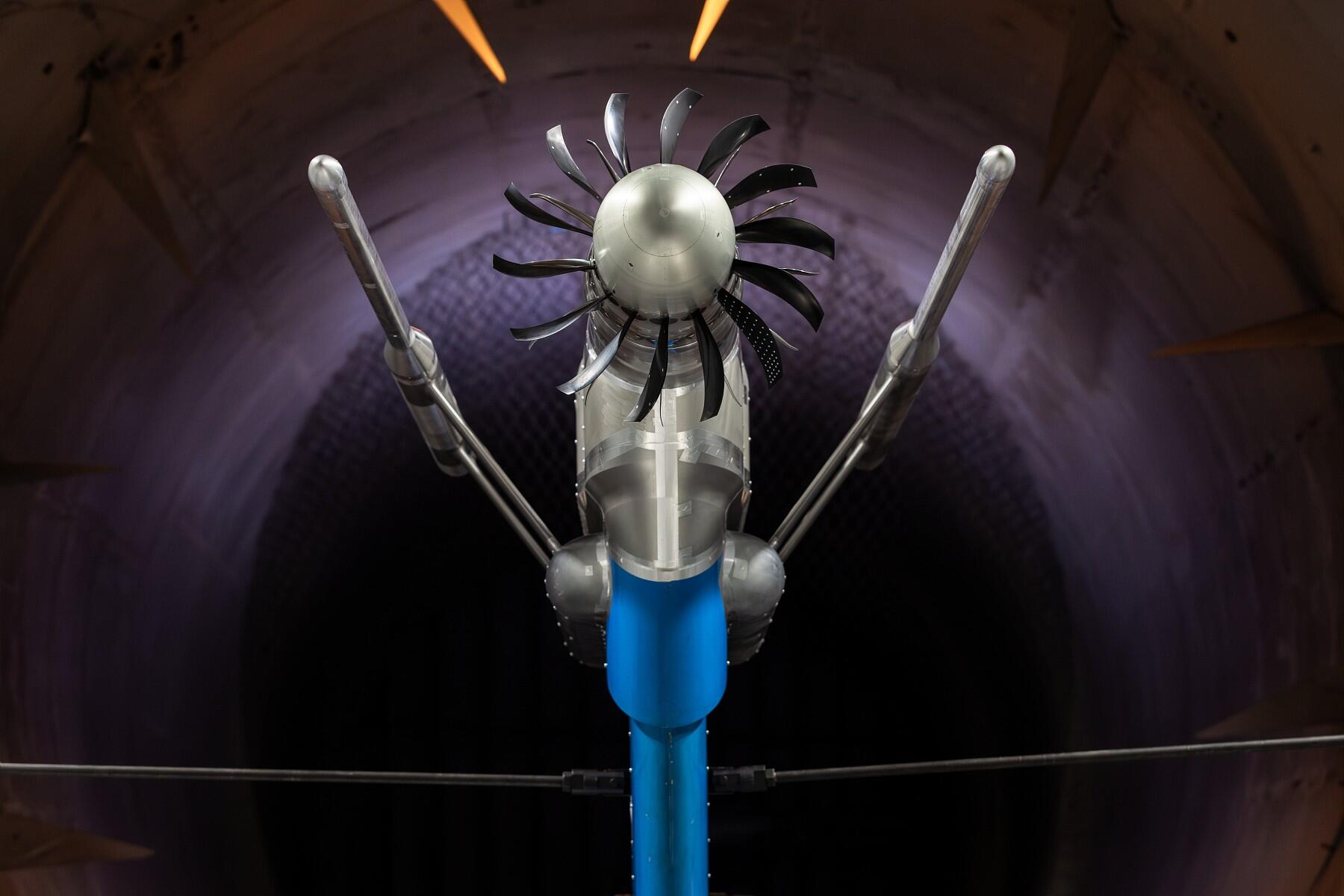
LONDON—CFM International is beginning parts manufacture for the first Open Fan ground demonstrator engine following the completion of the preliminary design review (PDR) for key components including the core, fan blade and outlet guide vanes (OGV).
Updating progress on the next-generation engine project on the eve of the Farnborough Airshow, the GE Aerospace-Safran joint venture says more than 500 tests have been completed since the Revolutionary Innovation for Sustainable Engines (RISE) technology program was launched in 2021.
“This [PDR] is a very important milestone in our world because it means we can now start manufacturing the parts that will be built and assembled into the ground test demonstrator of the Open Fan,” says Pierre Cottenceau, Safran Aircraft Engines' vice president of engineering, research and technology.
CFM says it has also completed 400 hours of wind-tunnel tests and more than 5,000 cycles of endurance and dust-ingestion tests with representative RISE high-pressure (HP) turbine blades in Leap-1B and F110 donor engines.
Mechanical and material tests are meanwhile underway on Open Fan OGVs, CFM says. These include impact, ingestion, fatigue, endurance, load, icing and vibration response. “First results from test campaigns including wind tunnel facilities have demonstrated that aeroacoustics performance has exceeded technology maturation objectives,” the company says
The first high-speed low-pressure (LP) turbine has also recently been tested for more than 1,000 hours, CFM says. Results “validated the LP turbine aerodynamic design as well as its aerothermal performance,” it adds.
Dust-ingestion tests also continue ahead of underway ahead of ground test engine assembly. Arjan Hegeman, GE Aerospace vice president of future of flight engineering, says the architecture of the Open Fan, including an adaptive cycle feature for dust particle extraction, will give the engine inherent durability advantages compared to a next-generation conventional engine design. “The Open Fan will ingest 50% less dust than a ducted architecture,” Hegeman says.
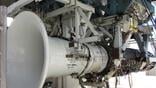
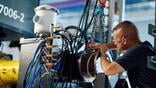
Hybrid-electric ground tests are also underway in support of RISE. Safran is evaluating its Silvercrest engine modified with a pair of electric machines under the French DGAC-funded Phileas ground-test program at its site in Istres, France. Installed on the high-pressure and low-pressure shafts, the two electric machines can operate either as electric motors or power generators. The campaign was devised to evaluate power extraction from and injection into the high-pressure and low-pressure shafts in the different phases of flight, Safran says.
The test program includes electric power management scenarios such as balancing power extraction between the HP and LP shafts (power balancing), transferring power from one shaft to the other (power transfer) and managing power exchanges between the engine and the aircraft (power sharing).
GE’s efforts involve testing a megawatt-class hybrid-electric engine system on a modified Saab 340B testbed. That follows the completion of ground tests of the propulsion system at the company’s facility in Peebles, Ohio. Developed through NASA’s Electrified Powertrain Flight Demonstration (EPFD) project, the propulsion system is based on a GE CT7 turboprop fitted with GE-developed motor/generators, power converters, inverters and controllers. The engine is also configured with Dowty propellers, Avio Aero gearboxes and batteries provided by BAE Systems. The nacelle is supplied by Boeing subsidiary Aurora Flight Sciences.