This article is published in Aviation Daily part of Aviation Week Intelligence Network (AWIN), and is complimentary through Aug 24, 2026. For information on becoming an AWIN Member to access more content like this, click here.

Airbus Launches Extended Wingspan A321neo Test Program

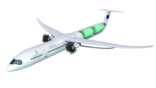
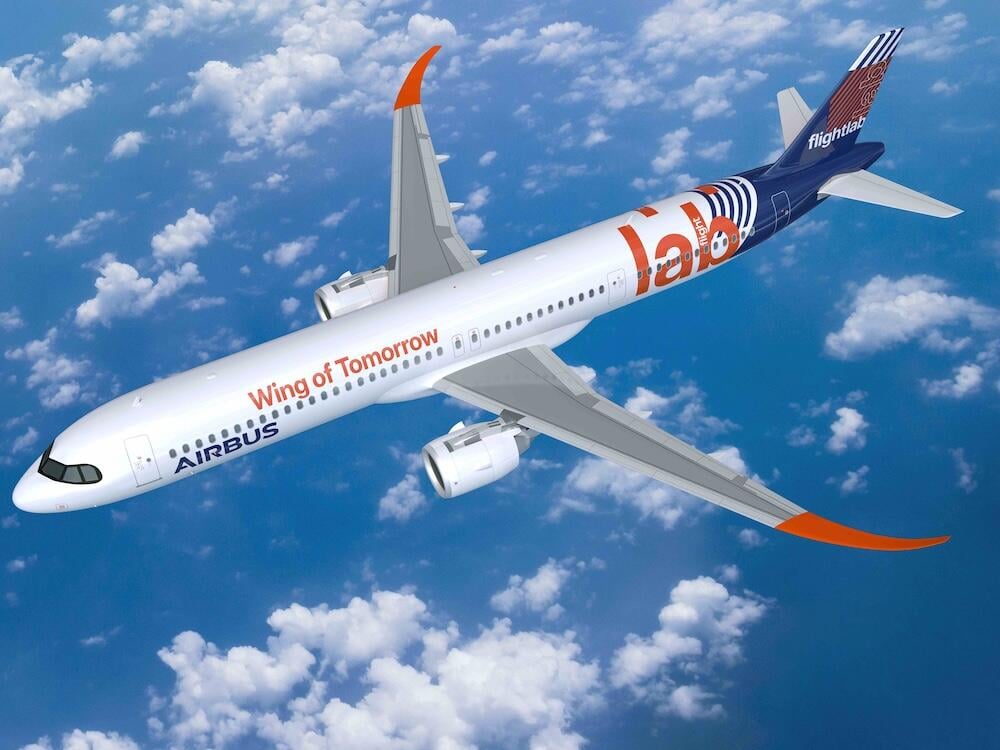
A321neo wing extension
Credit: Airbus

FARNBOROUGH, England—Airbus plans to flight test an experimental high-aspect-ratio wing extension on an A321neo by 2029 as part of its Wing of Tomorrow research program.

Airbus said July 21 that it will design, build and flight test full-scale wing extensions over the next three years to “evaluate how the different wing geometries perform in real flight conditions.”

Measuring several meters, Airbus said the added tip sections “will replicate a folding wing in the fully extended position during a flight. They will be fitted with comprehensive testing equipment to capture behavior in flight and evaluate how the longer wingspan impacts aircraft handling.”

Airbus and Boeing have both recently turned to higher-aspect-ratio wing designs for maximizing aerodynamic efficiency and reducing fuel burn on their latest long-range designs, the A350 and 777-9. Both are now studying extended span, lightweight wing technologies for their next-generation single-aisle projects; Airbus through its Wing of Tomorrow effort and Boeing through elements of its scaled-back X-66 transonic truss-braced wing research effort.

“The wing is one of the biggest levers we have to improve flight efficiency, which is why the Wing of Tomorrow is so critical for our next generation single-aisle aircraft,” said Sue Partridge, Airbus Head of Wing of Tomorrow program. “This flight-test campaign will allow us to safely challenge traditional design limits and explore the benefits of longer wings.”

Airbus is meanwhile preparing to start flight tests of a scaled high aspect wing with a hinged outboard section under the Extra Performance Wing (X-Wing) project. Funded by France, Germany and the UK, the X-Wing program is integrated with the Wing of Tomorrow initiative and is testing the lower drag design on a modified Cessna Citation VII business jet developed by the company’s Airbus UpNext division.

With a span of around 66 ft. (20 m), including 6-ft. movable tip sections, the Citation VII’s aspect ratio will be greater than 15:1, compared to 10:1 on an A320. The test wing spans approximately 20 m (66 ft.), including the 2-m movable tip sections. The design is representative of a third-scale single-aisle aircraft wing design.

The experimental A321neo wing extensions will be assembled at the Airbus Wing Technology Development Center at Filton, England, and flight tested in Toulouse. Under the Wing of Tomorrow effort, Airbus has already built three 17-m ground-based wing demonstrators in the UK facility to explore the advantages of increased wingspan and the benefits of more than 100 manufacturing and assembly technologies.

Since 2014, the Wing of Tomorrow program has been backed by £227 million ($304 million) in funding from the Aerospace Technology Institute (ATI), a partnership between the Department for Business and Trade and Innovate UK, designed to maintain the UK's position as a leader in aerospace technology.

Guy Norris

Guy is a Senior Editor for Aviation Week, covering technology and propulsion. He is based in Colorado Springs.