This article is published in Aviation Daily part of Aviation Week Intelligence Network (AWIN), and is complimentary through Mar 23, 2026. For information on becoming an AWIN Member to access more content like this, click here.
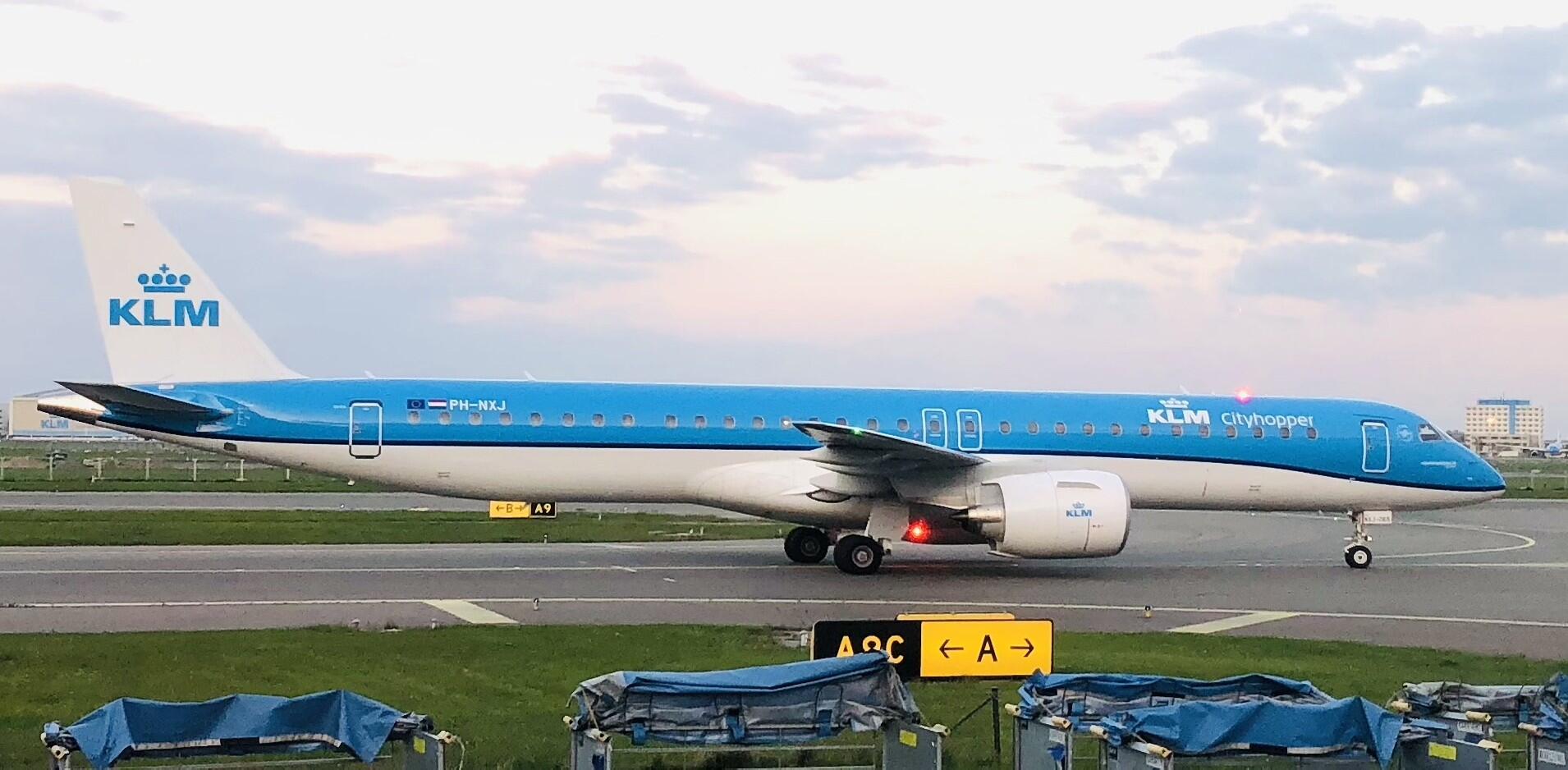
BELGRADE, Serbia—KLM Cityhopper is putting its remaining four grounded Embraer E195-E2s into operation, while evaluating a shrinking or growing fleet scenario for the future.
Operating a fleet of 61 Embraer aircraft, KLM Cityhopper serves as the backbone for KLM Royal Dutch Airlines mainline operations, feeding its global hub Amsterdam Airport Schiphol.
KLM Cityhopper MD Maarten Koopmans told Aviation Week on the sidelines of the ERA Regional Airline Conference 2026 in Belgrade, that the current situation with Pratt & Whitney PW1900G geared turbofan (GTF) engines powering its E195-E2 fleet has improved somewhat.
“When we look where we have been even a year ago, we are doing quite well,” he says. “Our earlier expectations have seen more aircraft parked. Every aircraft you park is not good, but at the end we maximized it to four.”
A so-called project “Butterfly” means that these parked aircraft will be unpacked from their cocoon, which protects the aircraft. “One aircraft has been parked for two years and we were positively surprised that everything looks good. We put new engines on, and it is flying this week for a C-check and then is back in operations,” Koopmans said.
Unpacking these aircraft also means that Koopmans does not expect the GTF issue situation to continue. “When I look at the situation with Pratt, they have been able to speed up their overhaul facilities,” he said.
Koopmans said that KLM Cityhopper has also a good level of spare engines available to keep the fleet going. “I expect that all four parked aircraft will be back in operation this year,” he said.
KLM Cityhopper operates 17 E175s, 19 E190s and 25 E195-E2s. The E2 will be refurbished with one extra row of seats to a total of 136 seats.
“There are another couple of [new] aircraft coming; we are working on the details [for delivery], but I expect quite a few more,” he said.
Koopmans expects that all E190s will leave the fleet in the next four to five years. “They will be replaced, probably, depending on the deals we can make, with E195-E2s. The E175, we will keep them for now, because there is no real alternative for them at the moment,” he said.
The Capacity Cap
On March 11, the Council of State in the Netherlands overturned a flight cap imposed at Amsterdam Airport Schiphol, saying the Government of the Netherlands did not properly draft the decree that brought the cap into law and did not provide adequate reasons for it. “But we have to see what that means,” Koopmans said, regarding the development.
Asked if the Amsterdam slot situation could lead to the use of larger aircraft to enable growth for Cityhopper, Koopmans said, “I think so. What you have seen over the years is that our aircraft average size has grown, and it will keep on growing,” Koopmans said.
“We will replace the E190s with 100 seats, and the E195s with 136 seats. It will happen, and with the same number of flights we can transport more passengers. That’s what we do at Schiphol.”
But it is also possible that the KLM Cityhopper fleet will shrink in favor of the KLM mainline operations. “For sure. We have had some discussions in the last years,” Koopmans said. “We used to have 50 aircraft; then we went up to 65. Then the expectation was that we would go back to 50. Now we might stay at the same size, or we even grow a little bit.”
He says the fleet project is a matter of timing. “In maybe 10 years from now, you need more Airbuses or less. It is a matter of which aircraft do you grow when,” he said.
“When I look to the current situation, we still need to rebalance the European and the widebody traffic. Which means we should be a little bit careful with the [capacity] on Europe,” Koopmans said. “And it seems logical for now to have Cityhopper grow a little bit. But this might be different in 10 years from now.”
The next new aircraft delivery to Cityhopper will occur in 2027. “This year is focused on bringing the four aircraft that are parked back into the air,” Koopmans said. “We are looking at offloading a few aircraft, but that’s it.”
KLM Cityhopper took delivery of its first E190 in 2008, beginning the replacement of its traditional Fokker 70 and Fokker 100 fleet. The first E175 joined the carrier in 2014, followed by the E195-E2 from 2021 onward.