This article is published in Aviation Week & Space Technology and is free to read until Aug 15, 2026. If you want to read more articles from this publication, please click the link to subscribe.

U.S. Space Force Expands NSSL Vendor Pool To More Than Rocket Builders

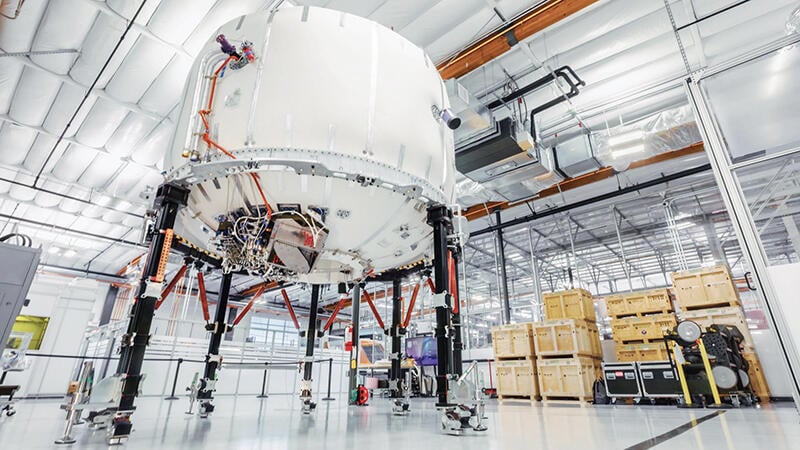
Impulse Space upper-stage vehicle

Impulse Space will find its own rides to orbit as the inaugural upper-stage vehicle provider in the Space Force’s NSSL program.

Credit: Impulse Space

The U.S. Space Force continues to widen the field of companies eligible to compete for lower-risk national security launch missions, even as the service remains heavily dependent on SpaceX while a new generation of providers races toward operational readiness.

  • Two new contracts bring Phase 3 Lane 1 pool to seven vendors
  • Impulse Space is pairing its kick stage with a medium-lift rocket

Two years after the service launched its two-prong National Security Space Launch (NSSL) procurement strategy, the vendor pool for Phase 3 Lane 1—designed to support more risk-tolerant rockets and systems—has more than doubled. The service announced Impulse Space and Relativity Federal as the newest potential Lane 1 providers on July 7. Blue Origin, SpaceX and United Launch Alliance (ULA) were selected as the initial providers in June 2024, and Rocket Lab and Stoke Space were added in March 2025.

Relativity is developing its Terran-R as a heavy-lift, two-stage, partially reusable launch vehicle. Impulse Space, meanwhile, does not build rockets. Instead, its bid pairs the company’s forthcoming Helios kick stage—an additional upper-stage rocket engine that can boost satellites into higher orbits—with with an as-yet-undetermined launch provider’s medium-lift rocket.

The Redondo Beach, California-based company has spent several years pitching the Space Force on how Helios could support growing demand for high-energy launches, says Eric Romo, the company’s president and chief operating officer.

He says Impulse saw an opportunity to package the vehicle with a medium-lift rocket as an alternative to a heavy-lift launch vehicle. “And then the conversation would quickly go to, ‘Well, how do we contract for this? What’s the right mechanism for getting this onboarded?’” he says.

At first blush, the NSSL program did not appear to accommodate that vision. But Impulse decided to bid as a prime contractor after the Space Force issued the latest Lane 1 request for proposals last December. “We’re just ecstatic to see that they have agreed that the language accommodates it . . . in a time when that demand for high-energy launch is growing,” Romo says, noting that Impulse will select its launch provider once it begins bidding on task orders.

To qualify for Phase 3 Lane 1, bidders must provide a system that includes their own manufactured hardware and demonstrate a previous flight or present a credible plan to launch within one year of submitting a proposal, a spokesperson for the service’s Portfolio Acquisition Executive for Space Access says. Lane 2, meanwhile, serves as the direct follow-on to the current Phase 2 program, with more stringent launch vehicle certification requirements and the ability to support the full range of NSSL mission profiles.

The service sought to maximize opportunities for emerging launch providers to support the NSSL mission, including allowing companies to form contractual partnerships that meet Lane 1 requirements. “This inherently included the potential for [orbital transfer vehicles] and upper-stage platform companies to onboard to Lane 1,” the spokesperson says.

While Lane 1 has opened the NSSL pool to new entrants, the missions awarded so far have largely gone to one provider. The Space Force has awarded seven Lane 1 task orders to SpaceX and one to Blue Origin.

SpaceX currently is the only NSSL partner with an operational launch vehicle. ULA’s Vulcan remains grounded while the company investigates a solid rocket booster anomaly that occurred during the USSF-87 launch on Feb. 12. Blue Origin’s New Glenn also remains sidelined after an explosion during a May 28 static-fire test that destroyed the rocket and damaged the company’s only operational New Glenn launch site.

Meanwhile, Impulse Space, Relativity, Rocket Lab and Stoke Space all expect to fly their respective vehicles for the first time within the next year. Impulse Space’s first Helios mission, Caravan-1, will carry government and commercial payloads, including the Space Force’s Victus Surgo tactically responsive space mission and a jointly funded demonstration  with Anduril to test rendezvous and proximity operations, Romo says.

The Space Force needs those new systems to come online quickly to support a growing backlog of missions. The backlog has already delayed some capability deployments for customers, such as the Space Development Agency. The service expects to award additional Lane 1 task orders by the end of fiscal 2026 to support missions including the Space Data Network and space-based air moving target indication, the Space Access spokesperson says.

Vivienne Machi

Vivienne Machi is the military space editor for Aviation Week based in Los Angeles.