
Featured Business Aviation Content






Sponsored Content



Business Aviation Essentials

Directory
AC-U-KWIK Premium
Annual subscription provides online access to information for airports, FBOs, and aviation support services around the world, PLUS direct email, phone...

AWIN Intelligence Bundles
AWIN - Business Aviation
Integrating unsurpassed content, trustworthy data, exclusive analytics and meaningful insight, AWIN Business Aviation is the faster, easier way to mon...
Premium News & Analysis
Jan 29, 2016
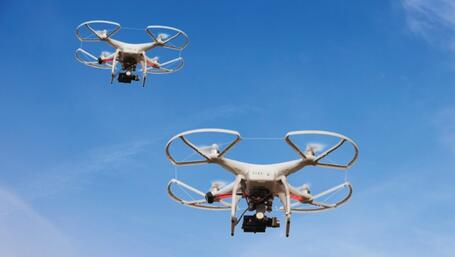
Just weeks after the FAA set up its online system to register small UAVs, the agency has already signed up at least 181,000 aircraft. Administrator Michael Huerta is “encouraged” by the results but says this is just the beginning. “Our challenge is to make sure everyone is aware of the requirement and registers,” he says. In addition, the FAA has released an B4UFLY mobile application to let UAV pilots know about flight requirements and restrictions. The FAA expects to finalize rules for commercial, non-hobbyist operations of small UAVs by late spring.
Jan 29, 2016
National Business Aviation Association’s Domestic Operations Committee has created a customs checklist to help business aviation operators meet Customs and Border Protection requirements at U.S. ports of entry. The challenge was in addressing local policies and logistical requirements that vary among the ports of entry, said Ron Bojanski, Midwest Aviation/Kiewit Engineering Canadian operations manager who led the project.

Jan 29, 2016
India’s Hindustan Aeronautics Ltd. plans to develop a new helicopter engine—the Hindustan Turbo Shaft Engine (HTSE) 1200. The announcement follows the first test run of the 25-kN (5,620-lb.) thrust Hindustan Turbo Fan Engine (HTFE) 25. “The HTSE-1200 can be used for helicopters of 3.5-ton class in the single-engine configuration such as the Light Utility Helicopter and for 5 to 8 ton class in twin engine configuration such as the Advanced Light Helicopter and Light Combat Helicopter,” said T.

Jan 29, 2016
The Learjet 75, Bombardier’s marketing name for the Learjet 45-456 and subsequent units, has been in production since November 2013 and it offers a package of improvements that make it a far more capable business airplane than the original Model 45 introduced in the mid-1990s. It offers true full-tanks, full-seats loading flexibility, substantially better runway performance, sportier climb performance, improved fuel efficiency, longer range and better reliability.

Jan 29, 2016
When pilots are asked to perform a tough assignment, they should be provided the tools necessary to conduct the mission safely. Assigning a single pilot to a single-engine, VFR-only helicopter with insufficient weather information and without instrument system protection certainly seems contrary to that rule and, indeed, statistics show such circumstances make such operations among the highest risk sectors in civil aviation.
Jan 29, 2016
Since helicopters generally operate at much lower altitudes than airplanes, the risk of collision with an unmanned aerial system (UAS) is much higher. In recent months the FAA has established an interim policy to speed up airspace authorizations for commercial UAS operators. Since March 23, 2015, the agency has granted authorization for flights at or below 200 ft. to any UAS operator with a Section 333 exemption (in simplest terms, someone using a UAS for commercial purposes).
Jan 29, 2016
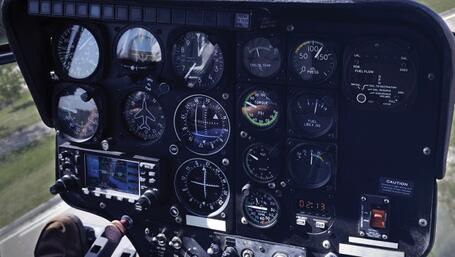
Officials from the helicopter industry and FAA will meet in Washington, D.C., Feb. 11-12, 2016, to discuss improving weather information availability, heliport standardization and IFR infrastructure. Despite some welcome new elements, gaping holes remain in the country’s weather information “grid.” There are many Non-Federal AWOSs that need to be added to the weather collection and information dissemination system.
Jan 29, 2016
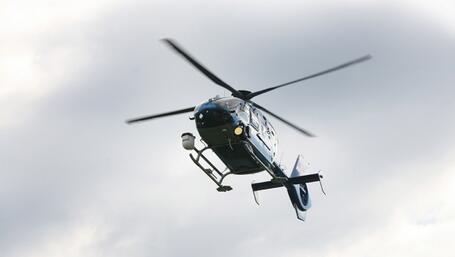
Before launching into the IFR system, pilots need to familiarize themselves with the instrument requirements for their particular helicopter. Within the same make, model and series of helicopters, variations in the installed avionics may change the equipment needed or the level of augmentation for a particular operation. The complexity of the automatic flight control system (AFCS), autopilot and flight director in some helicopters requires formal pilot training to understand the unit’s operation, limitations, failure indications and reversionary modes.