
Featured Business Aviation Content





Sponsored Content

Business Aviation Essentials
Directory
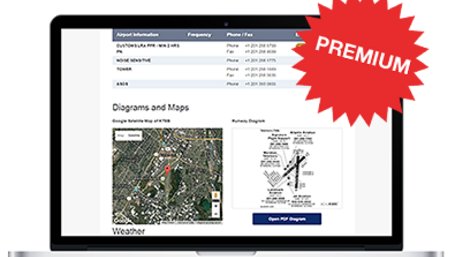
AC-U-KWIK Premium
Annual subscription provides online access to information for airports, FBOs, and aviation support services around the world, PLUS direct email, phone...
AWIN Intelligence Bundles
AWIN - Business Aviation
Integrating unsurpassed content, trustworthy data, exclusive analytics and meaningful insight, AWIN Business Aviation is the faster, easier way to mon...
Premium News & Analysis
Feb 25, 2016
The following NTSB information is preliminary about these selected accidents and Incidents in January 2016 and December 2015.

Feb 25, 2016
Every technician has been there, standing face to face with an agitated pilot who opens a conversation with, “It happened again.” This is often accompanied with the same look of disappointment mothers give when their child present a less than stellar report card. Technical problems that appear and disappear are exceptionally frustrating. The lack of a definitive resolution can cause a corrosive environment in your team dynamic. Pilots need to trust their technician’s ability to hunt and trap these types of problems, and their return erodes that faith.
Feb 25, 2016
On May 31, 2012, during cruise flight at FL 220 in a Cessna 560, the captain’s windscreen cracked and the flightcrew made an immediate descent and landing. Engineering inspection revealed the source of the problem was a damaged seal. It had let water enter, which then froze during flight.
Feb 25, 2016
A good cleaning should be just that. But often is quite not. “A great many expensive repairs are made to windows which have been subject to improper cleaning techniques,” says Tim Snipes of Aviation Window Services in Boulder, Colorado. Among tools of destruction he cites are stiff brushes, soiled or abrasive cloths, and improper cleaning agents.
Feb 25, 2016
Sometimes MEL restrictions make sense, but sometimes they produce little-considered “gotchas.” Recently one reader flew a passenger trip into Napa, California. The captain’s windscreen heat was MEL’d and the operational notes instructed crews to keep it off and remain clear of freezing conditions.
Feb 25, 2016
Chances are you've heard that Nexrad has the capability to detect hail. That was made possible a few years ago with the addition of polarization. Previously the system detected precipitation in the horizontal dimension better than in the vertical. As a result, it could not distinguish between large raindrops, which tend to have a horizontal size greater than vertical, and hail, which tends to be equal both horizontally and vertically. Now it can differentiate between wide and tall.

Feb 25, 2016
The palette’s evolution began in the basement of a home in Kansas City, Missouri. Dedication to a task is often found in the strangest of places and so it was with this research project on thunderstorms. J.T. “Jean” Lee, then a young scientist for the “Weather Bureau,” as the federal agency was called some 60 years ago, was assigned to Severe Local Storms Research (SELS). Simply put, the SELS team was to learn all it could about the hazards thunderstorms posed to aircraft, a project begun earlier by the U.S. Army Air Corps.

Feb 25, 2016
Longitude’s cockpit layout closely parallels that of Latitude. Three side-by-side, 14-in., landscape configuration flat panel displays occupy most of the instrument panel. The LCDs are some of the highest resolution screens yet installed in a business aircraft. Synthetic vision is standard. Above the screens are left and right display controllers and a central integrated standby instrument system. At the top, there is a central glareshield-mounted flight guidance control panel.