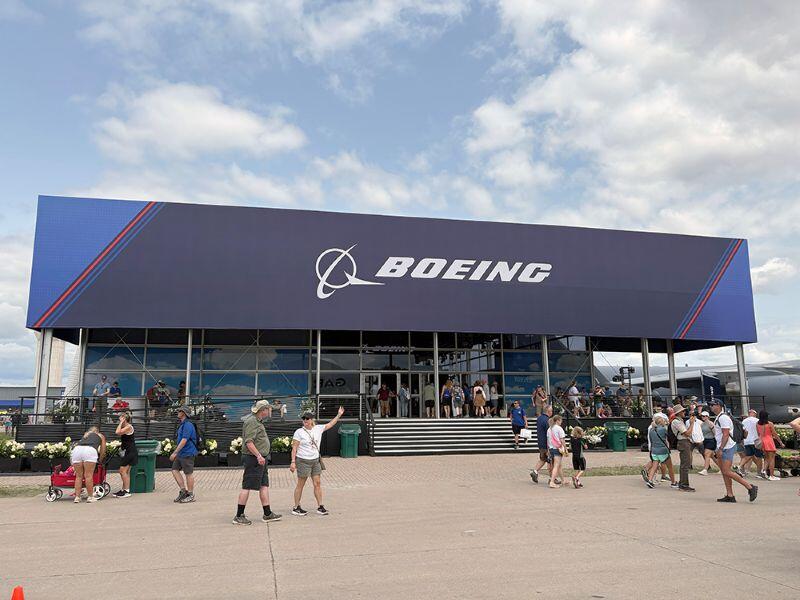
OSHKOSH—Nearly $5 trillion in services demand over the next 20 years will drive continued growth in the need for qualified aviation talent, according to Boeing’s latest Pilot and Technician Outlook. The aircraft manufacturer highlighted key training strategies it believes could help meet that demand during a presentation at EAA AirVenture.
Between 2026-45, Boeing expects the global aviation industry to require 2.4 million new personnel—up about 2.3% from last year’s forecast. The figures include the need for 674,000 new pilots, 728,000 new maintenance technicians and 1.02 million cabin crew.
As in recent years, Boeing expects China, Eurasia and North America to have the highest demand, in line with the projected new aircraft deliveries in each region. South and Southeast Asia will see some of the highest regional increases, with a need for around 6% growth across all three personnel categories over the period. Most other regions have modest growth or unchanged numbers from last year.
According to Boeing, two-thirds of this demand will be needed to replace retiring personnel, while one-third will support projected fleet growth. Chris Broom, Boeing Global Services’ vice president of commercial training solutions, noted that 85% of expected pilot attrition is due to retirement, while retirements account for 40% and 28% of maintenance technician and crew retirements, respectively.
“This retirement wave creates both recruitment pressure and the need to continue to develop a pipeline of highly skilled pilots, mechanics and cabin crew to preserve operational continuity and integrity,” Broom said. “Airlines and MROs have and must continue to respond with proactive talent pipelines, partnerships with training schools and competency-based training programs to ensure skilled personnel are in place and operators maintain high safety standards.”
The aviation industry has been ramping up workforce pipelines ahead of this projected demand. Broom noted that early career training partnerships, such as cadet programs, maintenance apprenticeships, and school partnerships and joint ventures, have increased fourfold over the last decade.
Jennifer Radtke, functional chief engineer for product support engineering at Boeing, noted that curricula must evolve to address next-generation aircraft technologies and younger generations’ learning preferences.
Radtke cited composites, avionics and software as three areas crucial to aviation maintenance technicians but not typically taught in the general curriculum of airframe and powerplant (A&P) programs. She also stressed that soft skills, such as effective communication and information processing, need to be taught to future technicians.
Radtke suggested that aviation industry stakeholders should make investments in digital training capabilities. “[The next generation is] all about immersive learning. They’ve learned a lot of things online, and A&P certification is all hands-on. We need to think about the curriculum being more readily available so that we can do some portions of those things virtually,” she said. For instance, she said some portions of the A&P general curriculum being offered virtually would provide flexibility for different people’s circumstances.
“I tried to get some of my engineers to go and get their A&P license in the evenings after work, and there wasn’t an off-the-shelf program for it,” said Sergio Bustamante, vice president and chief engineer of Boeing Global Services Engineering. “A lot of our schools aren’t really thinking about the professionals who would benefit from getting this experience and creating night programs and things like that specifically tailored [to them].”
Mike Miller, Boeing’s director of commercial training engineering, stressed that the industry will also need to generate more instructors to train this future workforce. “I think the most important thing that we all can do is focus on instructor training, because instructor training is really what scales,” he said. “If you have a well-defined and standardized instructor training program, whether for pilots or mechanics, then that gives you the ability to go out and scale other organizations, airlines and schools along that same standard of performance.”

Related Content