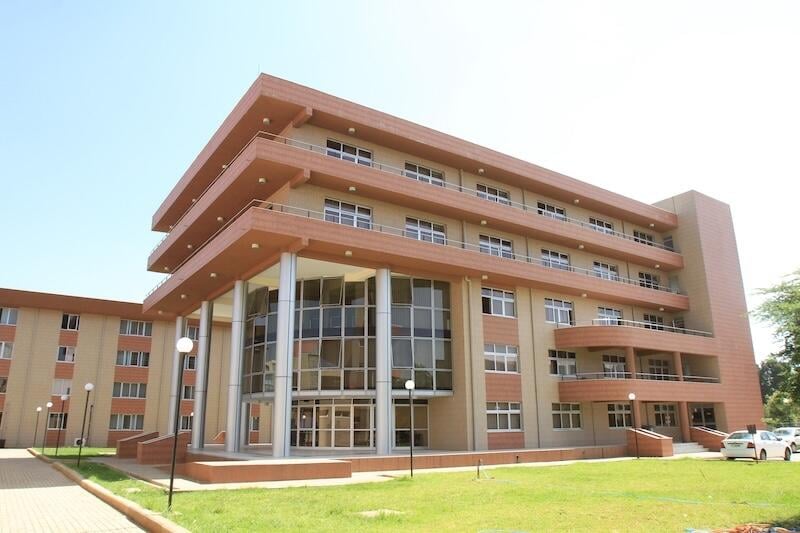
The Ethiopian Aviation University is welcoming more international students to plug Africa’s skills gap.
Ethiopian Airlines is expanding the role of its aviation university as a regional training hub as Africa faces a growing shortage of aircraft maintenance technicians and engineers.
The airline tells Aviation Week that demand for licensed maintenance engineers, avionics specialists and technicians trained on newer aircraft and technologies is increasing faster than the available talent pool. Ethiopian has identified limited training capacity and strong global demand for skilled aviation personnel as contributing to the shortage.
The Ethiopian Aviation University was originally established to meet the flag carrier’s own workforce requirements, but the airline is now making remaining capacity at the institution available to third parties. That includes airlines, maintenance, repair and overhaul (MRO) providers, aviation authorities and individual trainees from Africa and beyond.
The university’s international reach was highlighted by the recent graduation of 115 aircraft maintenance technicians from 12 countries, including Cameroon, Chad, Madagascar, Senegal and Tanzania. Ethiopian expects the number of international students to increase through expanded partnerships with airlines, industry stakeholders and civil aviation authorities.
Ethiopian says it already works with several airlines and institutions across the continent, providing maintenance and other aviation training. It is also developing customized training programs and technical solutions around the workforce requirements of individual organizations.
The move comes as Ethiopian continues to expand its own MRO capabilities, including new component facilities and hangars. According to the airline, its university programs are being updated as new maintenance capabilities, technologies and component repair facilities are introduced at Ethiopian MRO. Trainees also receive practical exposure to the MRO operation, which Ethiopian says is intended to help bridge the gap between classroom training and the requirements of operational maintenance roles.
However, increasing training capacity presents its own challenge. Ethiopian identifies a shortage of qualified instructors as one of the main constraints facing maintenance training across Africa. The airline says many training institutions lack modern facilities, equipped workshops and sufficient instructional staff.
Aircraft maintenance training requires experienced and licensed engineers capable of delivering both theoretical and practical instruction to international regulatory standards, while those same personnel are in strong demand from airlines and MRO organizations. This creates a further bottleneck: The industry needs more technicians, but training institutions can struggle to attract and retain the experienced personnel required to produce them. The resulting capacity constraint, the airline states, limits the pace at which the next generation of maintenance professionals can be trained and certified.
For Ethiopian, the university therefore serves a dual purpose. Its training capacity is still planned around the airline’s own operational requirements and fleet growth, while capacity beyond those needs can support external customers. The approach could give Ethiopian a growing role in addressing a skills shortage that extends beyond its own MRO operation.
The airline’s long-term goal is to increase international participation and establish the university as a reliable aviation training center for the international community.

Related Content