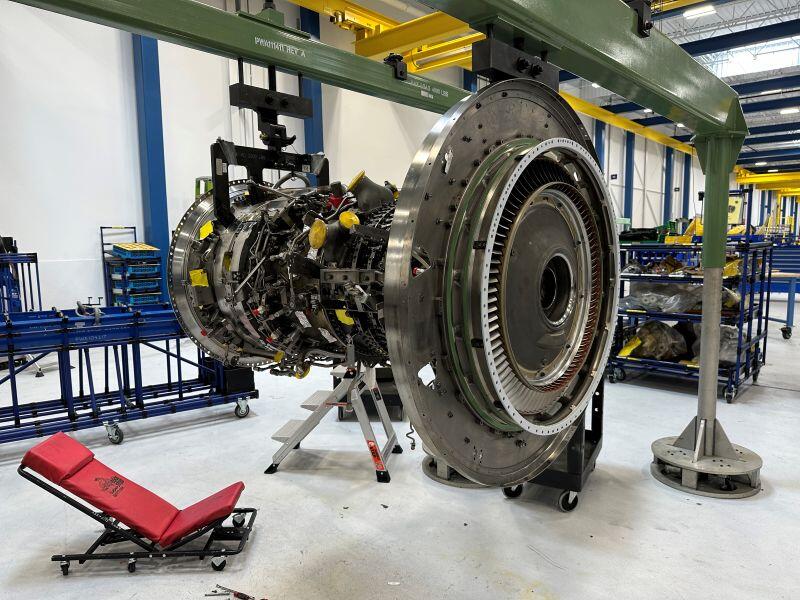
Pratt & Whitney engine in for repair
Airlines absorbed at least $11 billion in extra costs last year due to supply chain failures, many related to engines, and their frustration has escalated to anger, says Willie Walsh, the International Air Transport Association’s (IATA) director general.
The industry needs to resolve the supply chain and CFM International Leap and Pratt & Whitney geared turbofan engine reliability problems, and stop “firefighting the problem,” he says.
The airline and aftermarket sectors have struggled with the supply chain that was extremely disrupted during the COVID-19 pandemic but “it’s time to switch from extinguishing the latest blaze” to a longer-term strategic plan because “it’s intolerable that we see this issue continuing for as long as it has,” Walsh tells Aviation Week.
Airlines need reliable fleets and new aircraft delivery dates to effectively plan their operations short term. Without addressing the supply chain problems in totality in the near term, “we’re going to be dealing with engine turnaround times and engine shortages for years to come,” says Walsh.
Tackling them now is also important because OEMs plan to deliver about 10,000 new aircraft over the next decade. Many of them are narrowbodies with Pratt & Whitney GTF or CFM International Leap engines.
Pratt and CFM respectively should deliver a combined 3,700 GTF and Leap engines annually between 2030-2040. Engine shop visits should rise to more than 5,000 Leap engines and 2,000 GTF engines by 2040, according to IATA. Establishing the MRO capacity and workforce to support that takes time and money. “We need to start moving now,” Walsh says.
IATA outlined four priorities to strength the airline supply chain. They include:
* Increase engine parts availability, including through more repair options, expanding licensed production and used serviceable material.
* Remove barriers that limit independent MROs from adding capacity. “Getting capacity in an engine shop is a challenge” today, as is the longer turnaround times because of the parts shortages, says Walsh. Couple that with the airframe and engine ramp up, “there’s clearly going to be demand for significant additional capacity” in the years ahead.
* Secure long-term, predictable parts pricing when purchasing aircraft and engines. IATA encourages airlines and lessors to leverage those negotiations and lock-in parts costs at point of purchase.
* Encouraging all OEMs to adopt transparent and competitive aftermarket practices, similar to the IATA-CFM agreement originally signed in 2018 and renewed this year.
Walsh encourages the industry to adopt these changes “because we don’t want to deal with [supply chain] problem forever,” he says.

Related Content