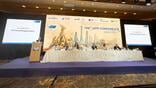
David Kerr, chair of IATP’s S Pool, on the sidelines of the IATP Conference in Malta.
ST. JULIAN’S, Malta—David Kerr, head of technical procurement and supply at Norse Atlantic Airways, has been appointed chair of the International Airline Technical Pool's (IATP) S Pool, which specializes in parts for the Boeing 757, 767 and 787.
In the voluntary role, he will focus on operational and technical challenges for operators of these aircraft types, narrowing in specifically on unique issues for 787 operators.
Speaking exclusively to Aviation Week on the sidelines of the 133rd IATP Conference here last week, Kerr emphasized the critical nature of managing high-value spares and improving readiness for airlines through the IATP's collaborative platform.
He assists airlines with technical onboarding, verifying part applicability, checking technical documents and ensuring component-level tracking within IATP. Misalignment between internal airline part numbers and IATP’s system can create operational challenges, particularly for complex 787 components.
The 787 remains the most challenging aircraft in the S Pool. Kerr cites the widebody's reliability and high-cost spares as key factors shaping pool management. “On older aircraft like the 747, we knew which parts were needed at each location because [aircraft-on-ground] patterns were predictable,” he said. “With the 787, demand is much less consistent between airlines and airports, so it is harder to know exactly which components to position where.” Long repair times, limited historical data and costly parts complicate spares positioning, making supplier engagement and predictive stocking essential.
Kerr has also focused on increasing 787 parts availability by analyzing demand patterns and collaborating with suppliers. “The 787 is a really challenging aircraft when it comes to spares. I use data from Boeing, Norse and other airlines to identify patterns and common parts that are in high demand, so we can address gaps across the network,” he explained, highlighting a proactive, data-driven approach to pool management.
He also noted that helping airlines navigate part numbers is a major component of his role. Airlines may submit part numbers for full assemblies, but IATP tracks individual components. Part of Kerr’s role is to verify applicability for each aircraft type and ensure the parts are correctly entered in the system, preventing errors during aircraft-on-ground events.
Kerr says data from IATP shows that including 787 components has significantly increased the S Pool’s value. While most 757s have transitioned to cargo operations and are aging, the 767 fleet remains strong, with production continuing through 2027.
Kerr is urging airlines and suppliers to contribute more 787 components to the S Pool, even though demand is unpredictable and standardizing spares across the fleet remains challenging. He noted that global collaboration is essential to cover high-demand parts at key airports, particularly for airlines just joining the pool, like Riyadh Air.
According to Kerr, IATP’s S Pool provides a clear cost advantage over traditional power-by-the-hour contracts, but participation requires careful contribution and management of parts. “It’s not just about tracking inventory—you have to check applicability, ensure parts are correctly set up in the system and support airlines with any technical questions they have,” he said.
With the 787 fleet expanding globally, the challenge will be to ensure that high-demand components are correctly identified, positioned and available when needed. Strengthening the S Pool and improving visibility of critical spares will be key to reducing aircraft-on-ground disruptions and supporting airline operations, Kerr said.

Related Content