This article is published in Aviation Week & Space Technology and is free to read until Jun 27, 2026. If you want to read more articles from this publication, please click the link to subscribe.

Hanwha Aviation CEO Jeff Lewis Outlines Strategy

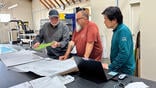
CEO Jeff Lewis of Hanwha

Hanwha Aviation CEO Jeff Lewis

Credit: Lee Ann Shay/Aviation Week

Hanwha Aviation launched in 2024 as an engine leasing platform and bought an MRO in 2025. CEO Jeff Lewis spoke with Lee Ann Shay and James Pozzi about growing the business from scratch and expanding aftermarket capabilities.

Since Hanwha purchased Eko Green in 2025, how has that changed your business? 

It just added a new tool for the business. I’m a firm believer in having a vertically integrated leasing platform that includes in-house technical capability. MRO is a key part of that because it gives us the ability to unlock additional value and create additional returns at the asset level. It also gives us the ability to launch a [used serviceable material (USM)] business in the future. That requires a portfolio of scale. We have 40 engines in the portfolio now, so generally, you might wait a little longer before you take the step. But I thought the timing for MRO was right. It’s been very helpful to our airline customers to have the engine MRO option.

What is the breakdown of those 40 engines? 

The majority of the fleet is CFMs, but we also have some [IAE] V2500s; we’re narrowbody-engine focused. We recently acquired our first CFM Leaps and Pratt & Whitney [geared turbofan]. Part of our long-term strategy is to build a position in the Leap. By having these engines now in our portfolio, we have access to [the intellectual property] and can start to understand them better. I really drill down into the engine’s technical details to manage them effectively for the investors. By having access to that information, it will enable us to make smarter investment decisions around those asset types in the future.

Why Eko Green? 

We bought the opportunity with all the certificates and the customer base. Jose [Perez] has been in the business a long time, so he had a lot of relationships. It’s a small business, but it gave us FAA and [European Union Aviation Safety Agency] certificates from Day 1, which will allow us to grow the business faster. And let’s be honest—most engine MRO shops are up for sale right now. But the problem is that most sellers’ expectations for the multiples are very lofty.

What multiples are you seeing? 

I’ve seen people asking 12-17 times, which I think is spicy. I just can’t justify that. I think the more realistic sellers have been closer to 10, but that’s still expensive. Keep in mind those multiples are based on the last three years of financials, and they’ve been riding a wave—the wave of this perfect storm that exists in our industry right now. I didn’t want to buy an MRO where I personally thought that we would have been overpaying. So my idea was, instead of spending a lot of money on an existing MRO, we’ll build one; we’ll create the value. I’m big into value creation, so I saw the opportunity of getting our hands on the certificates. We have all the relationships in place, and we’ve invested in the tooling, people, systems and a brand-new facility.

CFM56 MRO work
Hanwha AeroTechnix is focusing on the CFM56. Credit: Hanwha Aviation

What is the status of the new facility, Hanwha AeroTechnix? 

We’re finishing building the 50,000-ft.2 facility in Hialeah Gardens, Florida. It should open in May. We’re focusing on the CFM56—up to engine performance restorations—and we have some capability on the GE CF6. And we’re slowly starting to add Leap-1A and -1B MRO capabilities.

Is this going to be the first MRO in a network? 

This will be the first of a network. We’re going to grow our MRO footprint and the AeroTechnix brand globally.

What are your aspirations for the number of shops, and are you going to add capabilities? 

I’m really focused on developing the relationships with the airlines and having a regional focus in Southeast Asia and in Europe to build out that global network of MROs. The MRO capability will be initially focused on the CFM56, ramping up to Leaps, but we’re also in discussions with OEMs and others. Hanwha has very strong OEM relationships on the manufacturing side, so as Hanwha, we’re looking at how can we work with the OEMs, as well as at future MRO opportunities.

You are growing organically, but would you also consider additional acquisitions? 

We would consider some smaller ones again and create the value.

Are there verticals other than MRO that you would like to add to Hanwha Aviation? 

Sure, especially USM. Having USM in place with the engine MRO, coupled with a very strong leasing platform that has a big portfolio of engines, is the perfect way to extract as much value as possible out of the assets—apart from getting into parts manufacturing, which we are not because Hanwha already does that through OEM relationships. There are not really other verticals we could consider.

So on the USM side, you would perform your own teardowns? 

Yes, we want to do our teardowns and harvest our own material so we have the ability to build up modules, but also acquire packages of material and use that internally to build up engines, Frankensteining engines in the portfolio to create serviceable ones. We want to be creative from an asset management perspective, to extract that value and generate the higher returns.

What will be the pace of growing your engine portfolio? 

I would like to see us double the size of the portfolio in the next 12-18 months. It’s difficult in this environment, because the one challenge is finding the right deals. I’m not going to do deals for the sake of doing a deal. I’m under no pressure to deploy capital. I take this business very personally; I would never do a deal with the investors’ money that I wouldn’t do with my own money. So finding the right ones, applying the conservative approach that we use in our assumptions on future residual values and lease rates and so on is not easy. I see lots of deals, but I see lots that don’t make sense.

What is your biggest challenge? 

There are a lot of people in the industry who don’t understand what it takes to build a platform from scratch. Yes, we are very well-funded, but we started this business from scratch, ground up. That includes finding the right people and building a team. In a short time—1.5 years—we have built a global footprint, opening offices on three different continents and in four countries. That’s not easy to do, and it’s very time-consuming. One of the greatest operational challenges is putting all the systems and processes in place in such a short time while executing the strategy and making disciplined investment decisions.

What systems did you choose? 

We use Sparta for leasing, LeaseWorks for [customer relationship management], Core Financial Systems for our financial platform and AvSight for MRO.

Lee Ann Shay

As executive editor of MRO and business aviation, Lee Ann Shay directs Aviation Week's coverage of maintenance, repair and overhaul (MRO), including Inside MRO, and business aviation, including BCA.

James Pozzi

As Aviation Week's MRO Editor EMEA, James Pozzi covers the latest industry news from the European region and beyond. He also writes in-depth features on the commercial aftermarket for Inside MRO.