This article is published in Aviation Week MRO part of Aviation Week Intelligence Network (AWIN), and is complimentary through Jun 01, 2026. For information on becoming an AWIN Member to access more content like this, click here.

Woodward Sees Sustained Legacy MRO Demand

Blue engine
Credit: Sean Broderick/Aviation Week

Strong demand for legacy-product services combined with an expected ramp-up on current-generation platforms helped drive Woodward to raise full-year guidance for the second consecutive quarter.

The component manufacturer, which specializes in motion control, energy management, and fuel systems, saw year-over-year sales increase 23% for the three months ended March 31—the company’s fiscal 2026 second quarter. Commercial aftermarket segment revenue jumped 36%, including 12% sequentially.

“Legacy services activity remains solid, and we’re seeing steady increases in volume for our control systems on” both CFM LEAP and Pratt & Whitney PW1000G geared turbofan engines, CEO Chip Blankenship said on an April 29 earnings call. “Shop inputs remain steady, and we haven’t seen any decreases as a result of airlines’ recently announced capacity and utilization reductions.”

The company, which generated about 65% of its $1.1 billion in second quarter sales from its aerospace segment, supplies and services multiple line replaceable units (LRUs) and other parts for most large-engine programs. It has more content on the newer platforms, notably the Leap and PW1000G, which have been growing as deliveries increase, and the in-service fleet matures.

But demand generated by older platforms has not slowed beyond the company’s forecasts put in place before the Middle East conflict and related surge in fuel prices introduced significant uncertainty.

“We’ve certainly seen some airlines signaling that they’re removing a little bit of capacity,” Blankenship said. “They’re parking some planes, but none of the parking activity exceeds any of the forecasts that were already in play. We haven’t seen any drop-off in inputs to our shop from LRUs for repair.”

Spare LRU sales also remain strong, he added.

Meanwhile, the company is ramping up both production and support for key current-generation product lines.

Its new Spartanburg, S.C., facility that will produce Airbus A350 spoiler actuation systems is “on schedule,” Blankenship said. “We are on target to be operational in 2027 and begin deliveries the following year.”

Woodward last year was awarded a deal to produce and provide aftermarket support for electro-hydraulic actuation systems on 12 of the A350’s 14 spoilers.

Blankenship said two Leap component support deals announced at Aviation Week’s MRO Americas will need a year or so to become operational.

Lufthansa Technik signed an Elite Licensed Repair Service Facility Agreement (LRSF), making it the first network service provider authorized to conduct what Woodward terms “the complete range” of services on its Leap fuel controls, valves, and actuators.

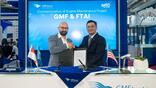
Air France Industries KLM Engineering & Maintenance then unveiled its own Woodward LRSF covering a range of Leap components.

“The rate-limiting step for any of our licensed service providers is getting test stands procured, installed, and calibrated.” Blankenship said. “That’s nine to 12-plus months away, depending on where each [is] in the procurement cycle.”

Woodward’s second quarter revenues marked the first time it topped $1 billion in a quarter. Sustained demand in both its industrial and aerospace segments prompted it to raise its full-year fiscal 2026 sales guidance to up 20-23%--a 5% top-end increase from February’s guidance.

Its aerospace segment will lead the way, growing a projected 21-24%. The segment’s previous guidance range was up 15-20%.

Sean Broderick

Senior Air Transport & Safety Editor Sean Broderick covers aviation safety, MRO, and the airline business from Aviation Week Network's Washington, D.C. office.