This article is published in Aviation Week & Space Technology and is free to read until Jul 03, 2026. If you want to read more articles from this publication, please click the link to subscribe.
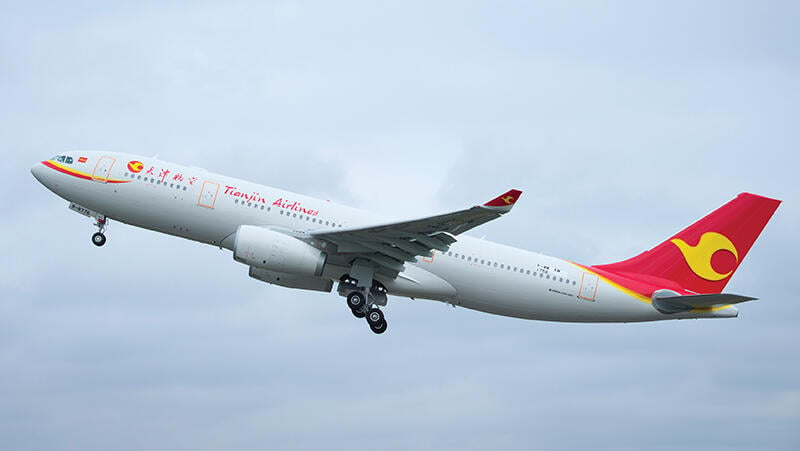
Widebodies such as the Airbus A330 make up a larger share of the Asia-Pacific regional fleet.
Aviation Week’s 2026 Commercial Fleet & MRO Forecast shows some interesting distributions in terms of global engine MRO.
For example, while North American major engine events are projected to account for 22% of the world’s events over the next 10 years, their share of global dollar demand will be only 19%. In Asia, meanwhile, the percentage of engine events and global dollar demand are forecast to hold nearly equal shares.
The preponderance of smaller regional and narrowbody aircraft fleets around the world should translate to more events for them. For instance, the No. 1 aircraft family in North America is the Boeing 737. This year, it outnumbers its competitor, the Airbus A320, by more than 1,000 aircraft. CFM International CFM56 and Leap engines power both. The A320 has a dual-engine option for each generation.
Asia—the Asia-Pacific and China—currently operates a much larger fleet than North America. While the 737 and A320 are also the No. 1 and 2 aircraft, respectively, in Asia, widebodies make up a greater share of the fleet. Therefore, the cost of narrowbody and regional aircraft events is much lower in the region because widebodies equipped with bigger engines require more expensive overhauls and life-limited parts.
The top widebody in North America is the Boeing 767, powered by the GE Aerospace CF6 engine, but the 737 outnumbers that fleet by more than 1,400 aircraft. After factoring in retirements and new deliveries, North American aircraft are projected to generate more than 35,000 major engine events—overhauls and life-limited parts replacements—worth over $159 billion.
In Asia, such widebodies as the Airbus A330 and A350 and Boeing 777 and 787 account for 25% of the fleet. Aviation Week projects that aircraft in the Asia-Pacific and China will require more than 53,000 major engine events worth over $283.5 billion between 2026 and 2035.