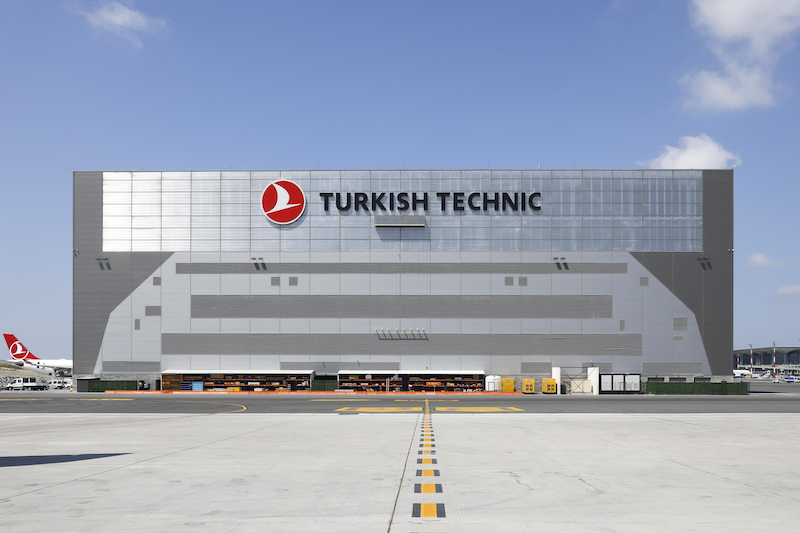
ISTANBUL—Turkish Technic is preparing for a long-term shift in aftermarket demand toward engine and component work as aircraft delivery delays, supply chain disruption and labor inflation continue to reshape the market.
Speaking at Aviation Week’s MRO BEER conference in Istanbul on June 17, Yasin Birinci, CTO of the Istanbul-based MRO provider, said near-term risks are becoming increasingly visible for Turkish Technic and other maintenance specialists in the region—but in turn, demand for services stays strong.
He notes that delays in new-generation aircraft deliveries by OEMs are affecting fleet planning at Turkish Technic’s parent company, the flag carrier Turkish Airlines. “Supply chain problems are not only headaches for us, for the MRO players, but also for the OEMs,” he said. “New fleets and new airframes are being delayed … This creates a chance for the MRO players.”
Birinci says these delays have resulted in operators keeping older aircraft in service longer and have created new opportunities in areas such as aircraft modifications, cabin changes and other support services. “New aircraft and new airframes are getting a higher presence in the fleet,” Birinci says, adding that this is putting pressure on airframe maintenance demand.
Birinci notes “soaring” engine demand, which accounts for the largest share of global MRO spend measured at $71.9 billion in 2026, according to Aviation Week’s Fleet & MRO Forecast data.
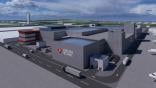
These demand opportunities have led Turkish Technic to retain its investment in its engine network. Last year, Turkish Technic commenced construction of a new engine maintenance facility specializing in Rolls-Royce Trent engines, specifically the Trent XWB-84, Trent XWB-97 and Trent 7000 variants. The facility will cover around 500,000 ft.2 of volume and is intended to be “100% export” focused, with the first engine expected at the beginning of 2028, according to Birinci. Last year, the company said it was also exploring potential CFM International Leap engine capability in Istanbul.
Birinci says it is also adding component capabilities to support Turkish Airlines’ expanding fleet of Airbus A350—with more than 130 on order—and Boeing 787 aircraft, which has more than 100 on order. Birinci notes that these orders have created a need for deeper component maintenance and inventory investment. Turkish Technic intends to offer services on these platforms for third-party customers within the next two years.
As a region, Eastern Europe has seen significant cost increases over the past five to six years, particularly in technician salaries and material costs. Labor availability is also a challenge, with Birinci stating that Turkish Technic has lost around 250 experienced technicians to companies in Western Europe and the Middle East. He concedes that this creates a “strong headache” for the company’s continuity of growth, with licensed B1 and B2 technicians particularly difficult to retain once overseas opportunities arise. “You cannot control the outflow, but you can control the inflow,” Birinci says about the talent issue.
To address this, Turkish Technic has invested in an in-house technician training academy at Istanbul Airport, including the conversion of an existing building into a specialized training center. With this in place, he expects to train around 500-600 technicians per year through the academy.
Turkish Technic plans to aid its workforce by investing in its digital infrastructure. Among these investments is the renewal of its ERP system, as it works toward paperless maintenance while also driving forward technician efficiency. Birinci says the goal is to generate more output from the same workforce rather than relying only on hiring people.

Related Content