The Philippines' booming airline sector is driving demand for MRO services, with the number of approved maintenance organizations (AMOs) rising through this year.
The Civil Aviation Authority of the Philippines has reported the number of local AMOs has risen by four this year, to 108, while the number of foreign AMOs has risen from 122 to 136.
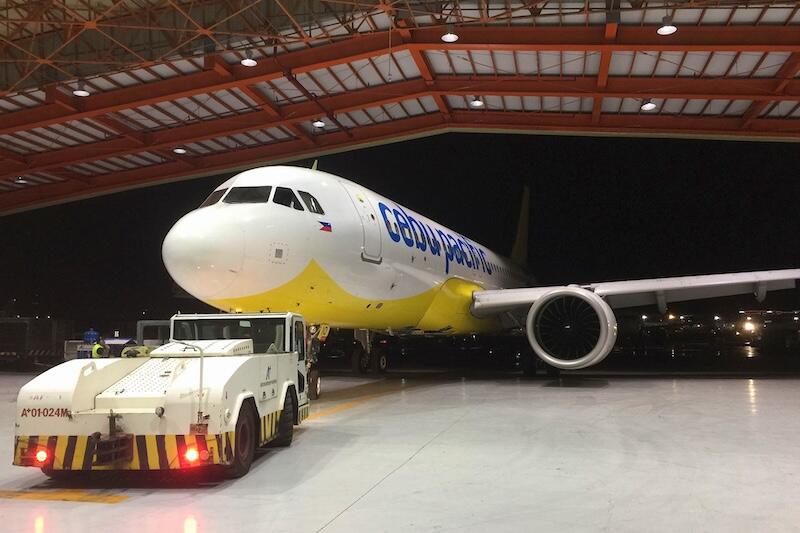
The biggest operators in the country are LCC Cebu Pacific, with 98 aircraft, and flag carrier Philippine Airlines (PAL), which has around 80 aircraft.
Both airlines saw sales rise 18% during the first nine months of 2025, with PAL reporting its 16th consecutive quarter of profit in the three months to Sept. 30.
Cebu Pacific, meanwhile, saw maintenance expenses jump 37% in the first nine months, as compared with the year-ago period, which it said was mostly due to an increase in maintenance accruals, in line with operating more flight operations, aircraft and engines.
Speaking to Aviation Week in September, Cebu’s engineering vice president said the airline was planning to “build additional capacity locally” to keep up with its expanding fleet.
Cebu operates a single-bay hangar at Clark International, but its wholly owned MRO, Aviation Partnership Philippines, has been expanding its base maintenance capabilities to include light maintenance to C checks, and it is in the process of adding heavy maintenance visits.
Aviation Week Network’s Commercial Fleet & MRO Forecast 2026 predicts that the Philippines will generate almost $7 billion of MRO demand over the next five years, with the MRO market growing at 6.4% annually.
Airbus aircraft will account for more than 80% of that demand, followed by Boeing and ATR types.

Related Content