This article is published in Aviation Week MRO part of Aviation Week Intelligence Network (AWIN), and is complimentary through Mar 17, 2026. For information on becoming an AWIN Member to access more content like this, click here.

HAESL Launching Tools To Further Decrease Engine Turnaround Times

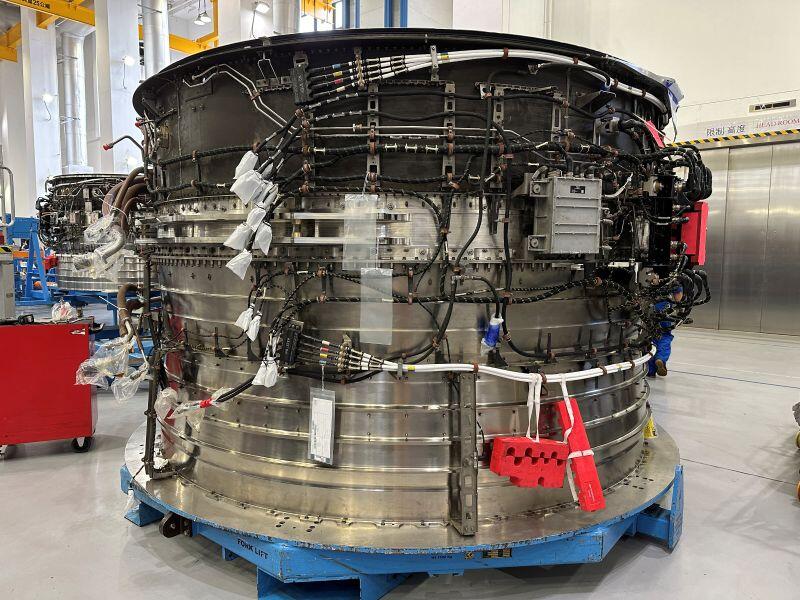
A Rolls-Royce Trent XWB low-pressure compressor case at HAESL.

A Rolls-Royce Trent XWB low-pressure compressor case at HAESL.

Credit: Lee Ann Shay/Aviation Week

HONG KONG—Hong Kong Aero Engine Services (HAESL) overhauled about 380 Rolls-Royce engines plus about 40 Trent 1000 TEN module sets in 2025, which represents “about 25% of Roll-Royce’s global network,” CEO George Edmunds says.

While this number is impressive for the HAECO Group and Rolls-Royce widebody-engine joint venture, two other metrics may be more revealing.

“We may do slightly less engines this year, but one of the areas that people get too focused on is engine number and not workscopes. We’re seeing that as engines mature, we’re seeing richer workscopes, so we should expect to see more first and second refurbishment of [Trent] XWBs, which take more hours,” Edmunds says.

At the same time, he says turnaround times are dropping across all engine types. Various factors contribute to that, including technology and process improvements.

“At HAECO, digital transformation is fundamentally reshaping our operations,” which involves significant investment, Edmunds says. Recent initiatives include predictive analytics and artificial intelligence that should drive further operational efficiency.  

HAESL is “applying AI to enhance borescope inspections and deploying a robotic AI-driven surface inspection” tool to replace a labor-intensive manual process and improve accuracy, he says. It’s also integrating AI into electronic work cards.

“We are also expanding HAECO Customer Gateway into HAECO Engine Services, our engine shop in Xiamen, thereby providing customers with real-time visibility into engine shop progress,” he says. The digital tool is designed to enhance customer service by enabling customers to interact with the shop digitally, including sharing data when needed. Since introducing the Customer Gateway, “we’ve reduced downtime for invoice sign off from an average of six or seven days down to one,” Edmunds says. These initiatives all are aligned with a 10-year digital roadmap for HAECO, HAESL and HAECO Engine Services that rolls up into a smart factory “to deliver step-change improvements in efficiency, quality and productivity,” Edmunds says.

As part of that, HAESL is upgrading its enterprise resource planning (ERP) software to cloud-based SAP S/4HANA, which is scheduled to go live in March 2027. This will integrate with the introduction of HCLTech’s iMRO/4 asset management solution to form HAESL’s maintenance execution system, he says.

A key part of the upgraded ERP is pooling the data into one cloud-based place, a data foundation, to unlock its potential. By feeding off the same foundation, he thinks HAESL will be able “to do much more enterprise-wide improvements and efficiencies.”

For example, HAESL, which has a long history of Lean processes, includes a whiteboard in each engine cell that shows “a streamer of every single process within that cell and where the wastes are. We work annually to reduce those wastes over time,” Edmunds says. “We’re going to go live with a digital streamer this year, which will then get better once we have the ERP system that will then allow us real-time visibility down to the modular or even part level. That’s going to really drive our ability to have an overview of the data and more insight on where we can take action.”

Lee Ann Shay

As executive editor of MRO and business aviation, Lee Ann Shay directs Aviation Week's coverage of maintenance, repair and overhaul (MRO), including Inside MRO, and business aviation, including BCA.