SINGAPORE—A lack of in-region engine maintenance shop capacity combined with a shortage of capabilities is causing bottlenecks in Asia-Pacific at a time when stakeholders are also battling against escalating costs and a still sluggish supply chain.
A lack of support to maintain the growing fleet was identified at Aviation Week's MRO Asia-Pacific event in an engine panel discussion on Sept. 16, with additions to footprint and repair capability cited as two ways to remedy this.
Asia-Pacific has the greatest number of leased aircraft globally. One lessor particularly active in the geography is Avolon, which has its regional office in Singapore and a diverse portfolio of both narrowbody and widebody aircraft and engines contracted out to local operators. Stephen McDonnell, Avolon's head of technical transactions for Asia-Pacific and the Middle East, said the region has seen a “perfect storm” in the years since the COVID-19 pandemic which has led to the capacity shortfalls of today.
“A lot of manpower was lost during COVID. A lot of people retired, particularly more experienced people and the backfill and training for that didn't begin until after the pandemic,” McDonnell said. “The supply chain is still recovering and there's an insufficient MRO footprint. There's increasing demand at historic levels for the assets. When you combine all of that together, it's a tornado, and it's going to take time to see out.”
Given the demand levels, McDonnell believes that Asia-Pacific is underserved as a region in engine maintenance. “Asia-Pacific's well served from an airframe overhaul perspective, but it's a bit light on engines,” he said. “A lot of engine work is going over to Europe and the U.S., and it's queuing there for quite a long time. There's a huge amount of opportunity in Asia-Pacific if the OEMs and the third-party MROs can gear up with extra capacity.”
A big portion of this is expected to be driven by the OEMs, given their heavy presence in the Asia-Pacific engine aftermarket. UK-based Rolls-Royce, which has a strong market share in Asia-Pacific's widebody powerplant segment, has targeted expansion of capacity in the region across its joint-venture shops to meet future growth and volume.
Vanessa Thacker, Rolls-Royce's vice-president of MRO strategy, said that the engine manufacturer is seeking to build extra Trent engine repair capacity in the region by expanding its footprint, such as adding 40% capacity growth in its Singapore Aero Engine Services joint venture with SIA Engineering Company while investing heavily in equipment and tooling at Hong Kong Aero Engine Services joint venture with HAECO. Rolls-Royce is scheduled to add a new shop in Beijing by the end of 2026 at the Beijing Aero Engine Services Company, a partnership with Air China.
Rolls-Royce is also targeting more cross-regional collaboration in its Asia-Pacific operations, utilizing existing technical knowledge bases. “These are integrated teams joining those joint ventures to look at strip, build, repair and testing processes and where efficiencies can be driven,” Thacker said.
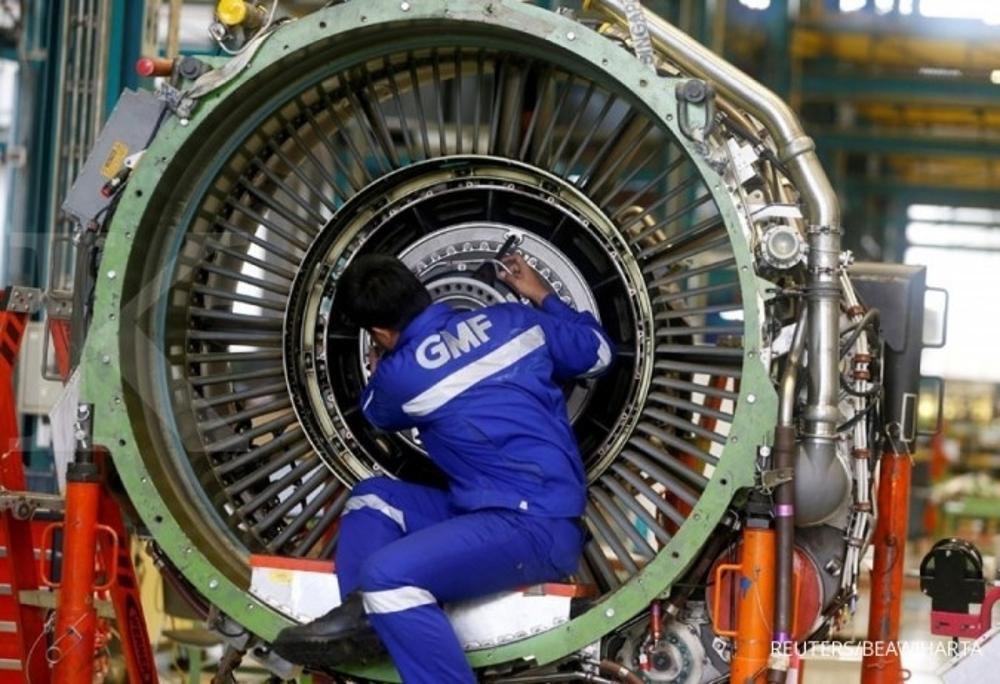
Another key driver toward achieving better fleet support will be fixing the region's supply chain, which has shown signs of improvement in the past year but remains challenging. Fidiarta Andika, GMF AeroAsia's vice-president of engine services, cited a shortage of high-pressure turbine blades for CFM56 models, one of the engines the Indonesia-based MRO services, as a challenge. He said that the key to overcoming this is having a strong supply chain network and believes more collaboration across the region can bridge capacity gaps. “When we talk about developing new engine capability, we are talking about a lot of investment work, a lot of knowledge and this takes time to achieve. There is an opportunity for existing engine shops in the region to collaborate with one another as that will bring extra capacity online,” Andika said.
Airline operators have felt the impact of new-generation engine durability issues related to programs such as the Pratt & Whitney geared turbofan engine. These include VietJet Air, which uses the engine for its Airbus A320neo and A321neo aircraft fleet. The carrier outsources its engine maintenance for its Airbus narrowbody and widebody platforms to several partners.
Rohit Tomar, VietJet's director of finance and supply chain operations, characterizes turnaround times (TAT) in two categories: first, shop TAT, and second, wing-to-wing TAT. “What is important to an airline is the wing-to-wing TAT because we need to get the engine back onto the aircraft to fly,” he said. “In some extreme circumstances, this can be as high as almost a year and that creates multiple challenges.”
Among these challenges include maximizing the cost advantages on a new engine, factoring in some of the entry-into-service issues, Tomar said. “If we are operating a new engine which reduces fuel consumption by 12% but because of the extended wing-to-wing TAT, this increases the spare engine requirement considerably so whatever amount I'm saving in the fuel I'm ending up paying for the spare engines,” he said. “The long-term effect of this is that when an airline needs to keep their operations running, they would have to invest in that number of spare engines. As the industry matures and the TATs keep coming down, airlines will end up having a huge number of spare engines for the number of operating engines.”
Rolls-Royce is seeing turn times for engines come down to some degree, but Thacker said the TATs are still not at the level the engine manufacturer wishes them to be. “We have a vision for world-class MRO, and that involves having engines not in the shops, but flying around, and the TAT is challenged because of supply chain constraints,” she said. However, she said the company is starting to see results from further integration within the supply chain. “Some of our engine programs are seeing 30% improvement in parts supply. That is an enabler for turnaround time improvement.”
Heightened costs and long TATs are also impacting lessors. McDonnell said costs have escalated at unprecedented levels across all the OEMs and it remains to be seen when this levels out, with McDonnell believing double-digit increases are unsustainable long term. In the nearer term, he said repair strategies are changing to reflect this. “Module swaps generally would have been for older engine types but now we're seeing a lot more hospital shop visits, repair shop visits and module swaps on newer engines, even on narrowbody fleets, which is very new,” he said.
McDonnell identifies the lease return stage as challenging to lessors in the current environment. “If a three-month return is scheduled and a preliminary borescope inspection has been done and a finding is made, lessors will be lucky to turn that around in six months,” he said. “We're trying to be a bit nimbler about how to manage those returns and see if we can find a happy medium between both previous and future operator of an asset, but it's a difficult proposition.”

Related Content