BeauTech’s New 10-Year Deal Highlights Shift In Spare Engine Planning
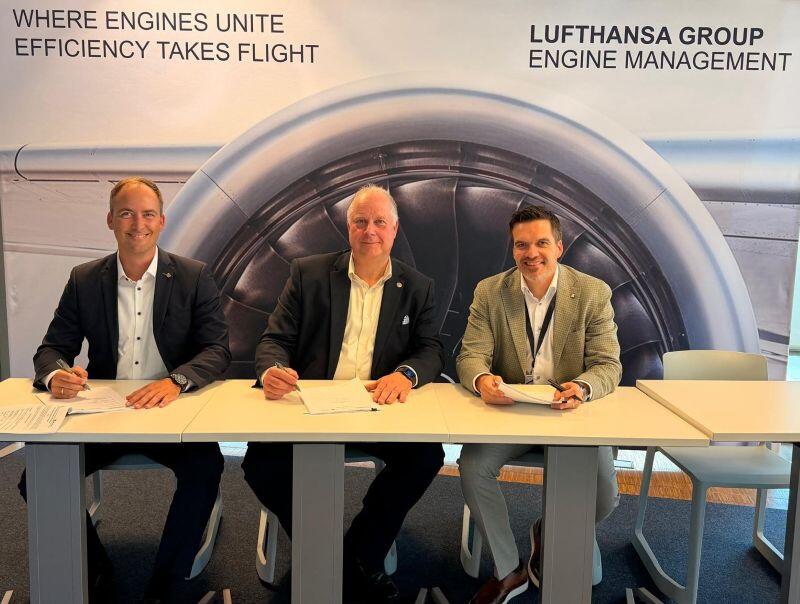
BeauTech Power Systems has signed a 10-year framework deal with Lufthansa Group’s dedicated engine management company, Group Engine Management. The deal signals a shift in the engine market, with airlines treating spare engine availability as a long-term structural necessity rather than a contingency tool.
The agreement gives Group Engine Management (GEM) access to BeauTech's engine leasing portfolio across GE Aerospace CF34, CFM International CFM56 and Leap and Pratt & Whitney geared turbofan (GTF) platforms. “We can support them [GEM] whenever they need additional capacity, including in AOG situations or fast-turn lease requirements," Tobias Konrad, BeauTech's chief operating officer, tells Aviation Week.
While the announcement itself centers on a leasing partnership, BeauTech executives say the deal reflects broader industry recognition that spare-engine availability will remain a critical issue throughout the remainder of the decade.
Konrad says the 10-year duration should be viewed less as a response to a temporary market disruption and more as a reflection of the industry's long-term planning horizon.
"I would frame the 10-year horizon as prudent planning rather than concern," he says. "GEM is one of the most capable engine managers in the industry and holds a substantial spare pool of its own. The fact that they still want contracted external access over a decade tells you how the smartest players in the market view spare-engine availability: it's a structural feature of this decade, not a short-term squeeze."
According to Konrad, engine leasing is also evolving beyond its traditional role of providing temporary replacement assets during shop visits.
"Leasing green time has become a genuine fleet strategy over the last few years, not just a way to cover a removal, and lessors have responded with more flexible, tailored solutions," he says.
For many operators transitioning from Airbus A320ceo and Boeing 737NG fleets to newer A320neo and 737 MAX aircraft, leasing engines with remaining service life can offer a more economical alternative to investing in costly overhauls shortly before fleet retirement, Konrad notes.
"Leasing in green time and avoiding a heavy, costly shop visit is a valid strategy that saves money in most cases. You are matching the engine's remaining life to the aircraft's remaining time in the fleet rather than over-investing in an asset you are about to retire," Konrad says.
The traditional short-term replacement lease model remains important, but Konrad sees increasing demand shifting toward newer-generation engines, particularly Leap and GTF variants, where maintenance events and shop visit pressures are now concentrated.
Concurrently, BeauTech expects demand for leased engine capacity to remain elevated even if OEM production and MRO supply chains continue to stabilize.
Konrad points to two parallel trends supporting the market. The first is a large wave of maintenance activity across aging CFM56 fleets as engines approach major life-limited-part replacement events and overhaul requirements. The second is the operating profile of newer-generation engines.
"The GTFs and Leaps have had real technical issues and significantly shorter on-wing times between repairs than the CFM56, so they come off wing more often," he says. This dynamic is pushing spare-engine requirements beyond historical norms, he adds, noting that the traditional assumption that airlines only need about 10% of their engine fleet as spares is no longer sufficient.
Because engines are coming off wing more often and taking longer to repair, airlines now need a larger buffer of spare engines just to maintain normal flight operations. “That is a structural step-change, not a temporary spike,” he adds.
While supply chains are showing signs of improvement, Konrad believes underlying demand fundamentals will continue to support the leasing market.
"The supply chain is genuinely recovering at the OEM level, and we are seeing early signs of stabilization in pockets," he says. "But with demand for serviceable engines still outpacing supply, it remains a healthy market for a short-term lessor for years to come."

Related Content