Italy’s Ancona International Airport is assessing plans to develop new third-party maintenance capability on-site as its owners look to capitalize on constrained MRO capacity in Europe and growing demand for widebody maintenance slots on the continent.
Stewart Higginson, operating partner at investment firm Njord Partners and chairman of Ancona International Airport, says the airport has received interest from Part 145 maintenance providers as well as spare parts companies over the past year. The airport, located on Italy’s Adriatic coast in the Marche region, has been under London-based Njord’s control since 2019 and handles both passenger and cargo traffic.
Higginson says the airport, of which Njord owns a 91.5% stake, is reviewing plans ranging from near-term use of existing hangar space and temporary facilities. Longer term, it sees potential for a significant base maintenance development capable of accommodating widebody aircraft.
“There’s a few things happening at Ancona that are reflective of the current state of the global MRO industry,” Higginson says. “Given the short supply of these services and this infrastructure that exists in Europe and around the world, it’s a bit of a no-brainer to address that opportunity.”
Having operated as a military airport during World War II, Ancona operates a runway of around 3 km (1.86 mi.), which Higginson says gives it the ability to handle narrowbody and widebody aircraft. The airport also is an established cargo location, with major operators such as DHL and UPS operating at the site.
The MRO opportunity is still in the “assessment and feasibility stage,” Higginson says. In the short term, Ancona could use existing hangar space for certain maintenance or parts repair-related activities, while its taxiways and hardstand areas could support temporary infrastructure.
A larger base maintenance offering would require new construction. “If you’re going to have multiple aircraft doing base maintenance, there’d be the need to actually construct something more significant and newer,” he says.
He anticipates any potential MRO capacity additions being carried out through third-party providers developing operations on site, with interest coming from both inside and outside of Italy. “We would essentially let a third party develop their business on our space,” he says.
If plans are cemented, he believes funding for a larger project could come from three sources. First, existing airport ownership, including Njord and the regional Marche government, which holds a minority 8.5% shareholding; second, any prospective MRO partner; and third, potential funding from the European Union.
The push comes as airlines and lessors continue to face limited maintenance availability, particularly in Europe. Higginson says slot constraints are also visible at EuroAtlantic Airways, the Njord Partners-owned Portuguese widebody ACMI and charter operator where he is chairman and previously served as CEO.
“Particularly during the winter, particularly in Europe, you find yourself having to bring forward and shift around the planning of your maintenance events constantly,” he says. “Slot availability is an issue if we’re just talking about normal scheduled C checks. You also have airworthiness directives that you’re having to respond to.”
He adds that engine shop visit availability is also constrained, with operators often required to seek capacity outside Europe. “Having additional facilities for engine shop-related work is also of great interest,” Higginson says. “Europe, in particular, is underfunded there.”
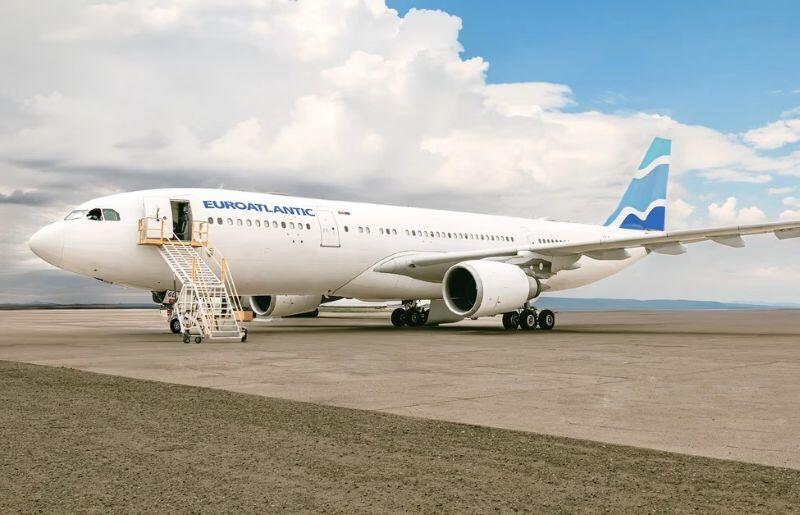
The investment firm became the majority partner in Lisbon-based EuroAtlantic in 2024. The ACMI airline currently has six aircraft in its portfolio, comprised of three Boeing 767-300ER, two 777-200ER and more recently, its first Airbus aircraft in the form of an A330-200, of which it plans to add two in the near future.
Long term, EuroAtlantic plans to grow its fleet to between eight to 12 aircraft before 2030 through additional A330s and 777s. The strategy is driven by aircraft availability and the need for a flexible widebody ACMI fleet. “There was not sufficient capacity out there in the market to still stick with a Boeing-only strategy in the long term,” Higginson says.

Related Content