This article is published in Aerospace Daily & Defense Report part of Aviation Week Intelligence Network (AWIN), and is complimentary through Mar 14, 2026. For information on becoming an AWIN Member to access more content like this, click here.

SNC, Specter Detail Low-Cost Plasma Ramjet Missile Plan

SNC
Credit: SNC

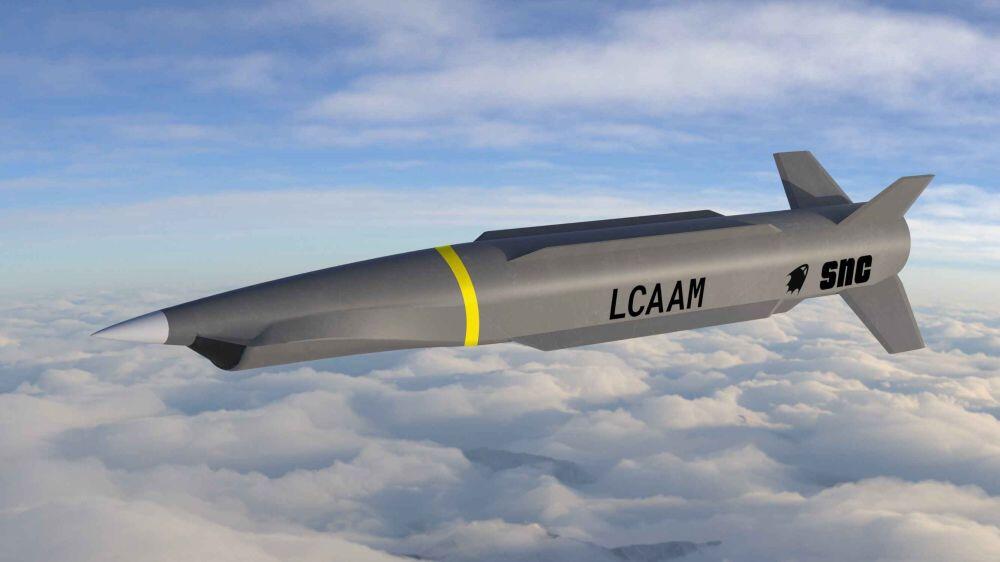
COLORADO SPRINGS—Sierra Nevada Corporation (SNC) and startup Specter Aerospace plan to develop and flight test a supersonic ramjet-powered cruise missile under a collaborative agreement signed between the companies in February.

Flight tests of the low-cost, air-to-air missile (LCAAM) are scheduled for the third quarter of 2026, says SNC, which displayed a model of the weapon at the Air Force Association Air Warfare Symposium in Aurora, Colorado, on Feb 24.

The LCAAM will utilize Specter’s plasma-assisted combustion technology for both ignition and operability expansion and is expected to form the basis for a supersonic aerial effects product line. Specter has been working on the technology as part of a broader, Pentagon-supported company initiative to develop a family of low-cost, mass-producible plasma-assisted interceptors, targets, countermeasures, and missile systems.

SNC says the collaboration with the Boston-based company “brings together Specter Aerospace’s expertise in ram/scramjet propulsion, vehicle design and avionics with SNC’s proven expertise in mission integration, air vehicle development and air defense systems.”

Jon Piatt, executive vice president of SNC’s intelligence, surveillance and reconnaissance (ISR), Aviation and Security business area, adds that the collaboration targets low cost and mass production while maintaining high performance. “Together with Specter Aerospace, we are combining affordability with advanced propulsion and scalable manufacturing to create a solution that allows for widespread deployment without compromising on range, reliability or performance.”

Although the full LCAAM vehicle will be tested later this year, SNC says some air vehicle and propulsion testing is already underway. “The ongoing flight test program is validating novel air breathing engine technologies designed to significantly extend vehicle range and reliability when compared to industry,” it adds.

Initial tests are focused on 1,000-lb. or under air breathing supersonic air effects class vehicles, though SNC adds “these technologies apply to both ramjet (supersonic) and scramjet (hypersonic) applications.”

Separately, Specter says development of the company’s Nighthawc hypersonic vehicle will continue independently of the SNC collaboration. The dual-mode ramjet and scramjet-powered vehicle is expected to complete ground test qualification and wind tunnel testing this year, before entering flight testing in 2027. 

— With Steve Trimble in Washington

Guy Norris

Guy is a Senior Editor for Aviation Week, covering technology and propulsion. He is based in Colorado Springs.