This article is published in Aerospace Daily & Defense Report part of Aviation Week Intelligence Network (AWIN), and is complimentary through Mar 14, 2026. For information on becoming an AWIN Member to access more content like this, click here.
Lockheed Martin is planning several internally funded technology demonstrations focused on missile defense between 2026-28.
AURORA, Colorado—Lockheed Martin plans to demonstrate a number of on-orbit capabilities related to missile defense over the next three years, a company executive said Feb. 23.
The company is planning multiple launches between 2026-28 to build confidence toward “space-enabled missile defense,” including the ability to sense and maneuver, and to contain missile threats “in an agile way,” Todd Stevens, vice president of mission strategies and advanced capabilities, told reporters at the Air and Space Forces Association’s Air Warfare Symposium here.
“We’re going to put capabilities up there, demonstrate them for the customer and reduce risk toward operational systems,” he said.
Lockheed Martin is internally investing in a number of demonstrations, both on-orbit and on the ground, meant to push emerging technologies past the so-called valley of death. These demonstrations are run under the company’s Ignite business unit, referred to internally as the “Skunk Works for Space.”
As missile defense initiatives come into greater focus under the proposed Golden Dome for America architecture and programs like the Missile Defense Agency’s Next-Generation Interceptor (NGI), the company has looked for opportunities to use its tech demo initiative to support that mission area, Robert Lightfoot, president of Lockheed Martin Space, tells Aviation Week Feb. 24.
As the company works on the NGI program and hopes to play a critical role in building space-based interceptors under the Golden Dome architecture, “there’s kind of a crawl, walk, run approach we can take,” he says. The technology demonstrations will help the company work through different configurations for those capabilities, he adds.
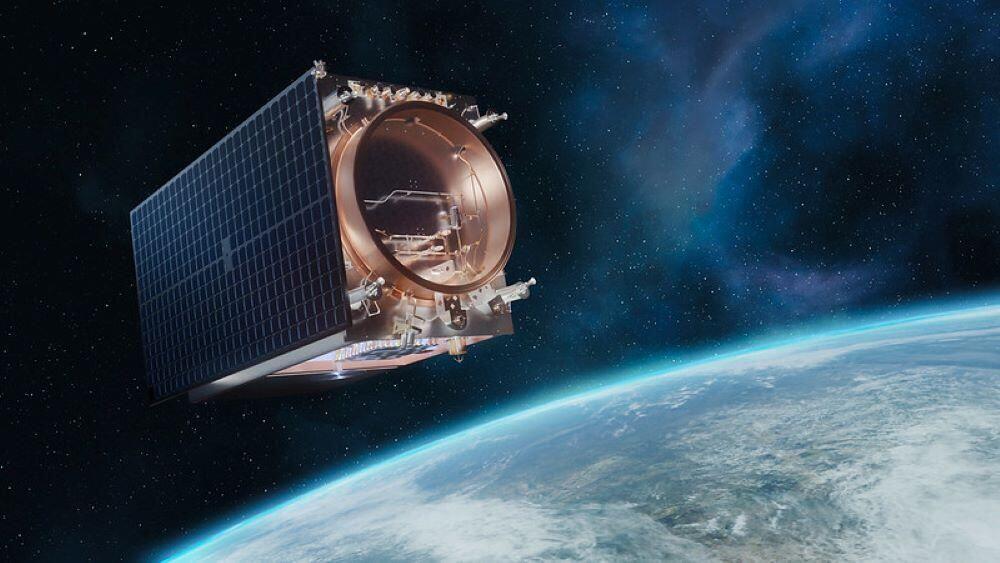
Lockheed Martin has contracted with Firefly Aerospace to launch a number of the space-based technology demonstrations on Firefly’s Alpha rocket. Firefly is scheduled to return to flight in late February after suffering multiple launch anomalies in 2025, one of which resulted in the loss of a Lockheed Martin technology demo payload, the LM400 spacecraft. A second technology demonstration known as “TacSat” has been delayed.
Lightfoot said Lockheed Martin is slated for several tech demo missions to launch aboard an Alpha rocket once it returns to flight. “They’re a strong partner,” he said, referring to Firefly. “There’s other partners we can use as well.”