This article is published in Aerospace Daily & Defense Report part of Aviation Week Intelligence Network (AWIN), and is complimentary through Mar 20, 2026. For information on becoming an AWIN Member to access more content like this, click here.

U.S. Air Force Official Calls For Mini-Interceptor For Tankers

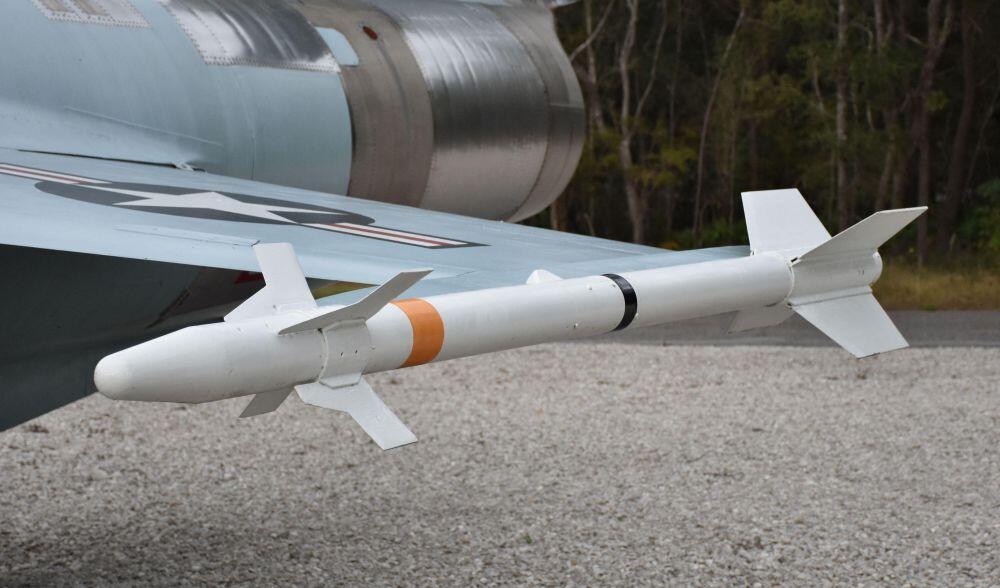
AIM-9 Sidewinder missile on a jet fighter. The Sidewinder is an air-to-air missile designed for dog-fighting. Contributor: Michael Fitzsimmons
AIM-9 Sidewinder missile.
Credit: Michael Fitzsimmons/Alamy

The U.S. tanker fleet aircraft needs a new kind of air-to-air interceptor that can shoot down incoming missiles, the Air Force’s top acquisition official for mobility aircraft says.

The comments by Kevin Stamey, program executive officer for mobility, reveal a revival of interest in new weapons that can protect high-value airborne assets, such as tankers.

By integrating a kinetic interceptor, the Air Force hopes to break the endless cycle of fielding non-kinetic countermeasures, which must be constantly updated as the adversary makes its own electronic adjustments.

“Whether it’s an IR [infrared] seeker or a radar seeker, if we have a means of taking it out kinetically, we don’t have to electronically attack it or use decoys that are effective against some things, but not others,” Stamey said in an interview published by the Air Force Life Cycle Management Center on Feb. 10.

Kinetic interceptors would form a last line of protection, especially against missiles with dual infrared and radar seekers.

“If all else fails and a threat somehow breaks the kill chain, we’ll still have a means to protect the tanker,” Stamey said. “The technology is necessary if we’re going to be successful in pushing tankers into what we call the weapons engagement zone.”

Stamey’s comments come several years after the Air Force and Navy first expressed interest in such technology.

In 2020, the Air Force Research Laboratory (AFRL) awarded Raytheon, an RTX company, a contract to develop the Miniature Self-Defense Munition, a imaging-infrared-seeking missile one-third the size of an AIM-9 Sidewinder. Two years earlier, the Navy surveyed the market for interest in developing a Hard Kill Self-Protection Countermeasure System for cargo and surveillance aircraft. It is not clear how far those projects moved beyond those last announcements.

Steve Trimble

Steve covers military aviation, missiles and space for the Aviation Week Network, based in Washington, DC.