This article is published in Aerospace Daily & Defense Report part of Aviation Week Intelligence Network (AWIN), and is complimentary through Oct 31, 2026. For information on becoming an AWIN Member to access more content like this, click here.

PAC-3 Edge
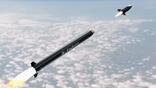
Lockheed Martin unveiled a new, longer-range variant of the Patriot Advanced Capability (PAC)-3 interceptor and confirmed the U.S. Army selected the proposed missile defense weapon to proceed into the next phase of the Future Interceptor competition.
The single-stage PAC-3 Edge will feature a new seeker from Lockheed’s Strigo product center, a Northrop Grumman-supplied multi-pulse solid rocket motor and control system upgrades, Lockheed said in a news release.
“Lockheed Martin’s PAC-3 Edge interceptor leverages the combat-proven PAC-3 [Missile Segment Enhancement], delivering even greater maneuverability, power and velocity to ensure the Army’s layered defensive architecture remains the most advanced in the world,” said Tim Cahill, president of Lockheed’s Missiles and Fire Control business.
Lockheed plans to start testing the PAC-3 Edge next year and, if selected, field the weapon as the Army’s Future Interceptor in 2031.
The Army’s Future Interceptor contract remains in competition as the program seeks to develop a weapon to fill a capability gap between the PAC-3 MSE and Lockheed’s Talon missile from the Terminal High Altitude Area Defense program.
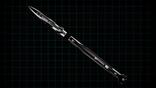
A rendering of the PAC-3 Edge shows that Lockheed appears to have removed the actuator control motors found in the MSE variant. Those actuators help the MSE achieve a hit-to-kill intercept against advanced targets, but drive up the cost of the system. Lockheed may be trying to balance that agility with the addition of a multi-pulse rocket motor in the PAC-3 Edge, which may be an upgrade compared to the dual-pulse system in the MSE.

Related Content