This article is published in Aerospace Daily & Defense Report part of Aviation Week Intelligence Network (AWIN), and is complimentary through Sep 13, 2026. For information on becoming an AWIN Member to access more content like this, click here.

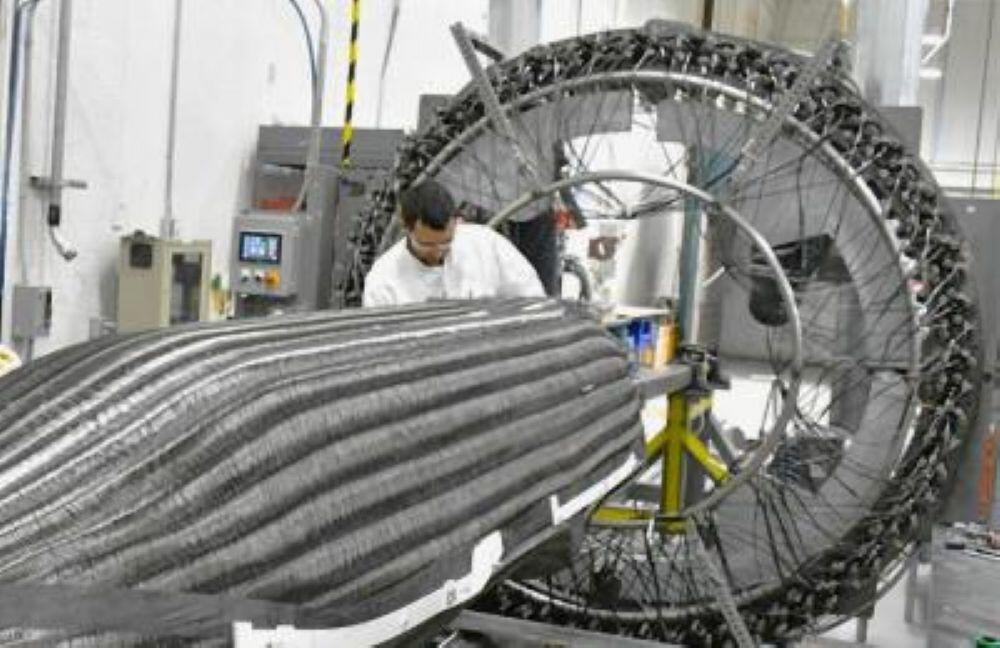
Lockheed Taps Albany For Low-Cost Hypersonic Missile Aeroshell

Photo credit: Albany Engineered Composites
Credit: Albany Engineered Composites

HUNTSVILLE, Alabama—Albany Engineered Composites (AEC) will provide a 3D-woven, composite aeroshell for the Lockheed Martin Next Generation Glide Body (NXGB), Lockheed announced on Aug. 10.

The advanced thermal protection system by AEC becomes a critical part of Lockheed’s campaign to preserve a role in the U.S. Army’s Long Range Hypersonic Weapon (LRHW) program as service officials plan to switch to a low-cost, mass-producible alternative by fiscal 2029.

The intricacies of producing the Dynetics/Sandia National Laboratories aeroshell for the Common Hypersonic Glide Body (CHGB) at the front end of the LRHW program’s Dark Eagle missile has been part of the issues limiting deliveries to no more than a couple of dozen per year. The Army furnishes Lockheed with the Dynetics-made CHGB, which is derived from the 45-year-old experimental hypersonic program by Sandia.

“So the technologies that we have today in the government provided the front ends that we have available. These were designed as scientific experiments that scaled into a limited manufacturing capability,” said Todd Stevens, Lockheed’s vice president for Mission Strategies and Advanced Capabilities.

“We need to get to a different manufacturing process, and so focus on production and cost while also achieving a capability,” Stevens added, speaking to reporters on the eve of the Space and Missile Defense Symposium here.

AEC advertises that it can produce specialized fabrics to function as shields from the intense heat created by hypersonic flight, preventing the missiles and their payloads from breaking apart during flight.

The Army selected Lockheed in 2018 to integrate the CHGB with a Northrop Grumman-supplied two-stage booster. But now the service plans to move quickly to a different type of hypersonic weapon. The Army’s budget justification documents released in April show plans to buy 1,000 low-cost hypersonic missiles in fiscal 2029, followed by 2,000 each in 2030 and 2031.

The order is likely to attract interest from nontraditional companies, including ballistic and hypersonic missile startup Castelion. In response, Lockheed unveiled the NXGB concept in June. 

Steve Trimble

Steve covers military aviation, missiles and space for the Aviation Week Network, based in Washington, DC.