This article is published in Aerospace Daily & Defense Report part of Aviation Week Intelligence Network (AWIN), and is complimentary through Oct 31, 2026. For information on becoming an AWIN Member to access more content like this, click here.
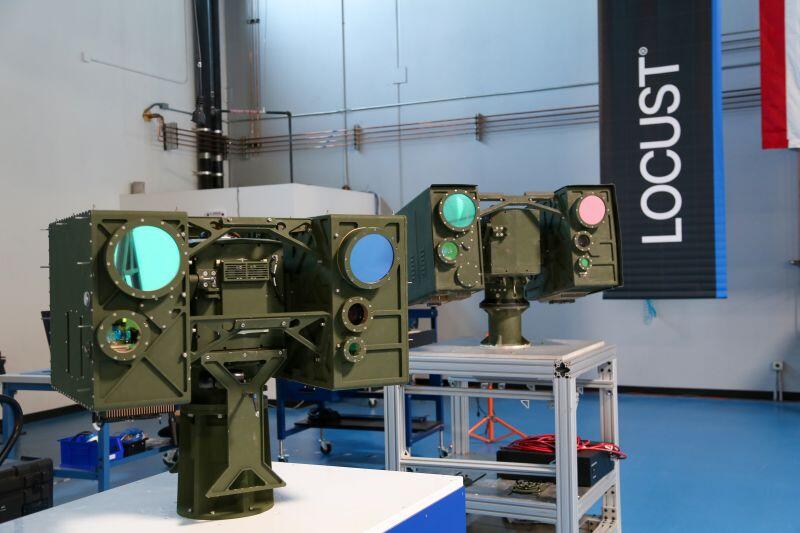
The U.S. Army will seek to insert a broad range of system improvements into the AeroVironment Enduring High Energy Laser (E-HEL) before deciding whether to acquire a new version of the directed-energy system in 4-5 years.
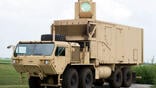
A $464.8 million Army contract announced on Sept. 2 to AeroVironment launched production of the 30-kW E-HEL system for integration on the Joint Light Tactical Vehicle (JLTV) or in a palletized form on a trailer pulled by a JLTV.
But the Army plans to decide in fiscal 2031 whether to launch production of a new version of the E-HEL system that can be installed on the smaller Infantry Squad Vehicle-Utility, according to a solicitation that the Army released through the National Security Technology Accelerator organization.
But the current version of the E-HEL system will need to be scaled down and improved significantly to fit within the size, weight and power constraints of an Infantry Squad Vehicle, the solicitation says.
The Army plans to fund development of prototype subsystems covering 12 major categories of the E-HEL system: power generation, energy storage, structure, software, sensors, communications, laser source, beam director, beam combiner, beam transport, thermal energy storage and the full system.
The Army mandated that the E-HEL system comply with the modular open systems approach strategy, which defines a set of common interfaces. That strategy was intended to keep the E-HEL open to technology insertions from third-party suppliers beyond AeroVironment as the system integrator.

Related Content