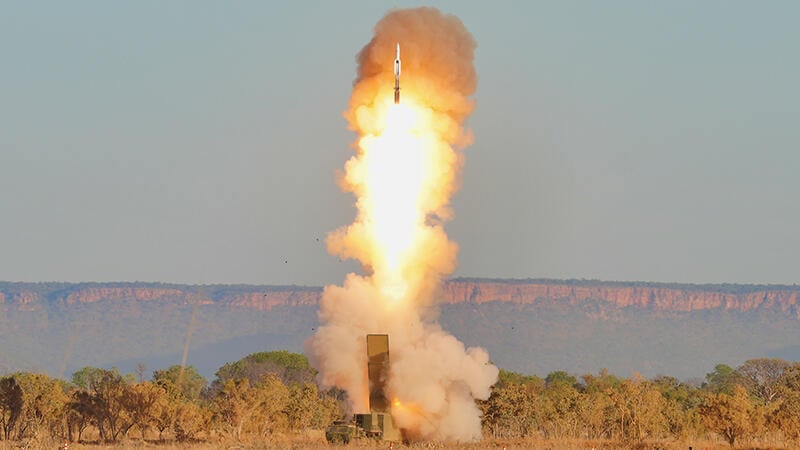
Germany wanted to acquire the U.S. Typhon—capable of launching SM-6 and Tomahawk missiles—but Berlin doubts the system could be delivered in time to meet its interim deep-strike capability goals.
Europe is accelerating efforts to plug its gaps in long-range deep-strike weapons needed to hold Russian strategic targets at risk—in part to address a U.S. pullback in providing near-term options.
A major catalyst for the policy change has been the U.S. cancellation of a planned long-range fires deployment to Germany. In addition, Washington is signaling it may not sell those capabilities, citing domestic needs. That leaves Europe fending for itself.
Moscow’s war in Ukraine has provided a key lesson for European military planners: Their forces need to be able to threaten command centers, logistics hubs, air bases and missile sites deep in Russian territory, at a range of up to 2,500 km (1,553 mi.), without relying on aircraft operating in contested airspace to strike those targets. While several countries in the region have invested in air-launched cruise missiles, their ranges are not long enough, and their stocks are often not sufficient.
- MBDA eyes cruise missile and deep-strike options
- ArianeGroup proposes conventional ballistic missiles
To deal with that situation, European companies are quickly coming up with ideas in areas such as cruise missiles, ballistic weapons and hypersonic systems. Those efforts are aimed in part at addressing requirements for the European Long-range Strike Approach (ELSA) program, which includes France, Germany, Italy, Poland, Sweden and the UK. Others are looking to field something more basic—and more rapidly.
Germany has taken a leading role, with a clear road map for deep strike. The country had planned, after the long-range fires fielding this year, to acquire the U.S. Typhon system—a ground-based launcher capable of firing Raytheon Tomahawk cruise missiles—by decade’s end. That prospect has faded as Washington prioritizes Tomahawk production for its own forces following heavy expenditure of the weapon during the war against Iran.
“If there is a gap, we will find a way to mitigate it,” German Army Gen. Carsten Breuer, chief of defense, said during an Atlantic Bridge event at the ILA Berlin Air Show.
Germany wants a system fielded by 2029, and Breuer indicated a sense of urgency. “We have to be faster. . . . We have to see what is on the market,” he said.
The tight timelines are ratcheting up pressure on industry, Thomas Gottschild, managing director of MBDA Germany, told journalists at ILA.
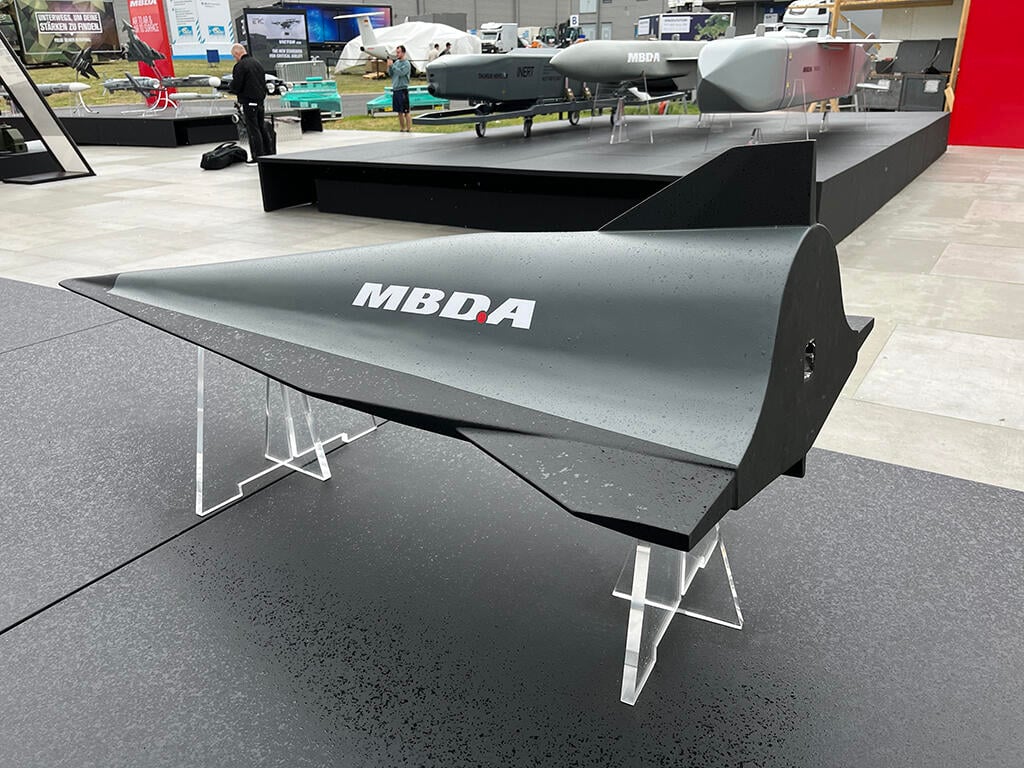
Rather than pursuing entirely new designs, MBDA is advocating for an evolutionary approach. The company is exploring a mix of weapon systems. These include hypersonic glide vehicles (HGV) and high-end cruise missiles, building on technologies from existing weapon families such as the Taurus KEPD 350 air-launched cruise missile and Stratus weapons MBDA is developing in France, Italy and the UK. On the cheaper end are long-range, low-cost one-way attack effectors.
HGVs would be used to penetrate defenses, Christoph Müller, MBDA Germany’s head of hypersonic solutions, told journalists at the Berlin gathering. These would be followed by low-flying, low-observable cruise missiles striking from multiple directions.
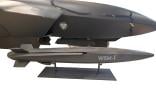
“If we want to meet the timelines of the end of this decade, you have to take the technology that is currently available,” Müller said. This would involve taking technologies from weapons like the KEPD 350 and MBDA’s proposed Remote Carrier Multidomain Multirole Effector (RCM2), then scaling it up to reach 2,500 km, he explained: “It essentially becomes a flying fuel tank with a tuned engine.” Compared with the 5-m-long (16-ft.) Taurus, this new weapon would be around 8 m long—too large for air launch from a fighter.
An HGV would not be ready for 2029, but Müller said development could advance quite quickly with the “right customer decisions.”
Initial test flights using a scaled down system could begin next year, although development is challenged by the lack of a hypersonic testing environment in Europe. “High-frequency flying is really the way to go here in order to accelerate, as there are many things you simply cannot test on the ground,” Müller said.
MBDA has identified Bayern-Chemie’s solid-fuel Red Kite as a potential sounding rocket motor for initial test flights. Ultimately, the missile-maker foresees developing an approximately 12-metric-ton hypersonic system, with a 10-metric-ton booster and an approximately two-metric-ton HGV.
During ILA, MBDA also signed a memorandum of understanding with Ukrainian Armor for a strategic partnership to look at deep-strike capabilities, but the partners did not elaborate on the details.
Rheinmetall and European missile and drone startup Destinus also disclosed that they would prioritize efforts toward quickly fielding the latter’s Ruta Block 3 cruise missile, which has a range of more than 2,000 km for a warhead weighing up to 250 kg (550 lb.). The two are close to finalizing their joint venture agreement, which also covers other systems.
“Together, we are advancing NATO qualification on an accelerated path,” Roman Köhne, head of the weapon ammunition division at Rheinmetall, said at Eurosatory in Paris. “This allows us to rapidly provide European armed forces with a ready-to-deploy, certified and fully European effector.”
Rheinmetall and Destinus are targeting system qualification for late 2028.
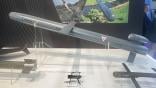
In France, MBDA is pushing its Land Cruise Missile (LCM) as an interim step for ELSA. The LCM could be combined with one-way effectors to increase survivability. The 120-kg-class Deluge one-way effector would have a range of more than 500 km, with a speed of 400 kph (250 mph) and aim to saturate enemy air defenses to allow the LCM to reach its target. The 3-m-long Deluge would have a 3-m wingspan and initially carry a small warhead; later upgrades could include a jamming payload.
The ground-based system leans heavily on the in-service MdCN—or Scalp Naval—missile, and would reuse its electronics for the firing system.
LCM would evolve with the MdCN Mk. 2 upgrade that France is pursuing and planning to have ready for service in 2030. Mk. 2 features a slightly refined front end for greater survivability. Further upgrades could include data links for inflight retargeting.
Whether through cruise missiles, one-way effectors or future hypersonic weapons, the message from European capitals is increasingly clear: Long-range strike is no longer a niche capability. It is becoming a central pillar of the region’s deterrence.
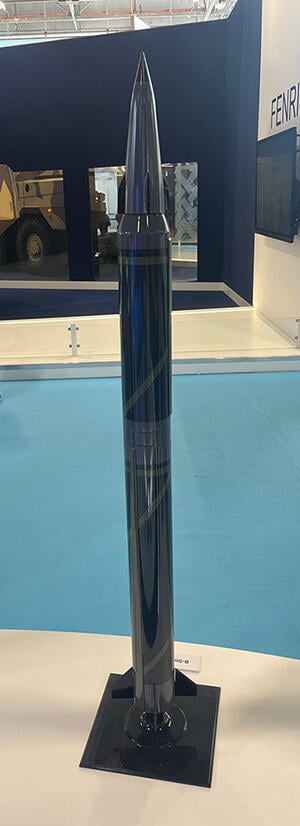
ArianeGroup—the company behind France’s M51 submarine-launched ballistic missile—is working with Thales and Soframe to propose a new family of ground-launched ballistic missiles to address the need. The partners are working on two versions of what they are calling B-Strike: one 1,000-km-range version and one capable of reaching 2,500 km. The companies are in talks with French armaments agency DGA to start the program.
“We are ready,” said Vincent Pery, ArianeGroup’s executive vice president for defense programs. The company could quickly move to flight trials, he told reporters, without putting a time frame on that.
The short-range B-Strike would reach an apogee of more than 120 km, fly at around Mach 10 and strike targets in under 10 min. It could be deployed from the partners’ X-Fire launcher, which could transport two missiles. The medium-range version would have an apogee greater than 150 km, fly at roughly Mach 15 and hit its target in less than 15 min. Both systems would have maneuverable reentry vehicles.
The French government still has to decide on the payload for the ballistic missile, including whether to tip it with an HGV the country has been developing. Some design parameters, such as whether to use a single- or two-stage rocket, will also be driven by customer priorities.
The B-Strike partners were coy about when such a system could be ready, deferring to the future customer. Company officials noted, however, that they developed a sounding rocket in about 2.5 years and an HGV in about three, suggesting that the ballistic missiles could be available in the near term.
Although France has the lead, the partners have said they are open to other countries joining.
In addition to working on the missile, ArianeGroup continues to evolve the V-Max HGV that first flew in 2023. A design incorporating lessons from the first flight test is in progress.


Related Content