This article is published in Aviation Week & Space Technology and is free to read until Dec 25, 2025. If you want to read more articles from this publication, please click the link to subscribe.

Europe’s Defense Ambitions Reach Beyond ‘Drone Wall’

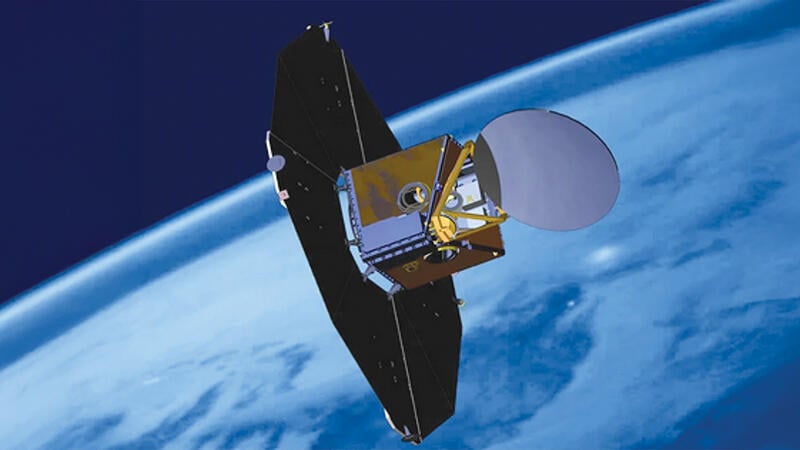
satellite in orbit

Germany and France are looking to deploy space-based early warning satellites to plug a long-standing capability gap.

Credit: OHB

Russian uncrewed air vehicle incursions into Polish and other airspace in recent months have put building a “drone wall” high on Europe’s agenda, but the region’s newfound appetite for air and missile defense stretches farther—into space.

The European Commission (EC) underscored the scale of the ambition in October when it unveiled its Defense Readiness Roadmap to plug capability shortfalls by 2030. The project has four cornerstones: the European Drone Defense Initiative, the Eastern Flank Watch, the European Air Shield and the European Space Shield.

  • MBDA hypersonic interceptor team refines design concept
  • Germany and France set space-based missile warning plan

EC Defense and Space Commissioner Andrius Kubilius said the flagships will aim to replicate the success of the pan-European space project in the defense area.

The European Drone Defense Initiative represents one of the first concrete steps at the EU level to put substance to the vaguely defined “drone wall” that government officials have invoked in recent months.

So far, governments have discussed quickly buying and fielding counterdrone and lower-tier air defense equipment as well as using combat aircraft to intercept threats. After the Netherlands used a Lockheed Martin F-35 to shoot down a suspected Russian drone in Polish air space, Germany doubled the number of Eurofighter Typhoons on quick reaction alert. The new Drone Defense Initiative is due to launch before the end of March with the goal of fielding first capabilities by the end of 2026.

Industry has started to see the windfall from growing customer demand for counterdrone and air defenses and is rushing to keep pace. Australia’s DroneShield plans to open a manufacturing facility next year in Europe, where it sees a large pipeline for orders, CEO Oleg Vornik recently told investors. Saab is ramping up its counterdrone efforts to add to existing capabilities, CEO Micael Johansson stated on the company’s third-quarter earnings call on Oct. 24. Shortly after, Kongsberg reported a record order backlog for its defense and aerospace business, in part driven by counterdrone systems. Thales Chief Financial Officer Pascal Bouchiat also said on an earnings call that his company expects Denmark’s order of its Eurosam SAMP/T NG ground-based, long-range air defense system to be followed by others.

The EU is looking to augment its drone effort with other initiatives such as the Eastern Flank Watch to integrate air defense and counterdrone systems with ground and maritime defense systems. The European Air Shield would launch at the same time to generate air and missile defense capabilities.

The European Space Shield is intended to address growing concerns about the vulnerability of spacecraft and to augment dual-use systems such as the Galileo positioning, navigation and timing constellation and the coming IRIS2 secure satellite communications effort. The commission wants to launch the program in the second quarter of next year.

Other efforts aimed at boosting Europe’s defense are advancing. An MBDA-led industrial team working on development of a hypersonic interceptor missile has narrowed its design concepts to two and aims to choose a final configuration for further development in 2026.

The Hypersonic Defense Interceptor System (HYDIS2) team is one of two working on the interceptor that nominally would be part of the European hypersonic defense effort known as Twister. European defense procurement agency OCCAR says the HYDIS2 team has decided on the propulsive architecture for both the initial acceleration and midcourse phases and will now work on kill vehicle elements. The agency noted on Oct. 23 that the UK has become an observer to the project.

The rival Hypersonic Defense Interceptor (HYDEF) team, led by Spanish company SMS and including several other Spanish defense companies plus Germany’s Diehl, narrowed in on concepts in August. Selection of HYDEF or HYDIS2 is expected to follow the studies, which could enable the prototype missiles to be ready by 2030. Industry officials also have floated the idea of combining the two efforts.

Intercepting threats requires spotting them, of course. France and Germany have committed to fielding a space-based missile warning system by 2030 as part of their plans to lead a European effort to develop that capability.

German Defense Minister Boris Pistorius and French Armed Forces Minister Catherine Vautrin agreed during a recent meeting to the accelerated timeline for the program, called the Joint Early Warning for a European Lookout (JEWEL), the French Armed Forces Ministry said Oct. 24. The system is to comprise an early warning satellite component and ground-based radars. The two countries also said they would work to bring other European states onboard. Kubilius has repeatedly called for a European early warning system.

JEWEL initially is due to include French and German geostationary satellites, developed in part through the European Odin’s Eye program led by OHB. The effort also is supposed to facilitate real-time data exchange and be ready to receive contributions from others, the French ministry said.

France said sensors on such platforms could be part of a sensing architecture. The country has recently advocated for greater use of high-altitude systems.

Robert Wall

Robert Wall is Executive Editor for Defense and Space. Based in London, he directs a team of military and space journalists across the U.S., Europe and Asia-Pacific.

Tony Osborne

Based in London, Tony covers European defense programs. Prior to joining Aviation Week in November 2012, Tony was at Shephard Media Group where he was deputy editor for Rotorhub and Defence Helicopter magazines.