
New Threats Drive Changes To U.S. Military Helicopter Pilot Training
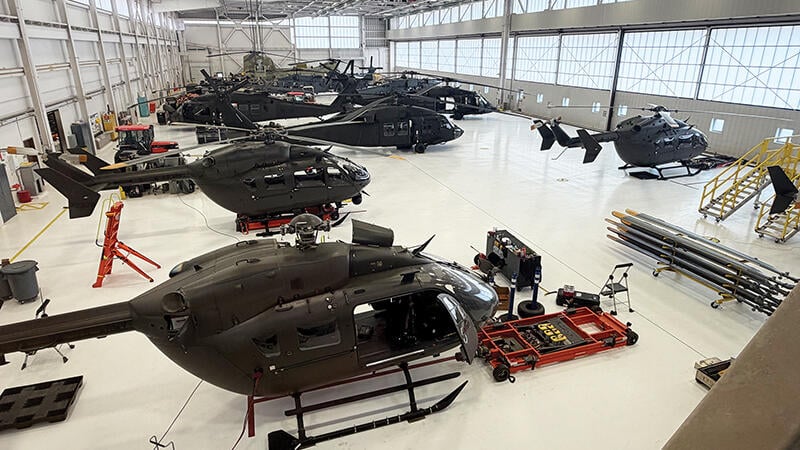
HAATS’ standing fleet of CH-47Fs, UH-60L/Vs and UH-72As is often augmented by helicopters students bring to use for training.
Credit: Guy Norris/Aviation Week
Flying a helicopter in reduced air density is challenging in the best of times, as rotor blades and engines lose performance. Add to that heavy loads, high-stress combat or search-and-rescue missions as well as degraded visual environments, and problems can quickly become serious—or even fatal. The...


New Threats Drive Changes To U.S. Military Helicopter Pilot Training is part of our Aviation Week & Space Technology - Inside MRO and AWIN subscriptions.
Subscribe now to read this content, plus receive full coverage of what's next in technology from the experts trusted by the commercial aircraft MRO community.
Already a subscriber to AWST or an AWIN customer? Log in with your existing email and password.
Related Content
