This article is published in Aerospace Daily & Defense Report part of Aviation Week Intelligence Network (AWIN), and is complimentary through Mar 11, 2026. For information on becoming an AWIN Member to access more content like this, click here.

U.S. Hunts Iran's Missile Launchers As Israeli F-35 Downs Yak-130
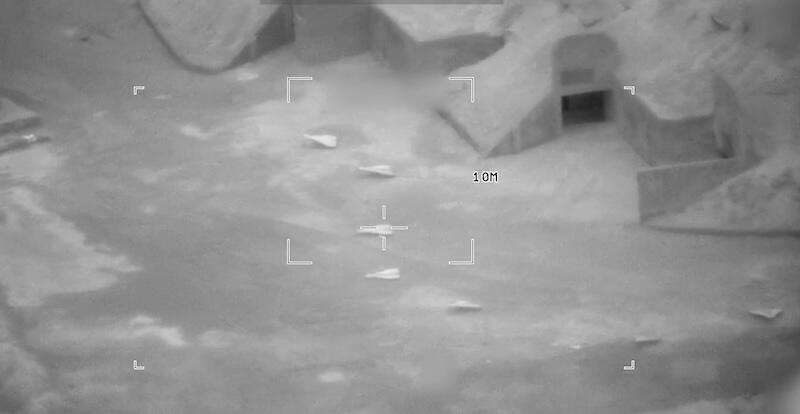
pic from centcom iran war
Credit: U.S. Central Command

The U.S. and Israel were hunting the vestiges of Iran’s ballistic missile and drone inventory, with Tehran’s ability to launch those systems at neighbors showing signs of diminishing—even if not eliminated—as the fighting stretched into a fifth day.

Combat operations on March 4 also saw an Israeli Air Force Lockheed Martin F-35 shoot down an Iranian Air Force Yak-130 trainer that can function as a light fighter. It marked Israel’s first shoot-down of a fighter using the F-35, the IDF noted, and represents the first overall reported air-to-air kill of a crewed fighter using the stealth fighter. The UK, a day earlier, said its Royal Air Force F-35Bs recorded their first shootdowns, engaging drones in defense of Jordan.

The U.S. also sunk an Iranian Navy ship near Sri Lanka using a submarine in what U.S. Chairman of the Joint Chiefs of Staff Gen. Dan Caine said was the first U.S. torpedo kill since World War II. Additionally, on March 3 U.S. forces sank a Shahid Soleimani-class surface combatant as part of the effort to destroy the Iranian Navy.

U.S., Israeli and other forces remained heavily focused on drone and missile threats, though. “We are hunting Iran’s last remaining mobile ballistic missile launchers,” U.S. Central Command (Centcom) boss Adm. Brad Cooper said late March 3 at the end of the fourth day of the campaign. He called what is left a “lingering” capability.

Much of the U.S. intelligence gathering systems are focused on identifying ballistic missile and drone targets to strike, Caine said March 4. Since the initial stages of the conflict, Iran’s theater ballistic missile shots have dropped by 86%, and seen a 23% decrease within the past 24 hr. Iran’s one-way attack drone shots are down 73% since the opening day of the war, he said.

Caine outlined a shifting approach in the conflict. U.S. and Israeli forces are progressively moving further into Iranian territory as they expand air superiority, he said, providing the ability to shift from employing standoff weapons to 500-lb., 1,000-lb. and 2,000-lb. Joint Direct Attack Munitions and Hellfire missiles fired by uncrewed aircraft. The move also eases the strain on limited supply of some U.S. high-end missile stocks.

“We have sufficient precision munitions for the task on hand,” Caine insisted.

Caine also described somewhat of a pincer move the U.S. aircraft carrier air wings operating in the region had carried out in the opening phase of the war. Aircraft from the USS Gerald R. Ford, along with bomber missions, focused on the northern border of Iran, while aircraft from the USS Abraham Lincoln focused on the southeast coast.

Iran has fired more than 500 ballistic missiles and 2,000 drones at Israel, neighboring Gulf states and other locations, Cooper said. In addition to expending ballistic missiles, Israel and the U.S. for more than four days have now been striking Iranian ballistic missile production infrastructure and launch systems. Cooper noted that the U.S. Air Force’s B-2, B-1B and B-52 strikes had that capability in their crosshairs.

Iran had about 3,000 ballistic missiles in its inventory last year before 12 days of strikes by the Israel Defense Forces (IDF) reduced the inventory, the IDF said this week. Israel said the Israeli Air Force had struck around 300 Iranian missile launchers as of late March 3.

Data from the United Arab Emirates (UAE) Defense Ministry illustrated the slowing pace of Iranian activity. The UAE disclosed 137 ballistic missile engagements at the end of the first day of fighting. The figure reached 165 ballistic missiles 24 hr. later, but recorded only 21 further ballistic missiles detected over the next 48 hr. On March 4, the UAE said it engaged another three ballistic missiles and 129 drones from Iran.

Iran on March 4 was still able to launch strikes on its neighbors, though. Turkey said Iran fired a ballistic missile in its direction that crossed Iraqi and Syrian airspace and was destroyed by NATO air and missile defense elements stationed in the Eastern Mediterranean.

In a sign of the strain Iranian attacks are placing on forces trying to defend against them, the UK on March 4 said it had resupplied air defenses to British and allied bases over the past 24 hours. It also said Royal Navy Wildcat helicopters able to target drones with Martlet missiles would arrive in Cyprus soon.  

Israel warned its citizens of missile launches. Saudi Arabia and Kuwait said they were dealing with incoming threats. Qatar, March 4, said Iran launched two cruise missiles and 10 drones against the country. The Qatari Air Force downed the cruise missiles and two drones, with the navy handling another two drones. Israel reported multiple incoming ballistic missiles and later said it struck targets in Iran, including missile launchers.

The IDF said the Israeli Air Force was again conducting what it called “broad-scale strikes” in Tehran as part of what it calls Operation Roaring Lion. Other targets included a Ghadr ballistic missile production and storage facility in Isfahan.

To help bolster allied countries, France on March 3 said it would dispatch its Charles de Gaulle aircraft carrier to the region. The UK, the same day, said it was dispatching a Type 45 air defense destroyer to Cyprus along with helicopters armed to take down drones.

The U.S. also is reinforcing. “More capability is on the way,” Cooper said, without providing details.

After other western countries launched efforts to aid citizens stranded in the region, with commercial aviation impacted by the fighting, the U.S. also started to act. Caine said the Pentagon was opening space-available seats on military aircraft returning from delivering equipment to the region to allow U.S. citizens to return, urging those who want to leave to get in contact with the State Department.

Cooper also noted that 17 Iranian ships have been destroyed since the start of what the Pentagon calls Operation Epic Fury on Feb. 28, including its most advanced submarine. Iran’s drone carrier, the IRIS Shahid Bagheri, was also hit.

The U.S., he said, had struck nearly 2,000 targets using more than 2,000 munitions. The IDF said it has expended more than 5,000 munitions. That included the heavy use of Spice guided weapons, but also Ice Breaker cruise missiles and other munitions.

The Centcom boss, in his first update on the operation, said the opening 24 hr. were more intense than those that launched the 2003 Iraq war and that the conduct of operations was ahead of plan. He confirmed the first use in the war of the Lockheed Martin Precision Strike Missile (PrSM) and said “countless” SpektreWorks Low-Cost Unmanned Combat Attack System (LUCAS) drones, which are an enhanced copy of the Iranian Shahed-136, have been fired.

Robert Wall

Robert Wall is Executive Editor for Defense and Space. Based in London, he directs a team of military and space journalists across the U.S., Europe and Asia-Pacific.

Brian Everstine

Brian Everstine is the Pentagon Editor for Aviation Week, based in Washington, D.C.

Steve Trimble

Steve covers military aviation, missiles and space for the Aviation Week Network, based in Washington, DC.

Tony Osborne

Based in London, Tony covers European defense programs. Prior to joining Aviation Week in November 2012, Tony was at Shephard Media Group where he was deputy editor for Rotorhub and Defence Helicopter magazines.