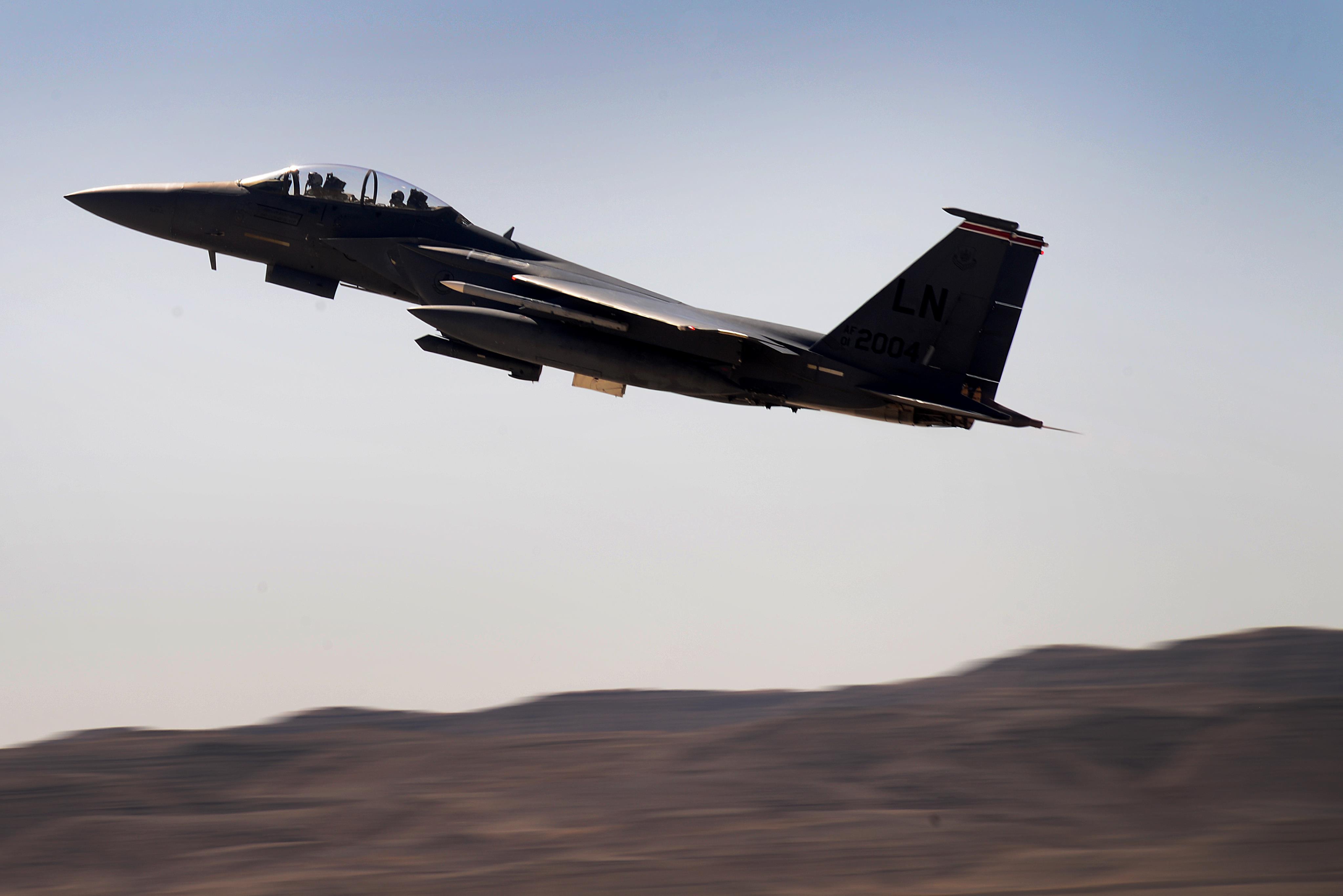
U.S. forces in a large-scale and complex rescue operation retrieved a downed and injured U.S. Air Force airman after more than two days deep inside Iran.
President Donald Trump announced the successful completion of the mission in a social media post early April 5, stating the “miraculous” search-and-rescue operation included dozens of aircraft. The announcement comes two days after the pilot of the downed Boeing F-15E Strike Eagle was also successfully picked up from a remote area of Iran.
“The fact that we were able to pull off both of these operations, without a SINGLE American killed, or even wounded, just proves once again that we have achieved overwhelming Air Dominance and Superiority over the Iranian skies,” Trump posted.
The mission was not without cost. Multiple aircraft, including special operations Lockheed Martin C-130s and Boeing H-6 attack helicopters, were destroyed on the ground after reportedly getting stuck at the forward arming and refueling point (FARP). Images circulating on social media appear to show the aircraft were destroyed in place. The military then flew in separate special operations aircraft to pick up the personnel.
Trump said in his post the military was monitoring the crewmember for 24 hr. as the rescue was planned. “The Iranian Military was looking hard, in big numbers, and getting close,” he said in a separate post. “He is a highly respected Colonel. This type of raid is seldom attempted because of the danger to ‘man and equipment.’ It just doesn’t happen!”
U.S. Central Command and Pentagon leaders had not yet commented publicly on the mission as of early April 5. Trump said there will be an Oval Office press conference April 6 to provide more information on the meeting. The rescue appears to have increased Trump’s commitment to the war, as in a separate social media post he promised large-scale attacks on Iran’s infrastructure to come on April 7 if Tehran does not fully open the Strait of Hormuz to international shipping.
The April 3 downing of the F-15E, along with the reported downing of an A-10 attack aircraft and multiple MQ-9 Reaper remotely piloted aircraft, indicates the Iranian military retains some effective surface-to-air missile capability. American and Israeli aircraft have, however, continued to operate extensively in Iranian skies, with more than 13,000 combat flights completed as of the latest Centcom update from April 1.
Images circulating after the initial downing of the F-15E showed components of the aircraft linking it to the 48th Fighter Wing at RAF Lakenheath, England. It is the fourth F-15E downed as part of the ongoing operation, after three were shot down in a friendly fire incident in Kuwait in initial stages.
The rescue mission is highly reminiscent of the notorious failed Operation Eagle Claw, also in Iran, in April 1980, in which eight U.S. servicemen were killed and multiple aircraft were destroyed in an attempt to rescue embassy staff captured by Iranian revolutionaries. That mission led to large changes within the U.S. military, including the creation of the Joint Special Operations Command to oversee combined operations like the one that occurred April 5.
The mission also led to the requirements to develop the now in-service Bell Boeing V-22 tiltrotor to avoid the need to set up a remote location; it is not clear if that aircraft was used.

Related Content