This article is published in Aerospace Daily & Defense Report part of Aviation Week Intelligence Network (AWIN), and is complimentary through May 22, 2026. For information on becoming an AWIN Member to access more content like this, click here.
MV-22
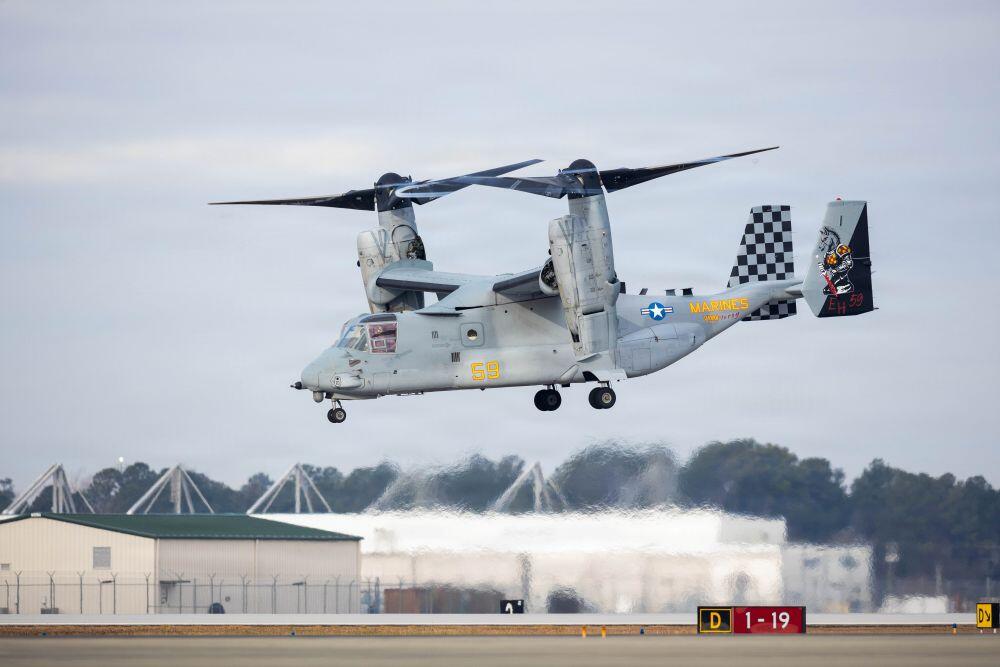
NATIONAL HARBOR, Maryland–The U.S. Marine Corps has opted to fully replace the nacelles of its Bell Boeing V-22 Osprey fleet as the focus to increase the readiness and safety of the tiltrotor has grown, along with funding.
Bell has for years been fully replacing the nacelles on the U.S. Air Force’s CV-22 Osprey fleet, which addresses many of the persistent readiness challenges on the aircraft. But the Marine Corps had opted for a more tailored approach by replacing only wiring harnesses within the nacelles in an easier and cheaper way to try to address some of the sustainment problems.
But recently the Marine Corps has opted to go with the full replacement.
“This decision is informed by validated performance data from the [Air Force Special Operations Command] V-22 community, with [Nacelle Improvement] exceeding initial readiness projections,” the 2026 Marine Aviation Plan says.
Col. David Fitzimmons, the branch head of the Air Warfare Systems Assault Support Branch for the Marine Corps headquarters’ aviation office, told Aviation Week on the sidelines of the Navy League’s Sea Air Space Symposium here on April 20 that the decision to focus solely on the wiring harnesses was largely driven by costs. However, with the expected fiscal 2027 budget increase, there will be more funding available and that prompted a decision to change course and fully replace the nacelles on the entire MV-22 fleet.
Kits will be purchased this year, with installations likely to follow in 2028, he says.
The Nacelle improvement program is one of several upgrade efforts underway on the MV-22 fleet. The Marine Corps says the top funding priority is the Osprey Drive System Safety and Health Instrumentation (ODSSHI), which will install sensors into the tiltrotor’s proprotor gearbox (PRGB) and drivetrain to provide vibration data. This will in turn prioritize maintenance on the gearbox, allowing maintainers to forecast potential component failures.
Within the gearbox, U.S. Naval Air Systems Command (NAVAIR) is leading the effort to replace components for those that are prone to failure–a lessons from the investigation into the November 2023 crash of a CV-22 off the coast of Japan in which cracks in gears caused a catastrophic failure in the gearbox. A new proprotor gearbox introduced in June 2024 uses a new triple-melt steel process for key components to avoid potential defects.
By 2027, the Marine Corps expects to remove restrictions on the operational fleet and have fully installed gearboxes by January 2023.
Next is the V-22 Fleet Optimization and Reduction in Configuration Effort (VFORCE), which will include converting current Block B MV-22s to the common Block C-Mission Computer Obsolescence Initiative configuration.